

Now more than ever, manitoba needs people who understand the issues facing agriculture
Our future depends on an informed public and a strong workforce. AITC-M is where that understanding
takes root. What students learn today shapes how they engage with agriculture tomorrow as future
employees, leaders and informed citizens.
Rooted in Strength is about the trust people place in AITC-M: in our expertise and our ability to deliver impact.
That trust is built through strong relationships with educators, supporters and industry, and through innovative programs and resources that evolve to meet changing needs. As demand shifts and capacity changes, we adapt
so that agriculture learning stays accurate, balanced, current and inclusive.
In 2025, demand for AITC-M programs and resources reached all-time highs. Educators across Manitoba were
hungry for meaningful, curriculum-linked learning that helps students understand where food comes from,
how agriculture supports communities, and why this industry matters to our province and the world.
With partner support, AITC-M expanded access, strengthened how we measure and share impact,
and built the capacity to reach more classrooms and communities.
This report shares the stories, successes and impact you helped make possible.
A Message from Our Leadership
Agriculture in the Classroom-Manitoba has crossed a threshold.
In 2025, educators’ appetite for trusted, curriculum-linked agriculture
learning reached an all-time high. That demand is a vote of confidence
in AITC-M, and it also sharpened a hard reality: our capacity has limits.
If Manitoba wants agriculture literacy at the scale educators are asking for, we need two things: sustainable capacity to meet demand, and clear, consistent evidence of outcomes so supporters can see what’s working, what’s changing for students, and where investment will have the greatest impact.
In 2025, we built on what works and made targeted moves to grow and prove impact:
- Innovation: We strengthened core programs and resources so learning stays relevant,
accurate and cost-effective as classrooms and agriculture evolve. - Momentum: More partners recognized AITC-M as essential to agriculture’s long-term success, because pathways into the industry start well before a first job.
- Demand: We treated wait lists as a signal to scale what works, strengthening systems and partnerships so we can expand access without compromising quality.
- Evidence: We advanced our Impact Framework and strengthened reporting so we can show outcomes more clearly, make better decisions, and build partner confidence as expectations and demand rise.
As you’ll see in the stories that follow, we also strengthened our team and key operations, including educator support, partner stewardship, planning and delivery systems, to help AITC-M scale what works while staying accurate, current and consistent.
None of this progress happens without community support. Volunteers, donors and industry partners help make hands-on learning possible for students across Manitoba.
Thank you for believing in this work, and for helping ensure Manitoba’s next generation has the knowledge to make smart decisions about food, agriculture and the future.
Katharine Cherewyk
Executive Director
Bonnie Bain
President, Board of Directors
Governance Update
We extend sincere thanks to Laura Holtmann, past-president of the AITC-M Board of Directors, for her leadership
and service. We are also pleased to welcome Bonnie Bain as president (board chair). In 2025, we welcomed new
directors Scott Peters and Dave Hansen.
Growing our team
In 2025, we strengthened our team with expertise that directly supports strategic growth: deepening educator support, expanding partner and community engagement, and sharpening how we tell the story of agriculture education across Manitoba.
- Jessica Canning, Education Specialist, brings K–12 teaching experience and a farm background to hands-on learning that connects students to agriculture and food systems.
- Tanis Chalmers, Engagement and Development Manager, brings roots in rural economic development to community engagement, fundraising and meaningful partnerships.
- Gabriela Landa, Communications Coordinator, brings communications and graphic design expertise to strategic storytelling and community-focused experiences.
Their work is already making an impact.
A full list of AITC-M staff and board members, including brief bios, is available on our staff and board page.
Measuring what matters
As demand for agriculture education grows, so do expectations for clear, consistent proof of impact.
In 2025, AITC-M advanced Phase II of its Impact Framework to strengthen how we define, track and
report outcomes so partners and supporters can see not only what we delivered,
but what changed for students because of it.

Through validation sessions with key stakeholder groups, AITC-M refined the framework, clarified priorities,
and began moving toward a scorecard approach for board reporting with three-year targets.
This work helps shift reporting beyond activity counts toward clearer insight into what’s working,
where gaps remain, and what needs to scale next.
To support that shift, AITC-M also strengthened internal tools and dashboards to reduce manual tracking
and make it easier to pull timely, meaningful data for accountability, planning and continuous improvement.

Explore our story
GROWTH
Rooted in strength AITC-M,
is growing with purpose

In 2025, AITC-M’s growth reflected a wider shift: more educators, schools, communities
and students see agriculture education as essential to Manitoba’s future.
That growth showed up in the numbers: more classrooms reached, more students engaged, more teachers
using our programs and resources. It also showed up in how we responded: scaling what works, using our
trusted tools, and piloting new approaches to meet rising demand without sacrificing quality.
85,376
Students engaged with AITC-M programs and resources
363,145
Agriculture education experiences

That’s 1 in every 2 schools in Manitoba!
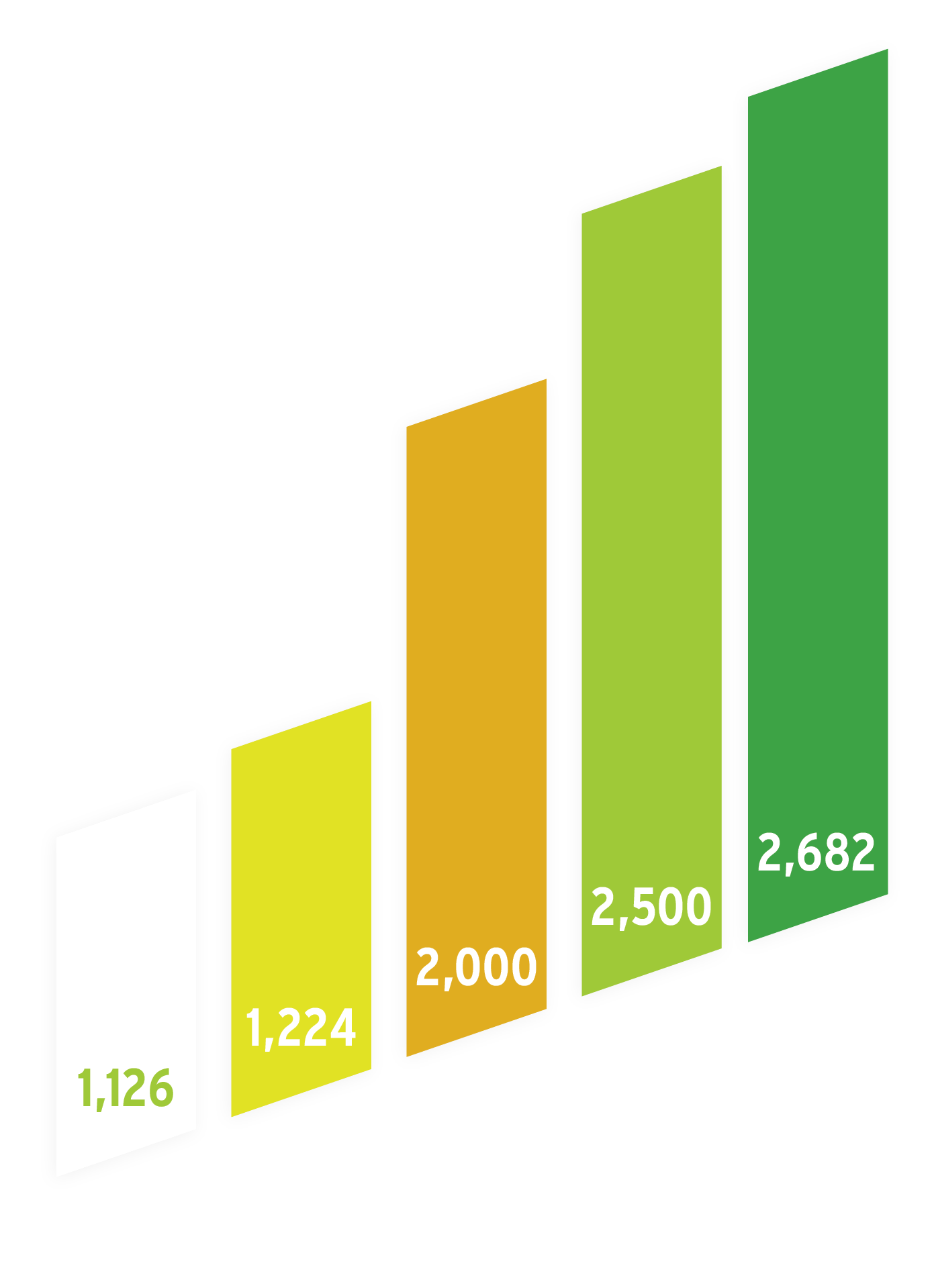

Our Growth
in Educator
Champions
AITC-M is in
schools across MANITOBA in 2025
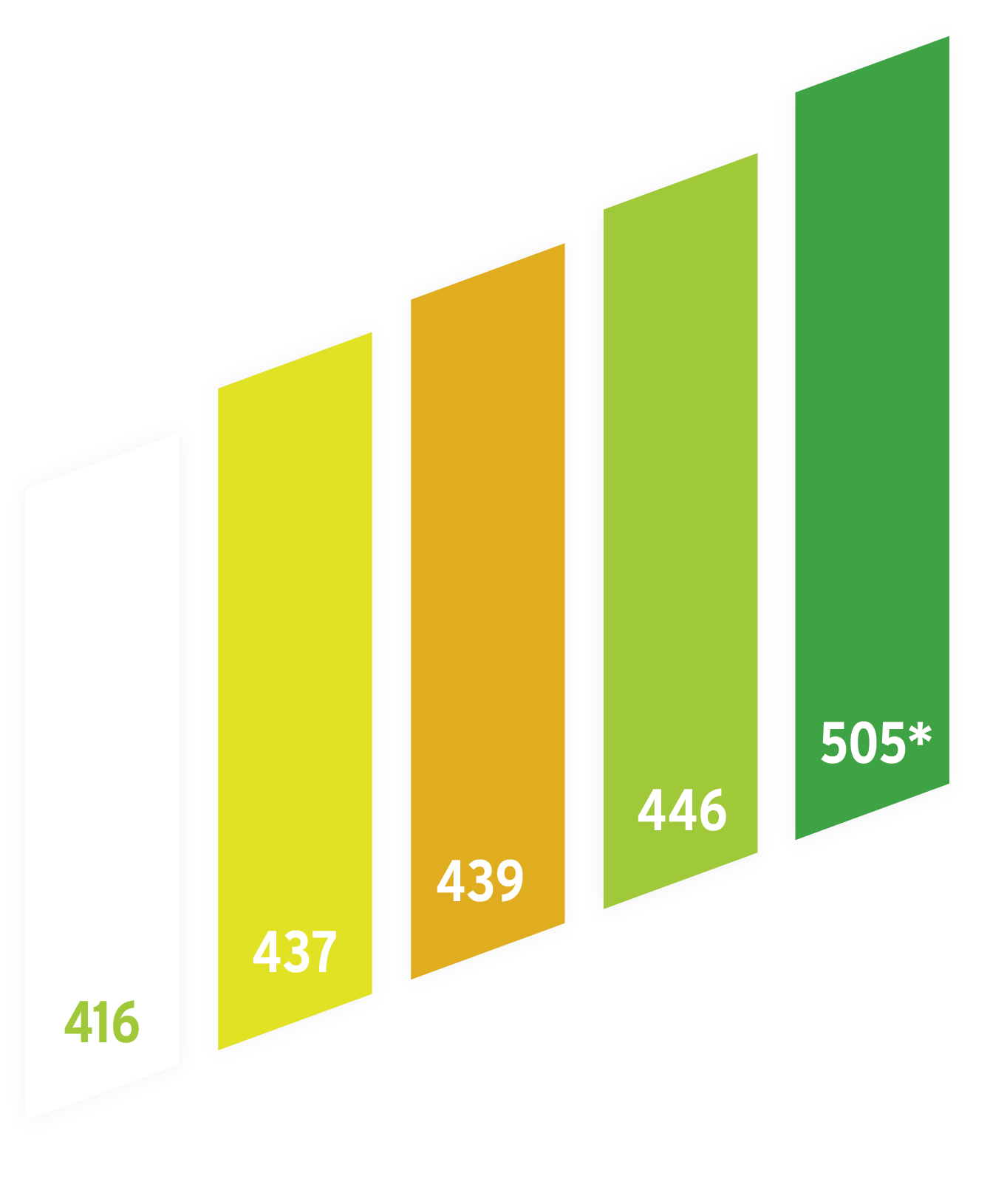
* Includes 32 homeschool groups

270 Urban Schools
203 Rural Schools
Manitoba Schools
|
|
|
|
Winnipeg schools in 2025
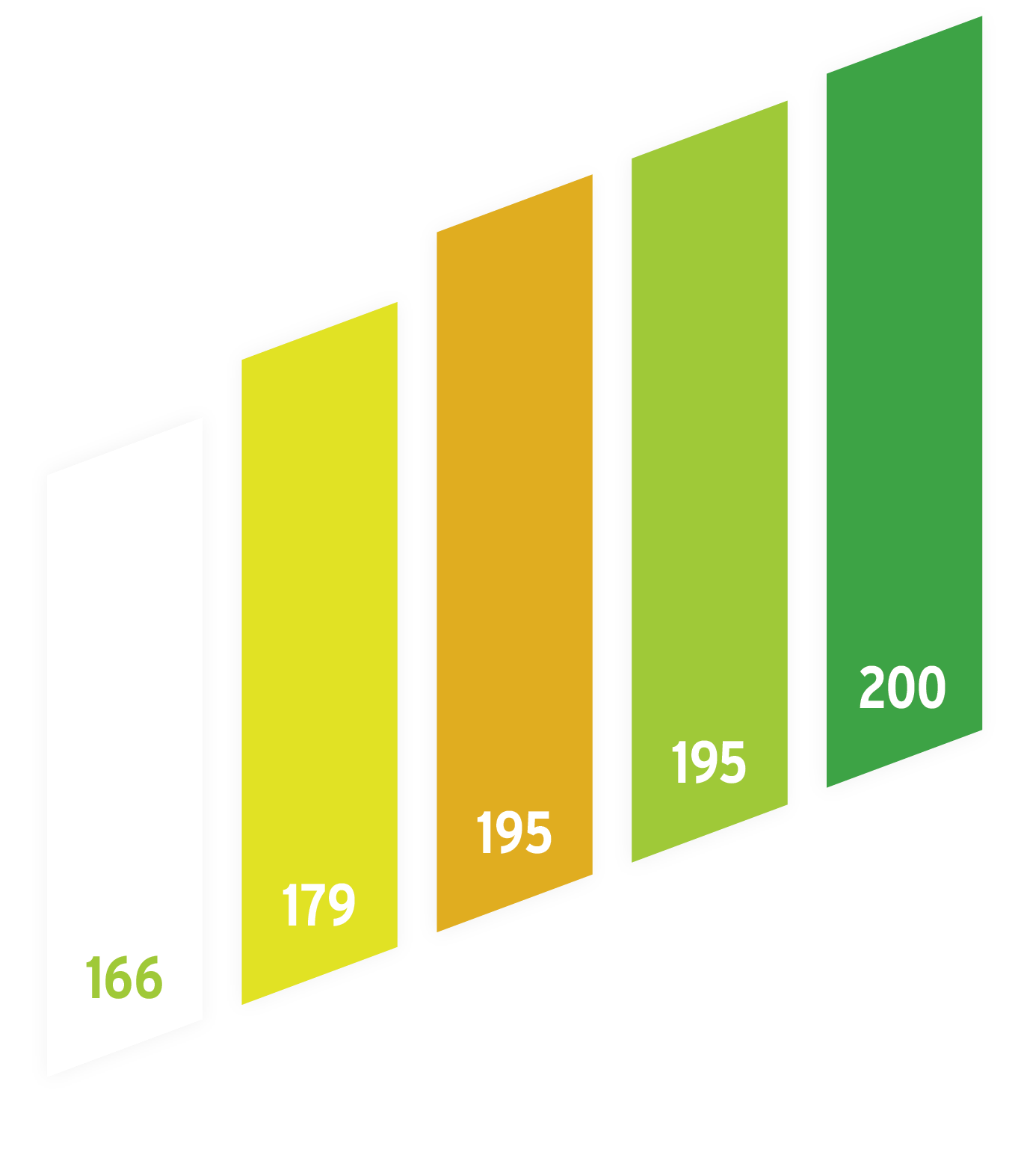

Winnipeg Schools
|
|
|
|
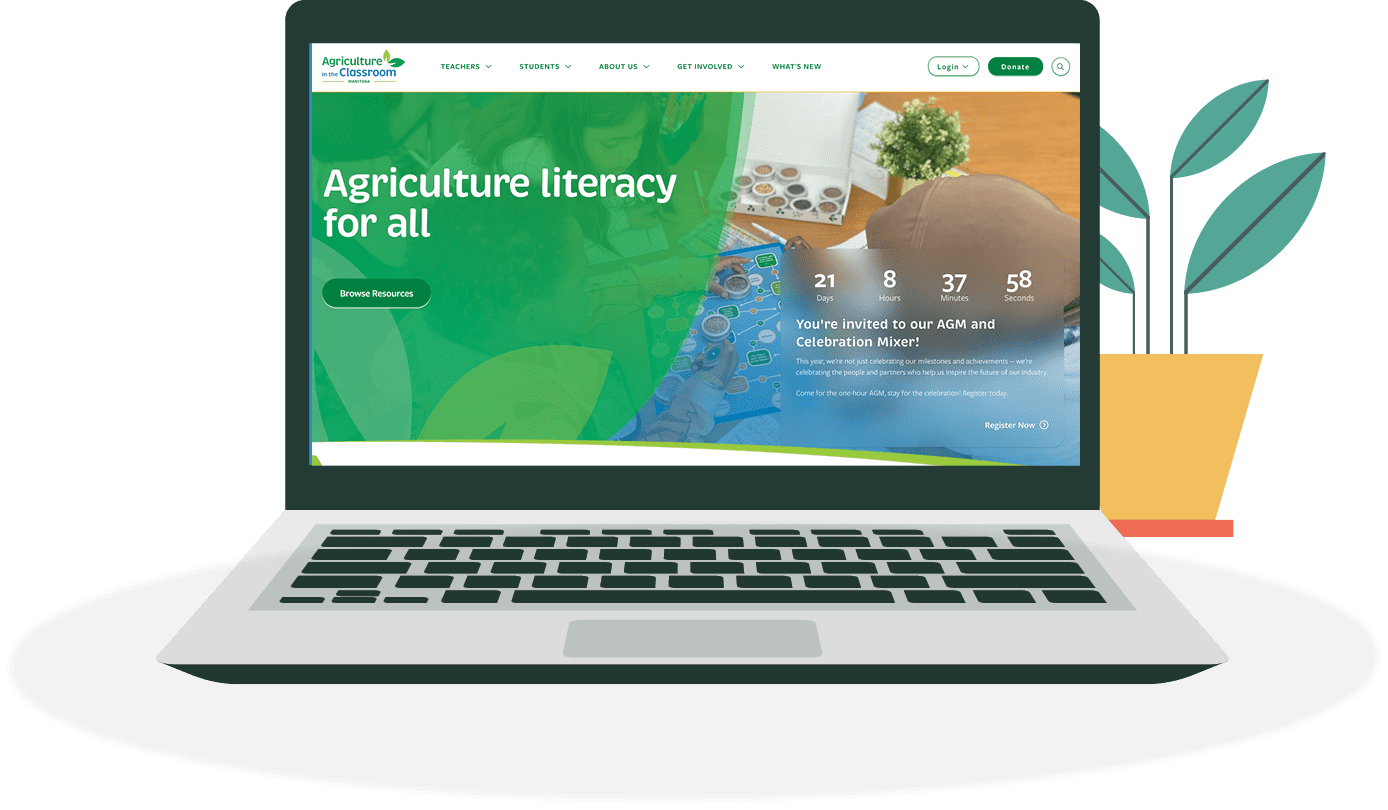
Growing Our Digital Reach
AITC-M’s digital outreach showed clear growth across platforms in 2025, with stronger engagement and more meaningful pathways into our programs and resources.
Website traffic rose by about 41 per cent year over year, signalling stronger visibility and more effective movement from social media to deeper exploration. The increase suggests audiences are going beyond passive viewing to actively seeking out AITC-M’s educational tools and opportunities.
Across Facebook, Instagram and LinkedIn, AITC-M now connects with a broad audience of nearly 6,000 followers. Growth was strongest on LinkedIn (about 16 per cent), followed by Instagram (about 12 per cent) and Facebook (about 8 per cent), showing momentum with both professional and general audiences.
Engagement metrics, including content interactions, link clicks and visits, also point to an audience that is increasingly responsive to AITC-M’s digital storytelling, particularly around agriculture-focused programming and seasonal initiatives.
Overall, these results reflect a larger digital footprint, stronger cross-platform reach and a growing connection between AITC-M and the communities we serve.
NEW AND EXPANDED RESOURCES
In 2025, AITC-M found smart, innovative ways to help our strongest classroom tools reach more
teachers and students. We refreshed proven activities, broadened access to popular CALM materials,
and tested new hands-on learning ideas while continuing to grow our English and French resource offerings.
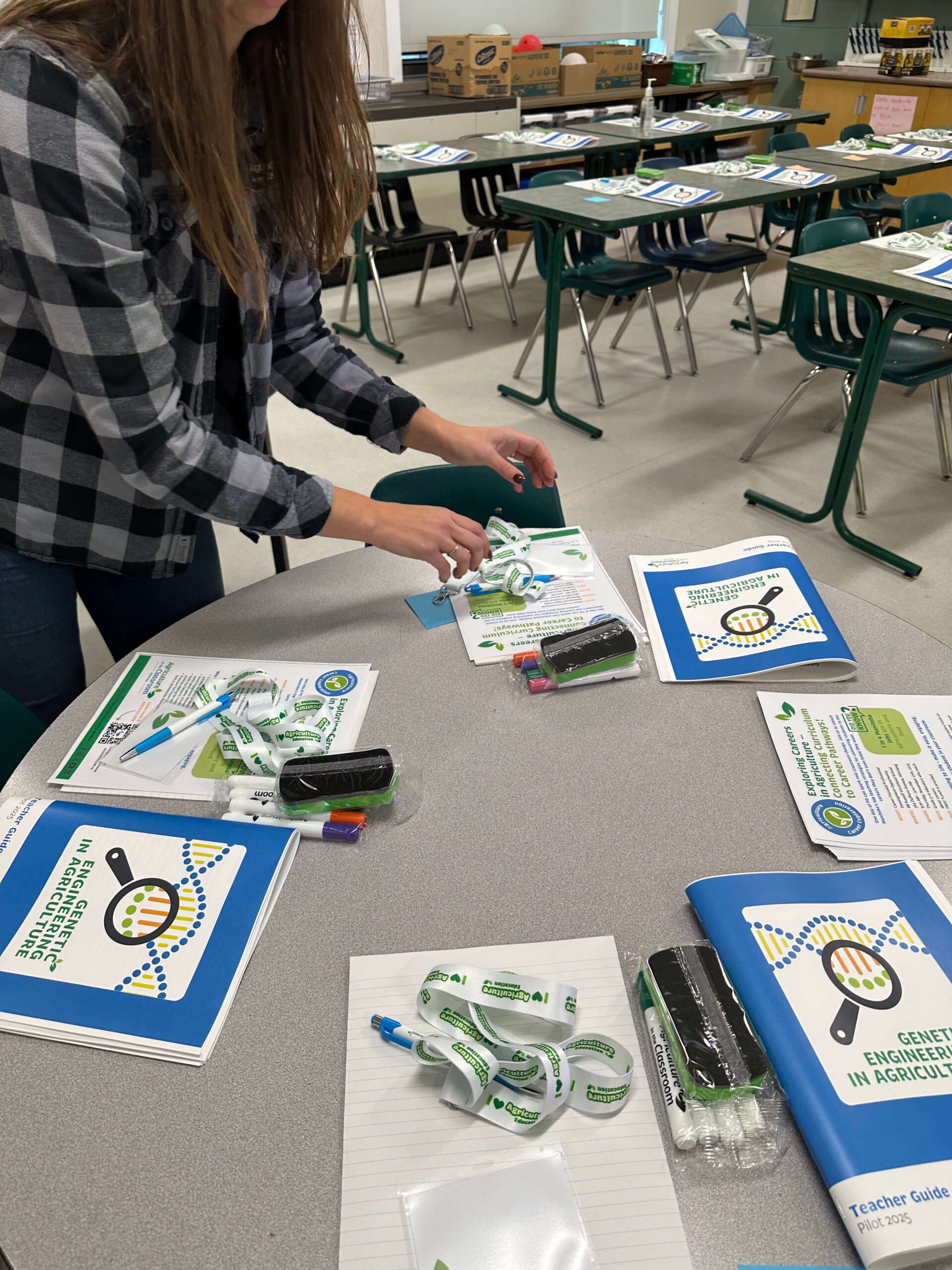

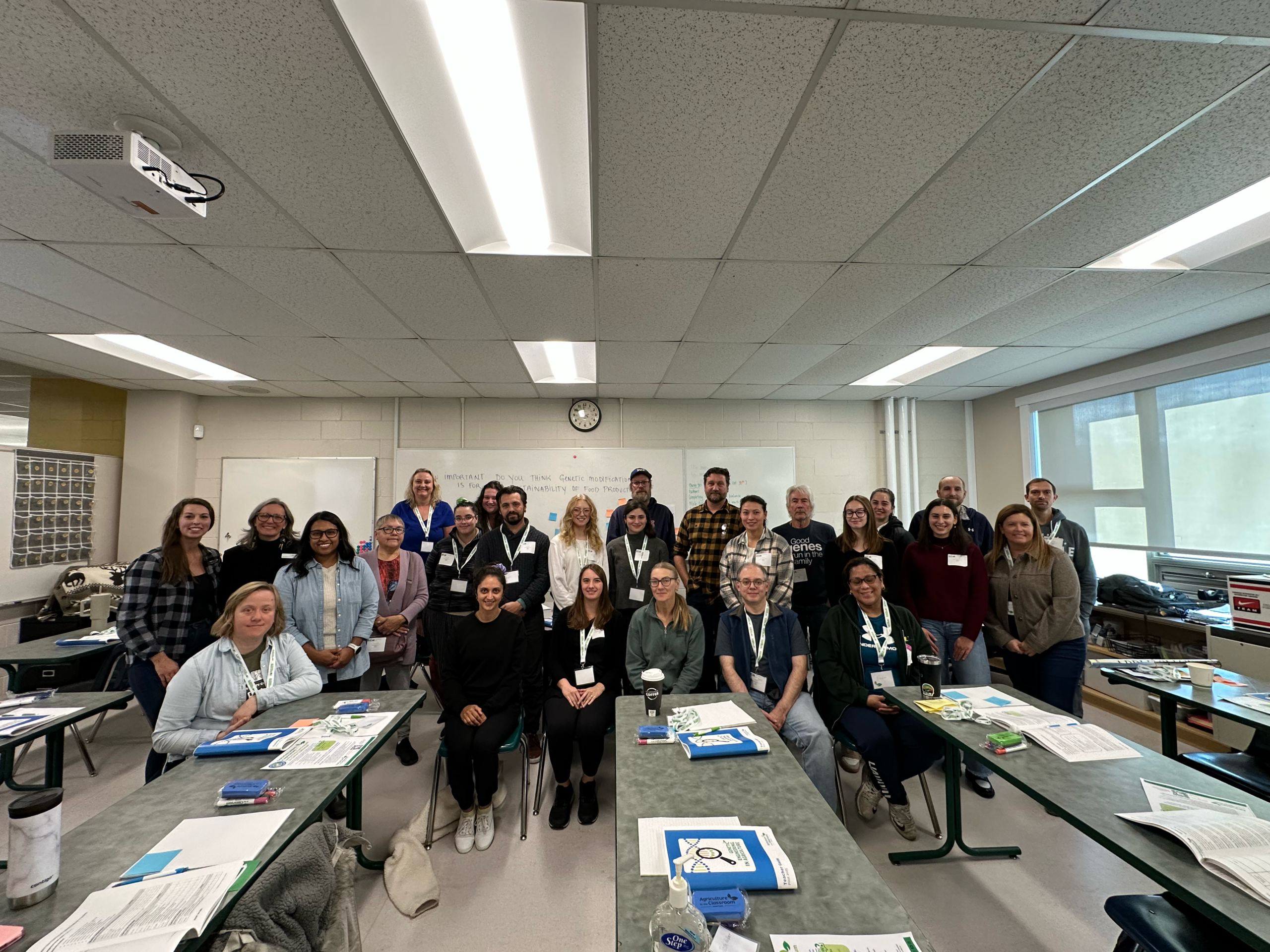
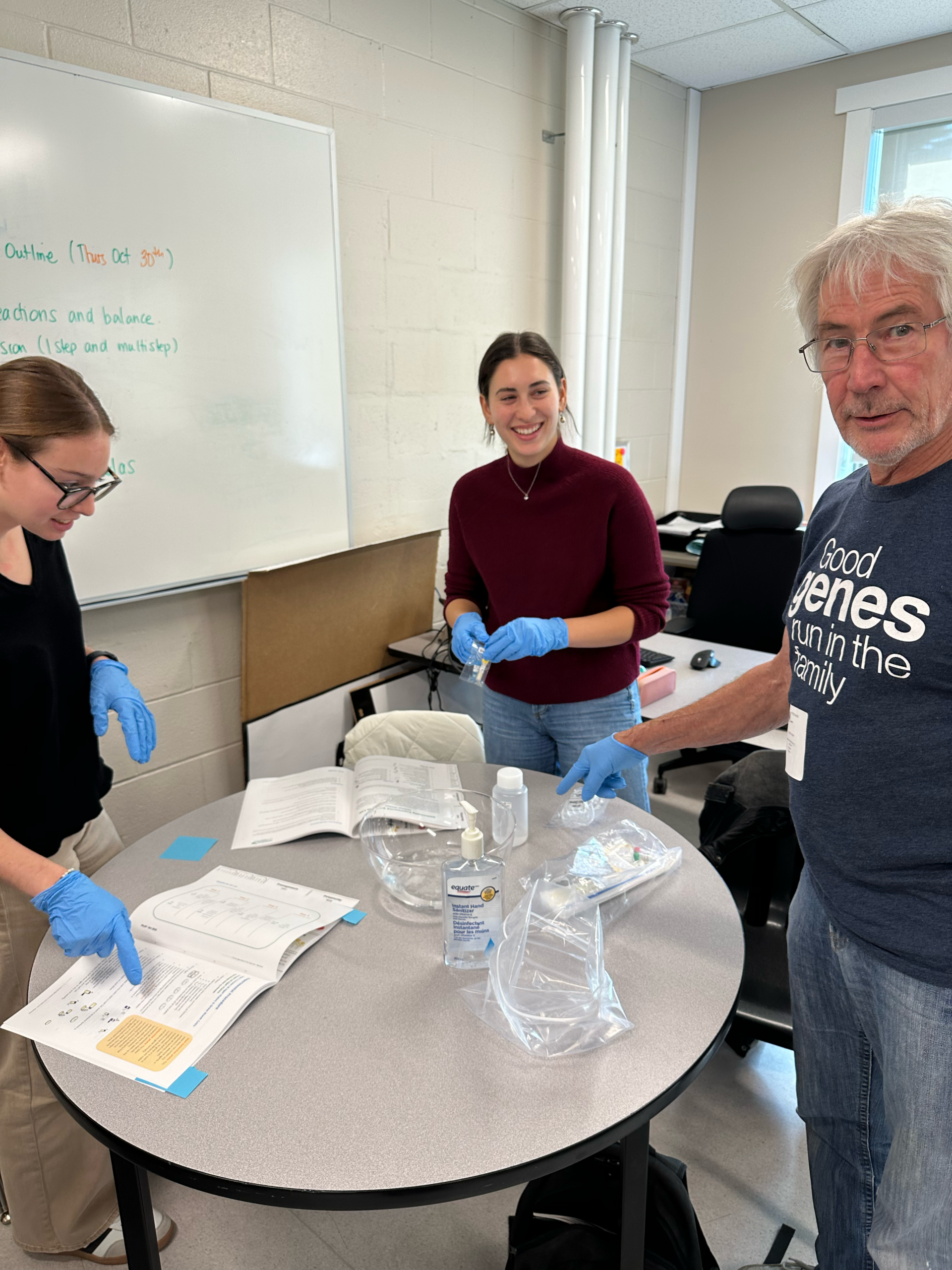
Genetic Engineering in Agriculture (CRISPR learning kit)
AITC-M is piloting a new high school resource that introduces modern genetic modification and next-generation
tools like CRISPR through hands-on, interactive learning. In October 2025, 19 pilot teachers were trained
(alongside 12 additional teachers at the same PD). Pilot feedback is expected in April 2026
and will shape the final version before broader release.

Sprout Head Mini Grow Kit (EN/FR)
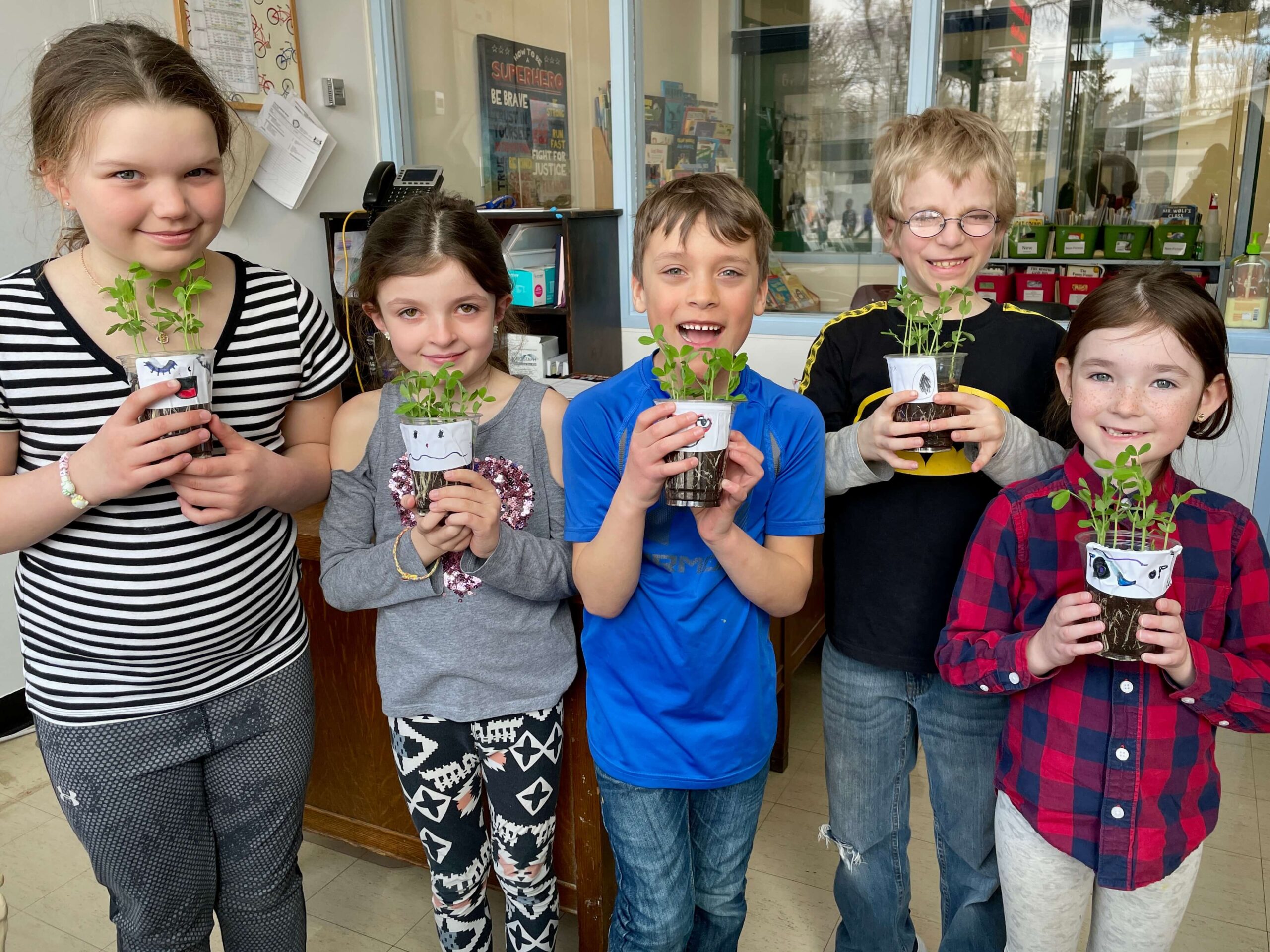
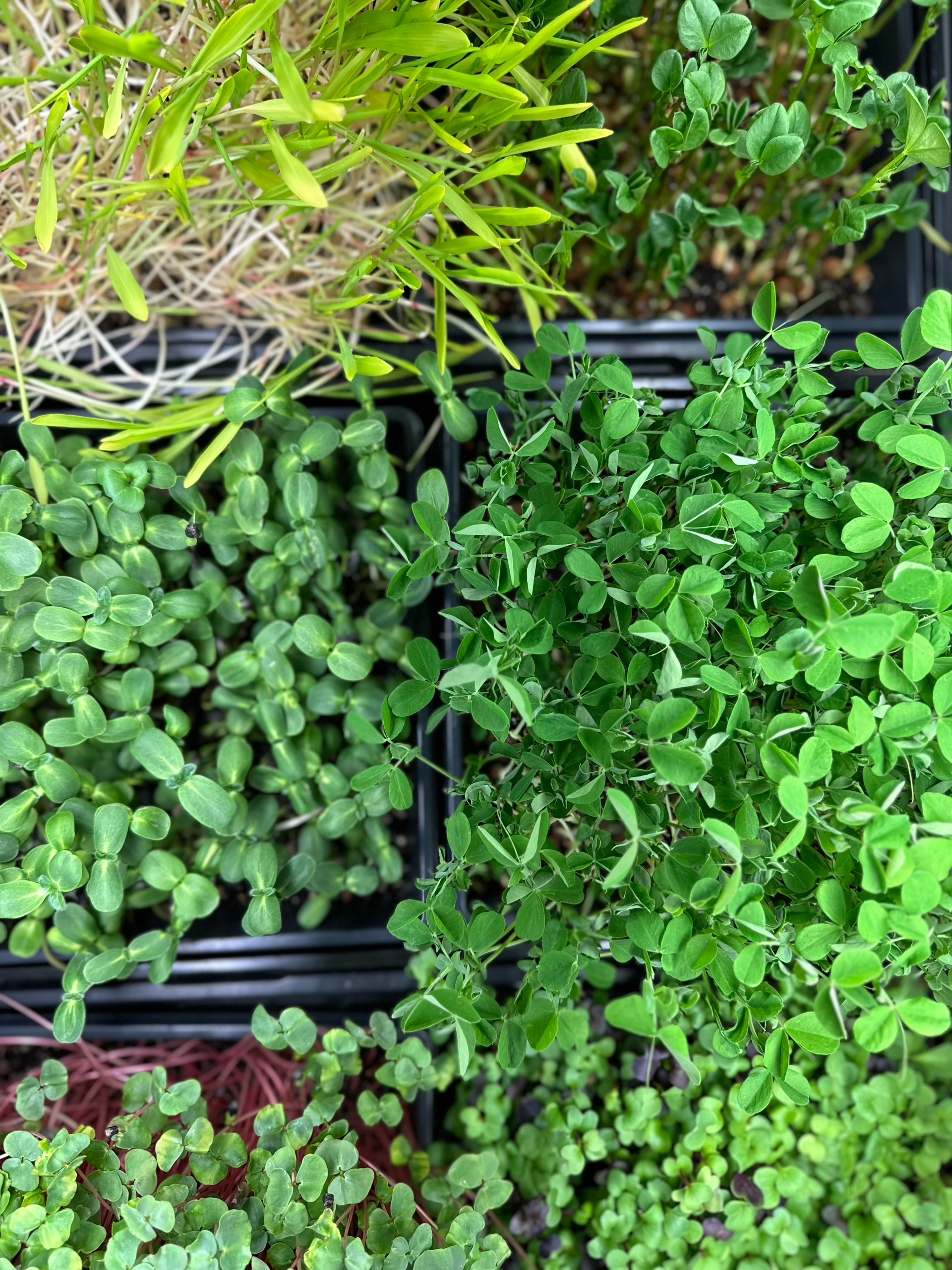
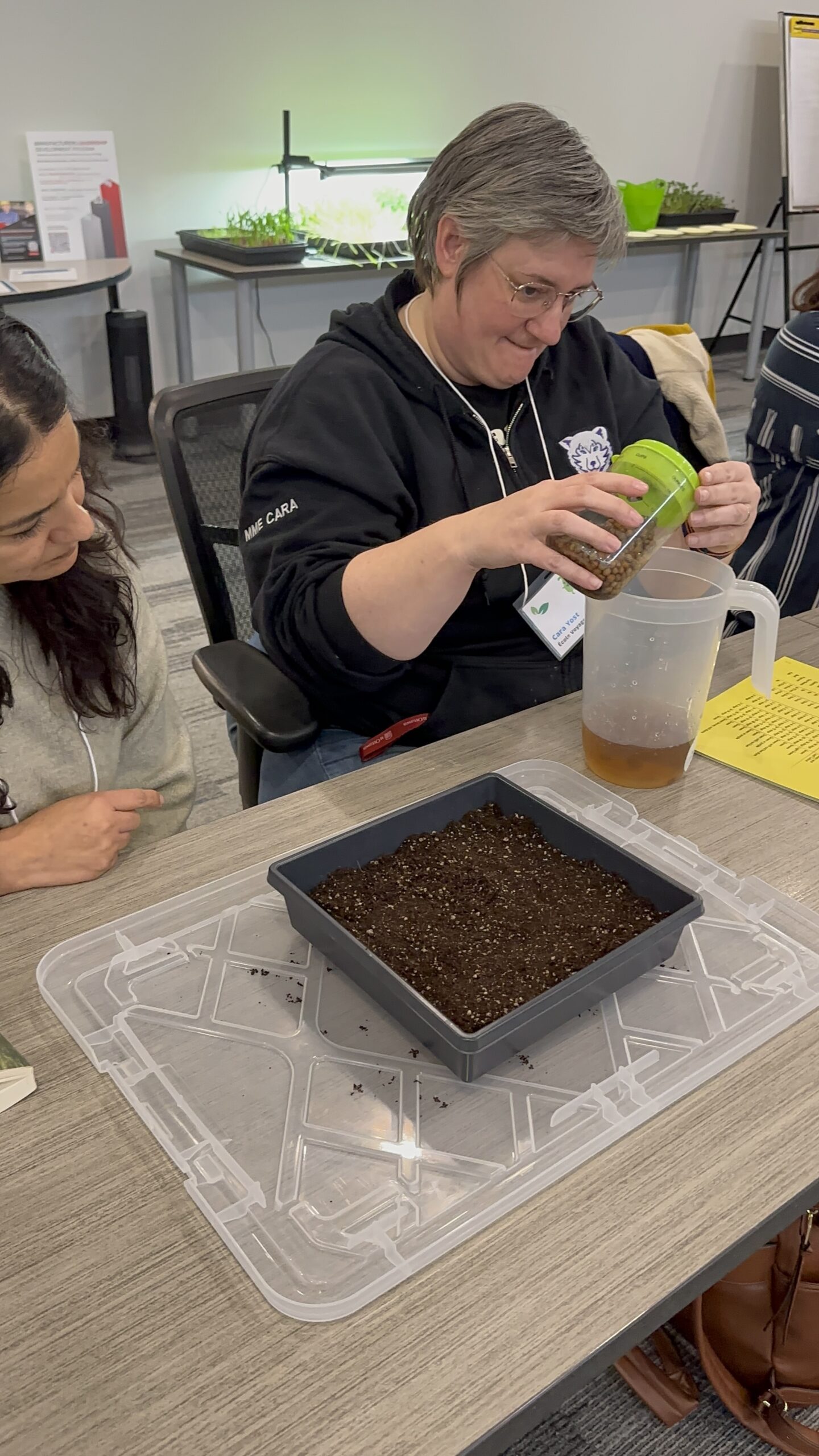
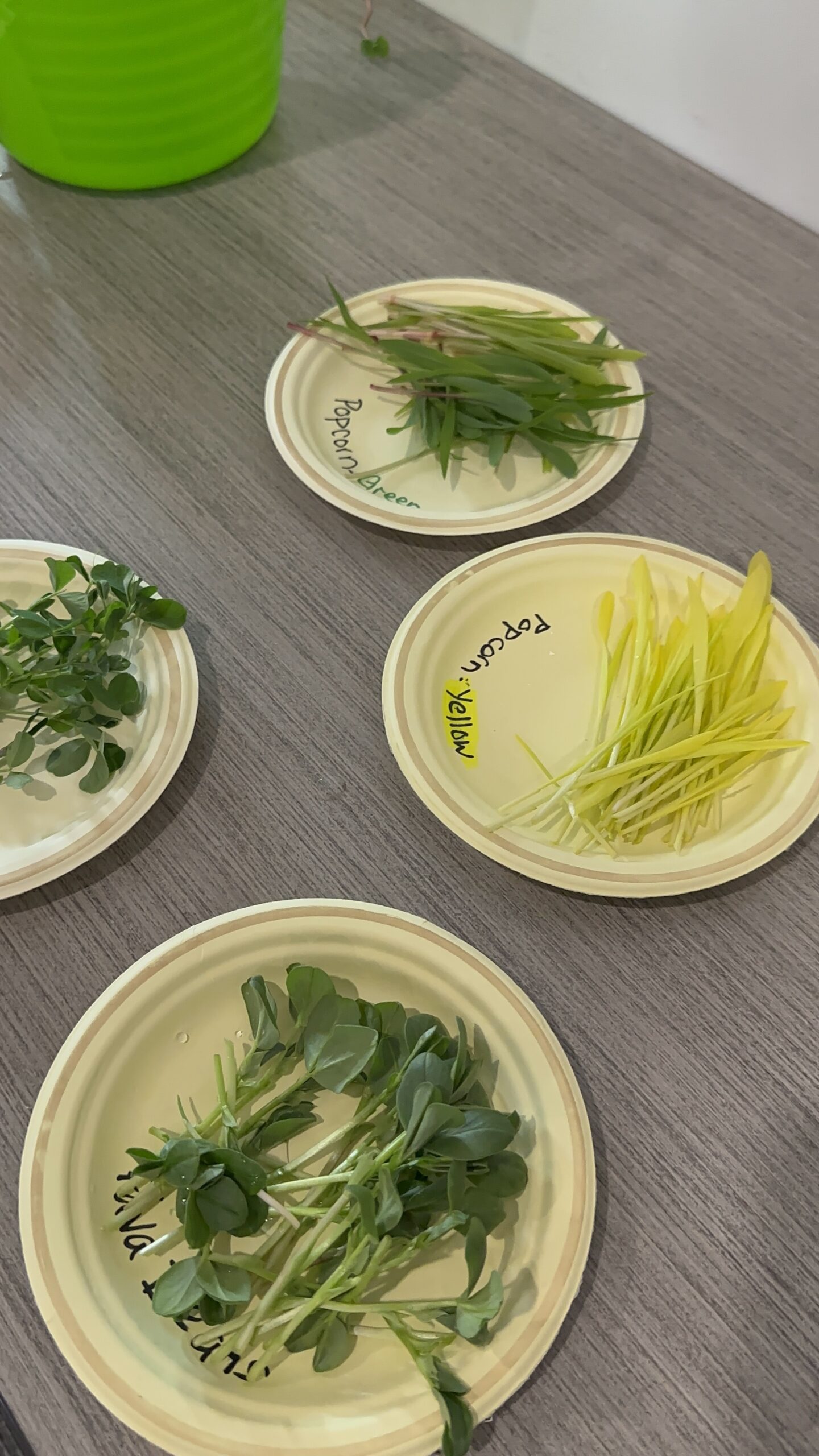
This new kit has proven to be a real hit, especially in spring, when many Grade 3 teachers are looking for hands-on learning
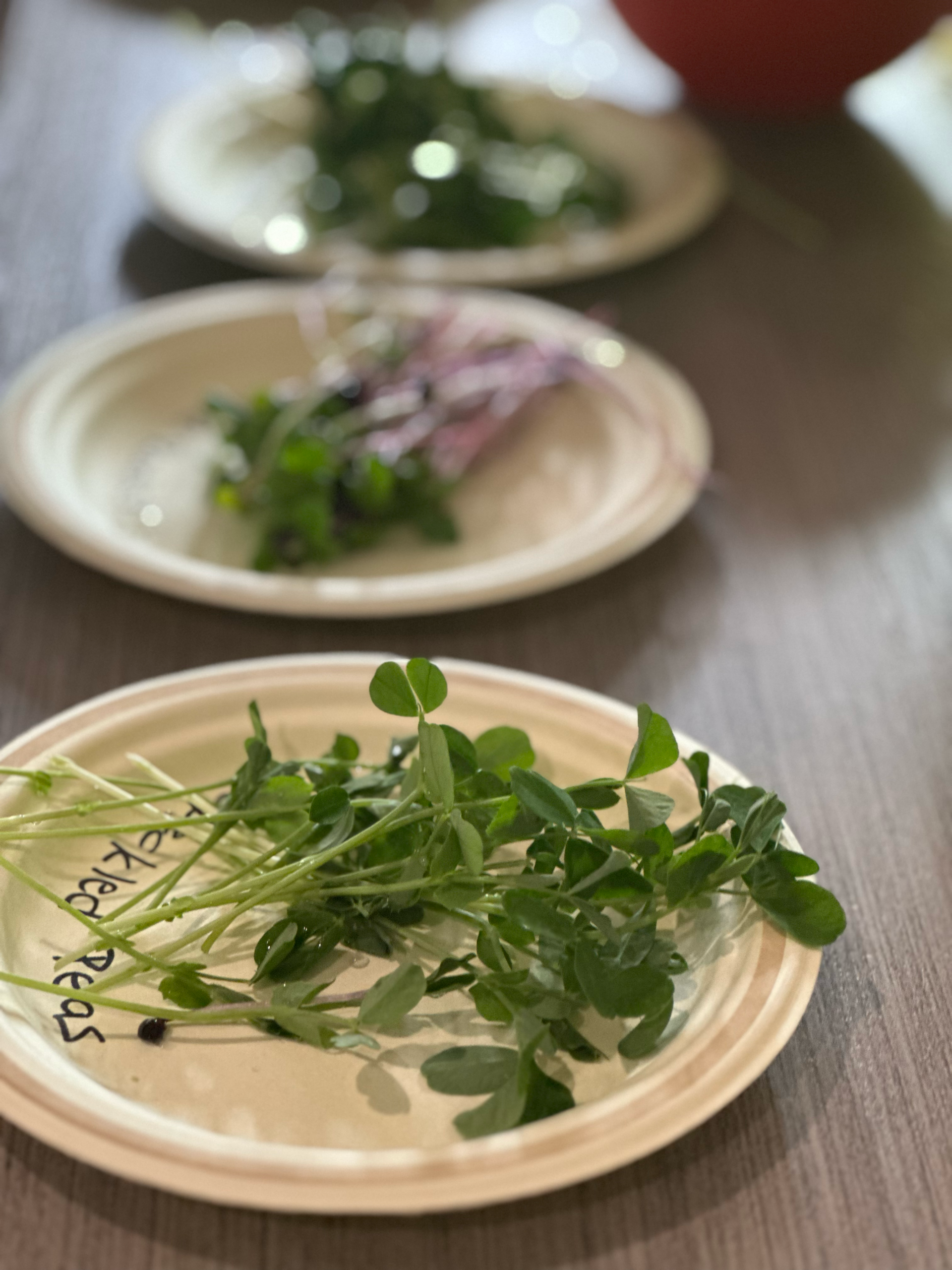
that fits Plant and Soil outcomes. Students plant, grow, observe, measure and eat pea microgreens, connect them to
Canada’s Food Guide, and explore pea-based products while mapping a pea’s journey from field to plate. In 2025,
Sprout Head reached 1,902 students. Thank you, Manitoba Pulse and Soybean Growers, for supporting this resource!
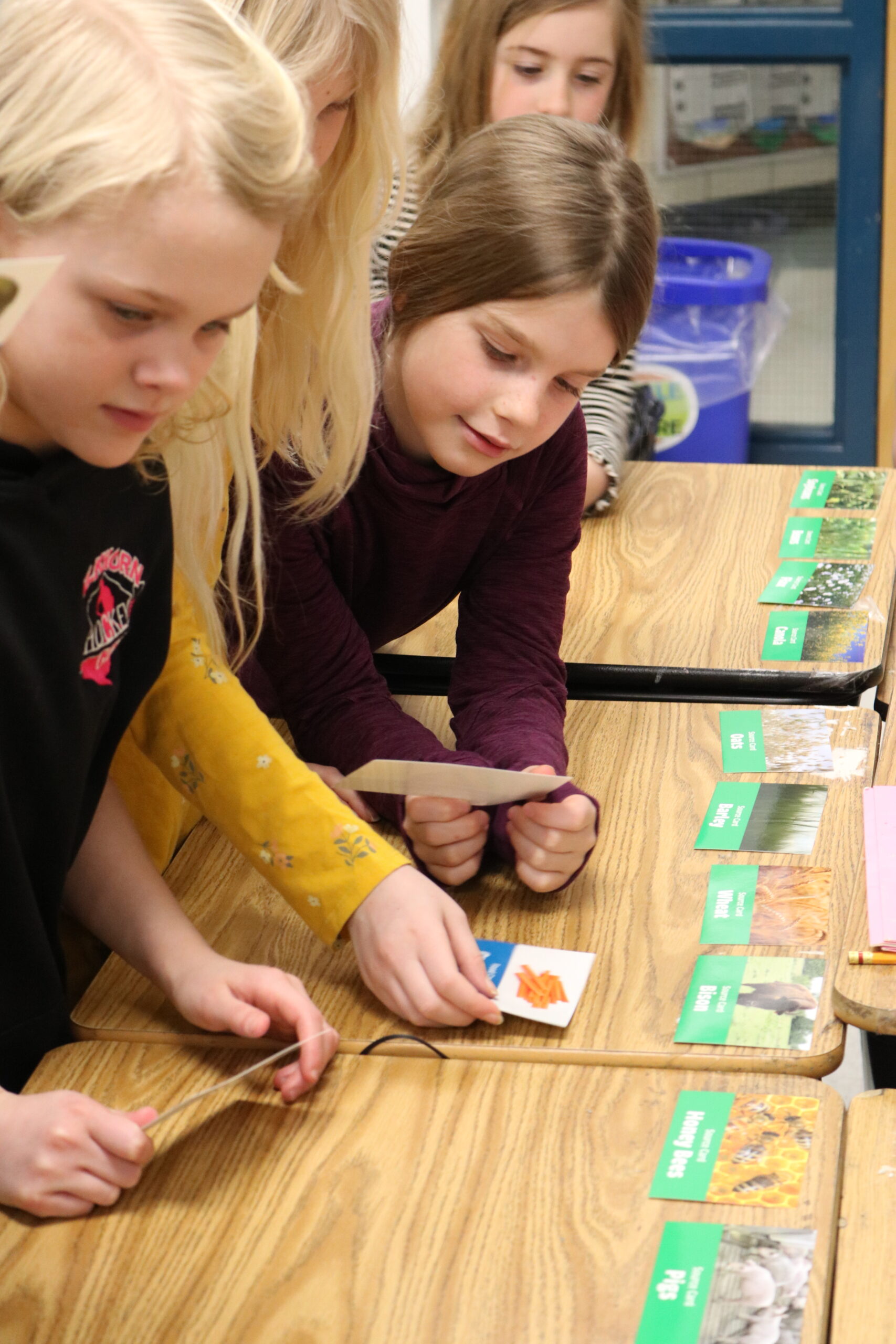
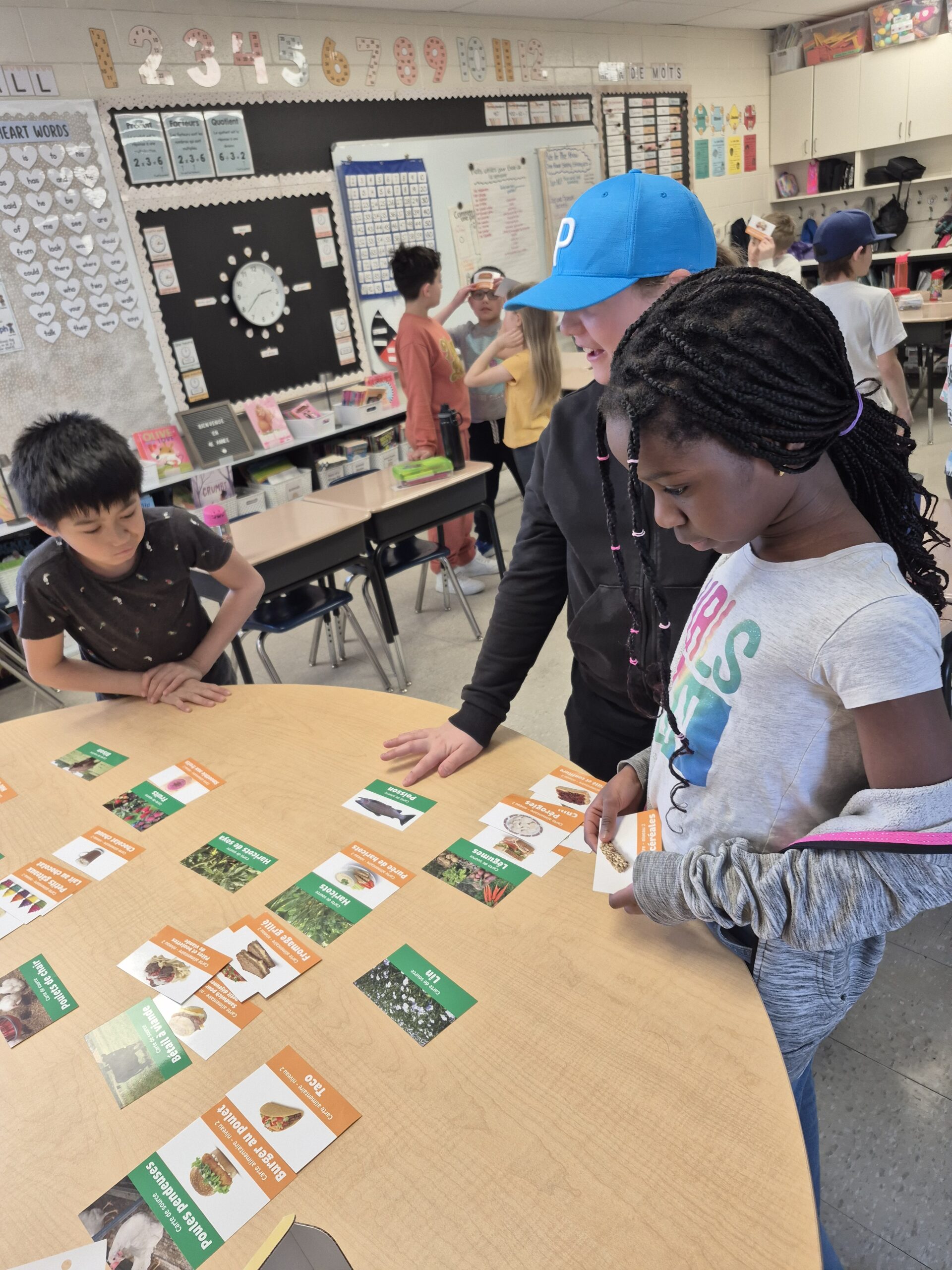
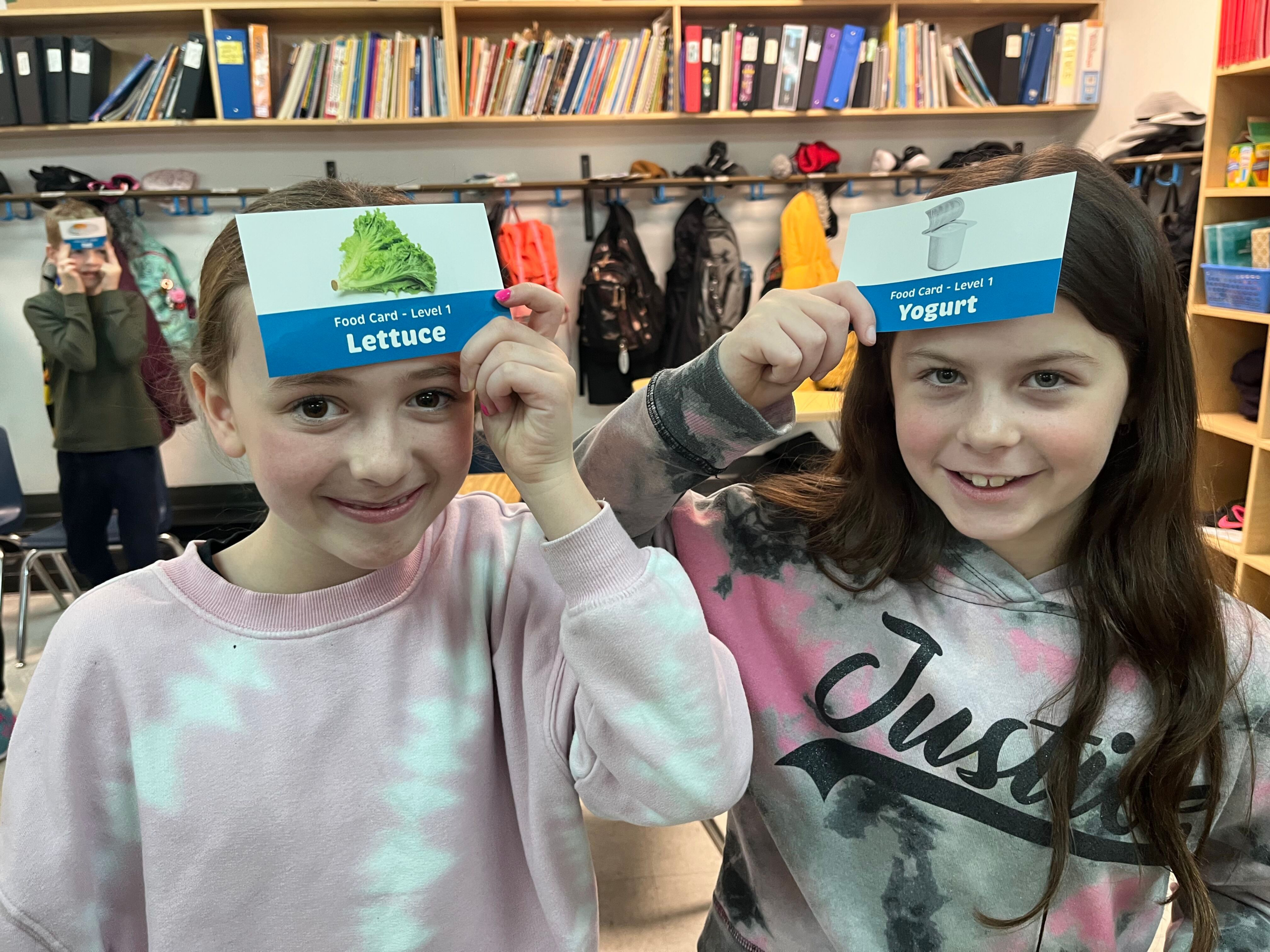
What’s In Your Lunch? (EN/FR)
Some of AITC-M’s most effective resources aren’t brand-new; they’re proven ideas that get refreshed and rebuilt to
enhance current programming. This year, we took an old classroom activity and updated it into a HedBanz-style game where
students guess foods and learn what ingredients come from crops or livestock, building everyday food-system literacy in a
way that sticks. We delivered What’s In Your Lunch? during CALM 2025, where it reached 309 classrooms and 6,475 students.
Notably, 19 per cent of participating classrooms were French, reinforcing the importance of offering equitable
resources in both official languages.

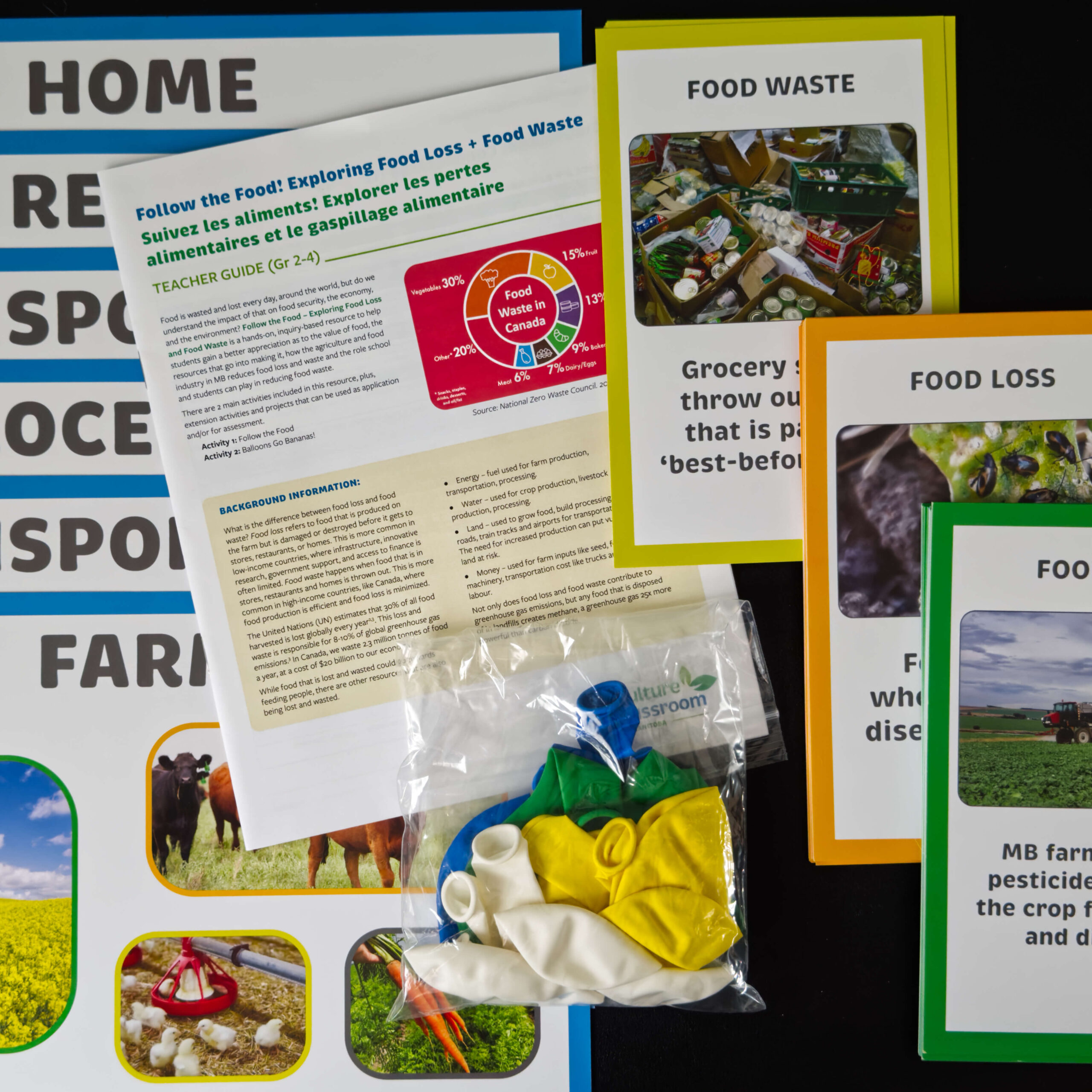
Follow the Food:
Exploring Food Loss and Waste (EN/FR)
Originally developed for CALM 2024, AITC-M reprinted and relaunched this popular resource to
make it more widely available to all teachers. The kit helps students understand food loss and
waste across the supply chain and identify practical solutions at school and at home.
Field Testing
New Activities
Alongside new classroom kits, AITC-M also developed classroom-ready game prototypes and carried out
one-off field testing. These practical pilots let us try
new ideas quickly and refine what works before
wider release.
With Manitoba Pork, AITC-M also built a Family Feud-style game that turns pig and pork production in Manitoba into a fast, fun competition, giving students a lively way to learn how pigs are raised, how pork moves through the system, and why local production matters.
And at Enns Brothers’ Day of Play in May 2025, AITC-M partnered with Enns Brothers to pilot a hands-on sensory table for young learners that featured fast, fun activities designed to make simple, lasting connections between the food we eat and where it comes from: seeds, farms, and the people who grow our food.
A Bilingual Milestone –
and an Opportunity
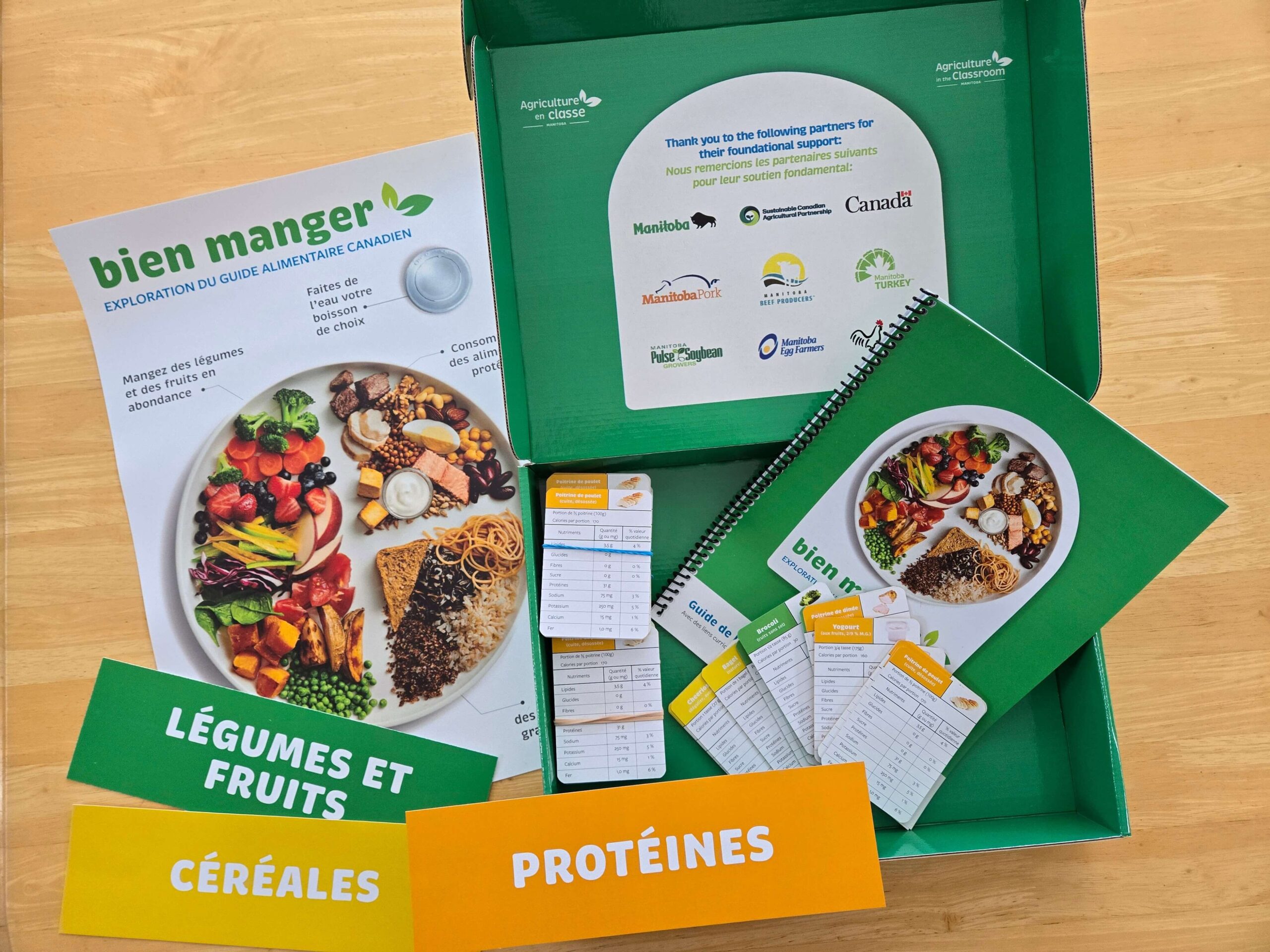
Our cornerstone Eat Well resource is now available
in French, including interactive lessons, display
materials and card-based activities that help students explore Canada’s Food Guide. This means nine out
of 10 AITC-M physical resources are now available
in both English and French!
The next step is scaling that access digitally, and that’s where we need partners. Funding French translation for our downloadable resources is a high-impact, measurable investment that extends trusted, curriculum-linked ag learning to more classrooms, more often.
If you or your organization would like to be part of that solution, contact:
Katharine Cherewyk, Executive Director, AITC-M

IMPACT
From Reach to Real Change
Our impact grows from strong roots: trusted, curriculum-linked learning, delivered with amazing partners, and improved year over year. The stories that follow show young people gaining understanding, thinking critically, and seeing a future for themselves in agriculture: the outcomes that matter most.
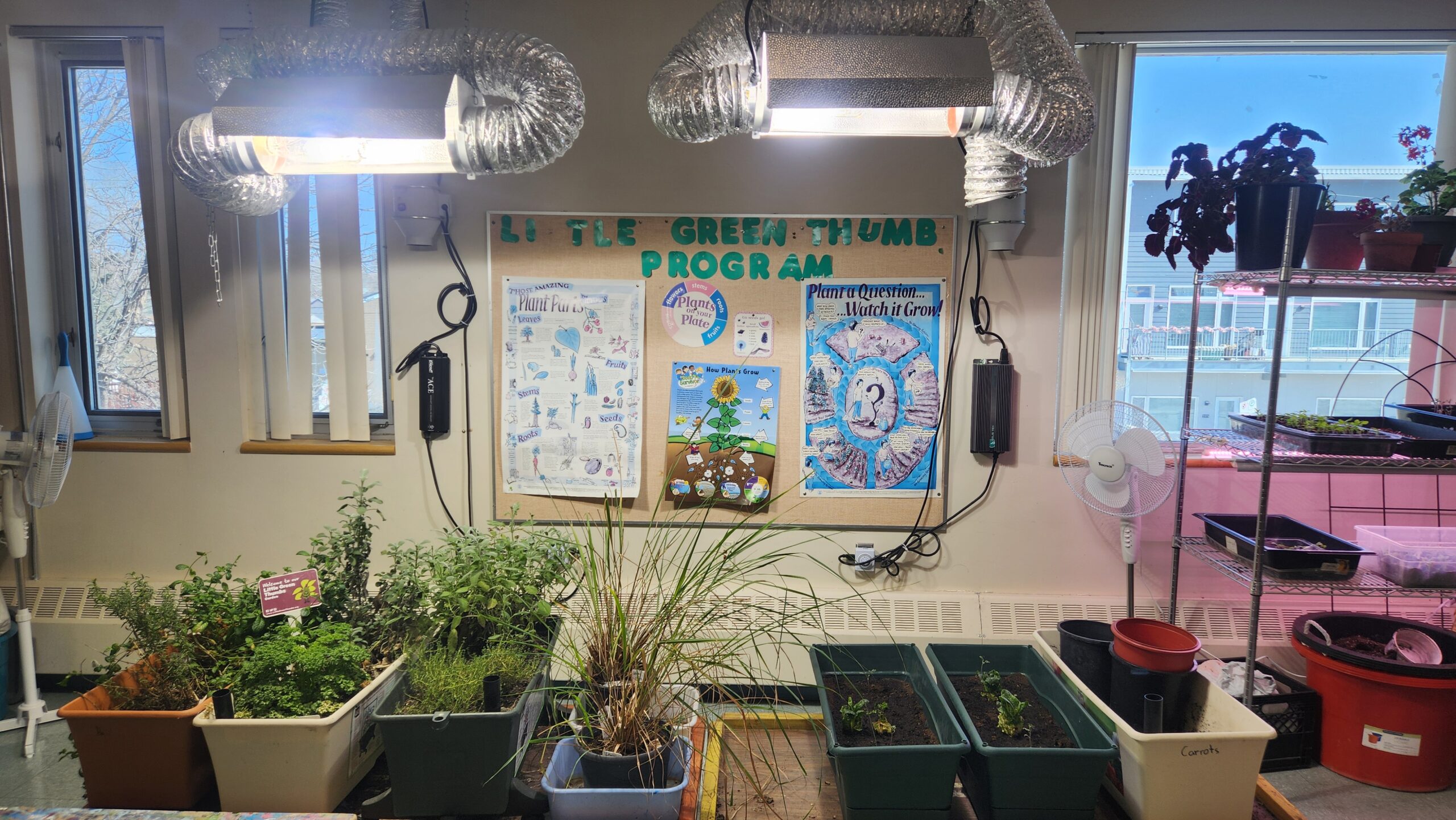
Classroom Gardens:
Watch them Grow!
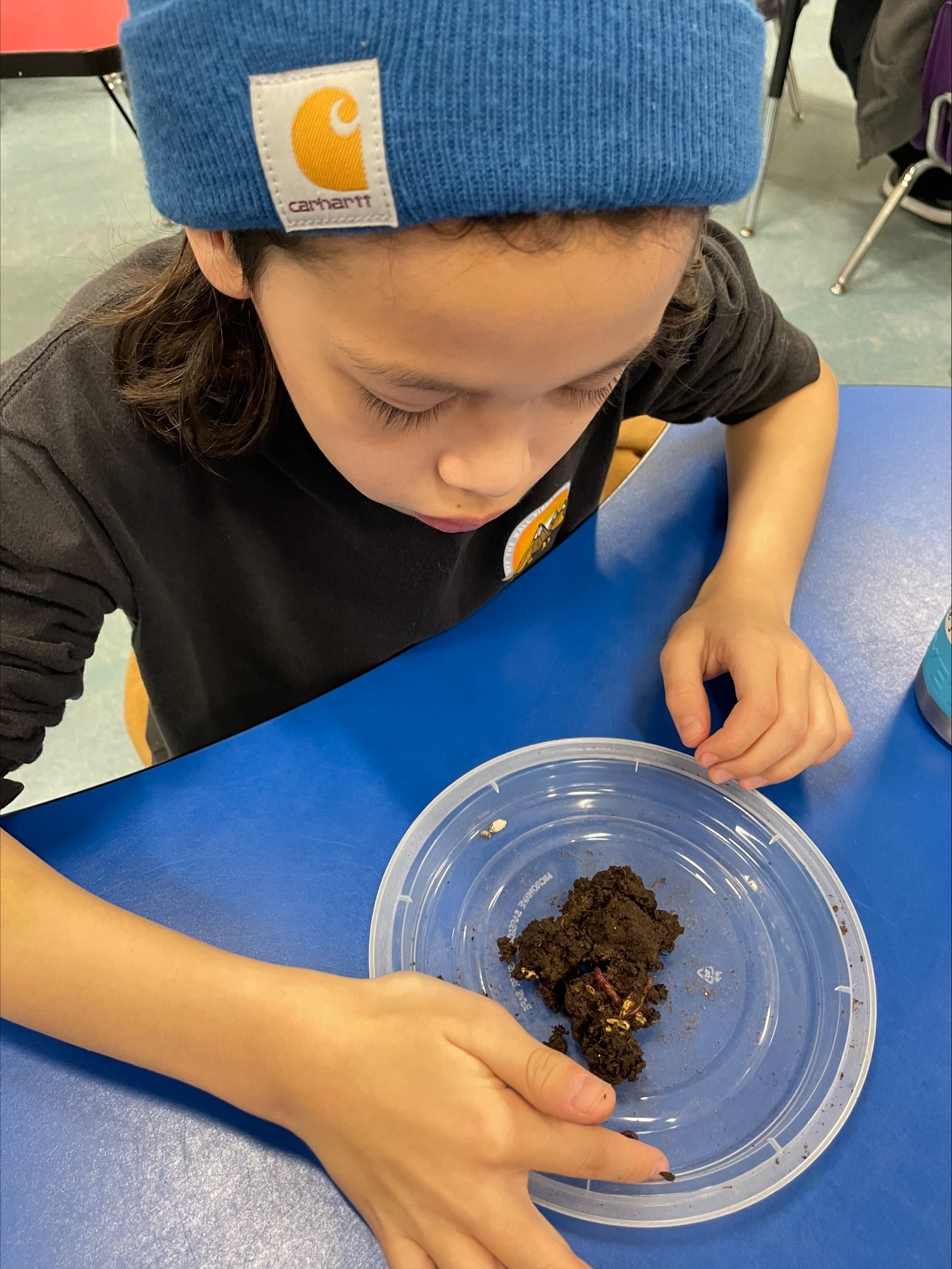
In 2025, AITC-M planted more classroom gardens than ever before — thanks to a historic $195,000 investment from Manitoba Crop Alliance. The support nearly doubled our delivery capacity, bringing garden-based learning to more schools, more grades, and more communities across Manitoba.
That growth translated into 60 new gardens —
up from the usual 30 — including 20 Little Green
Thumbs installations and 40 Little Green Sprouts
kits. Demand still outpaced supply: we received
more than 110 applications, a clear sign of
educators strong commitment to hands-on,
curriculum-connected learning.
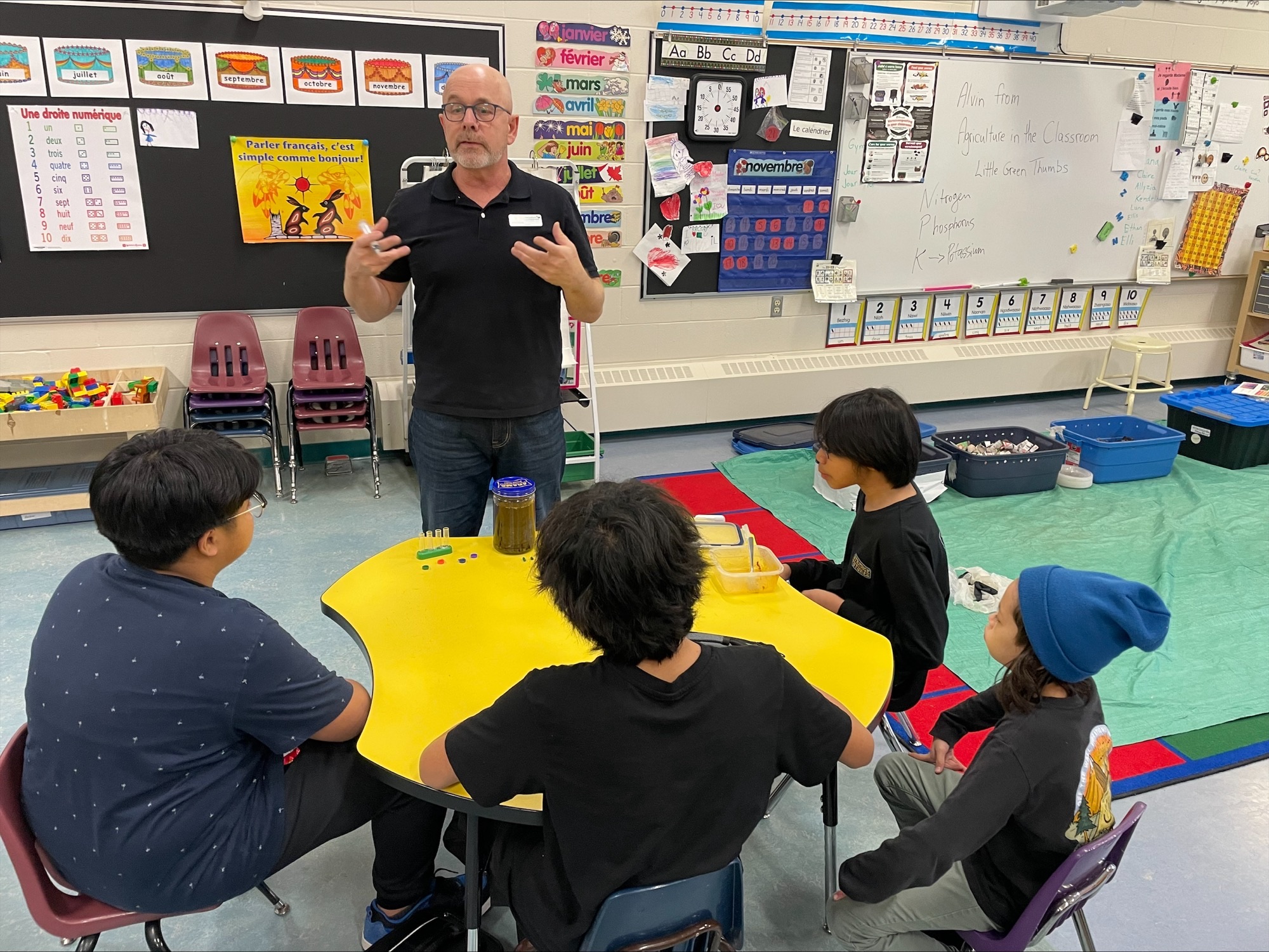
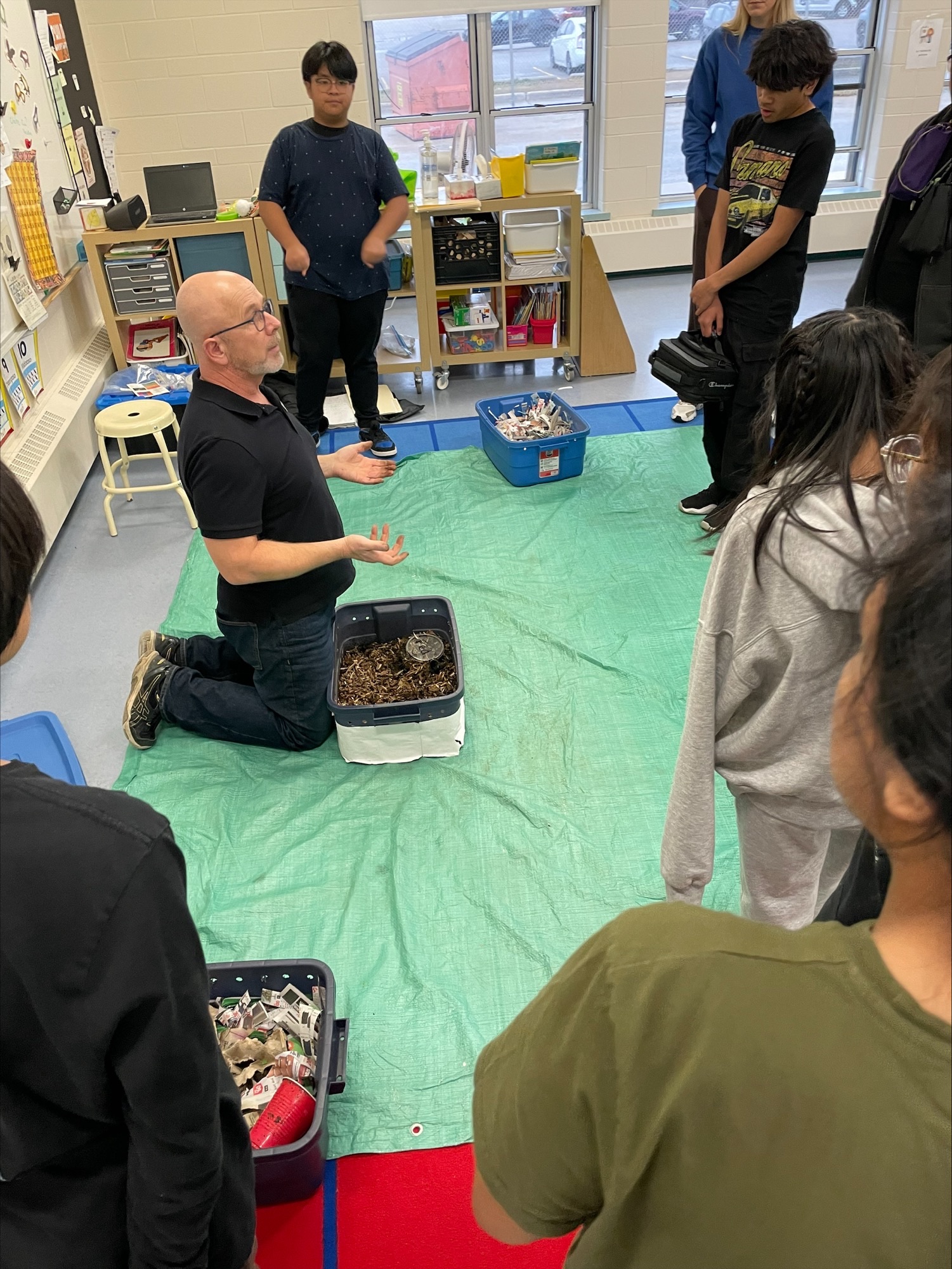
The investment also helped grow teacher capacity.
Fall workshops trained 68 new educators, giving
them the tools to lead garden learning year-round.
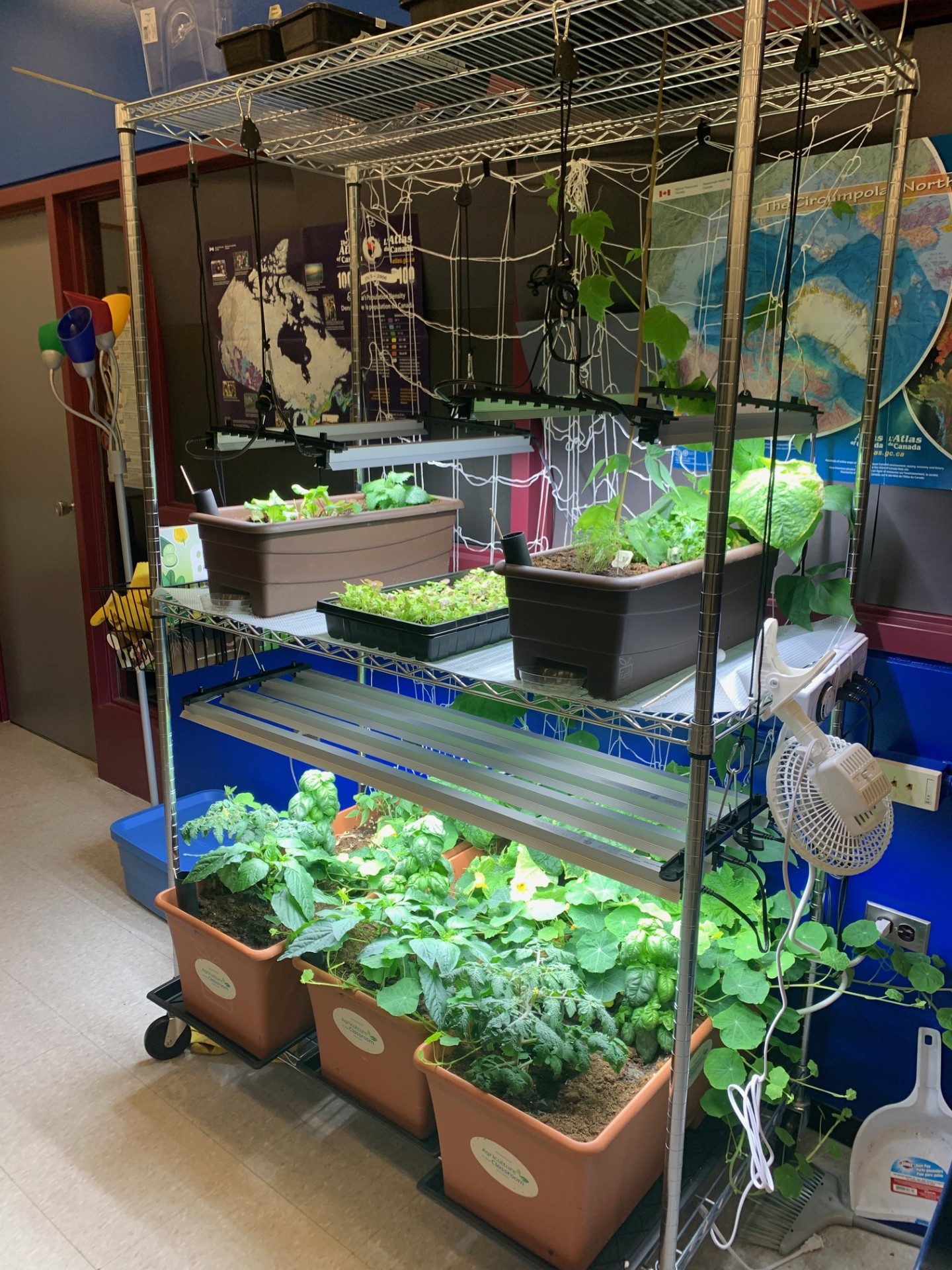
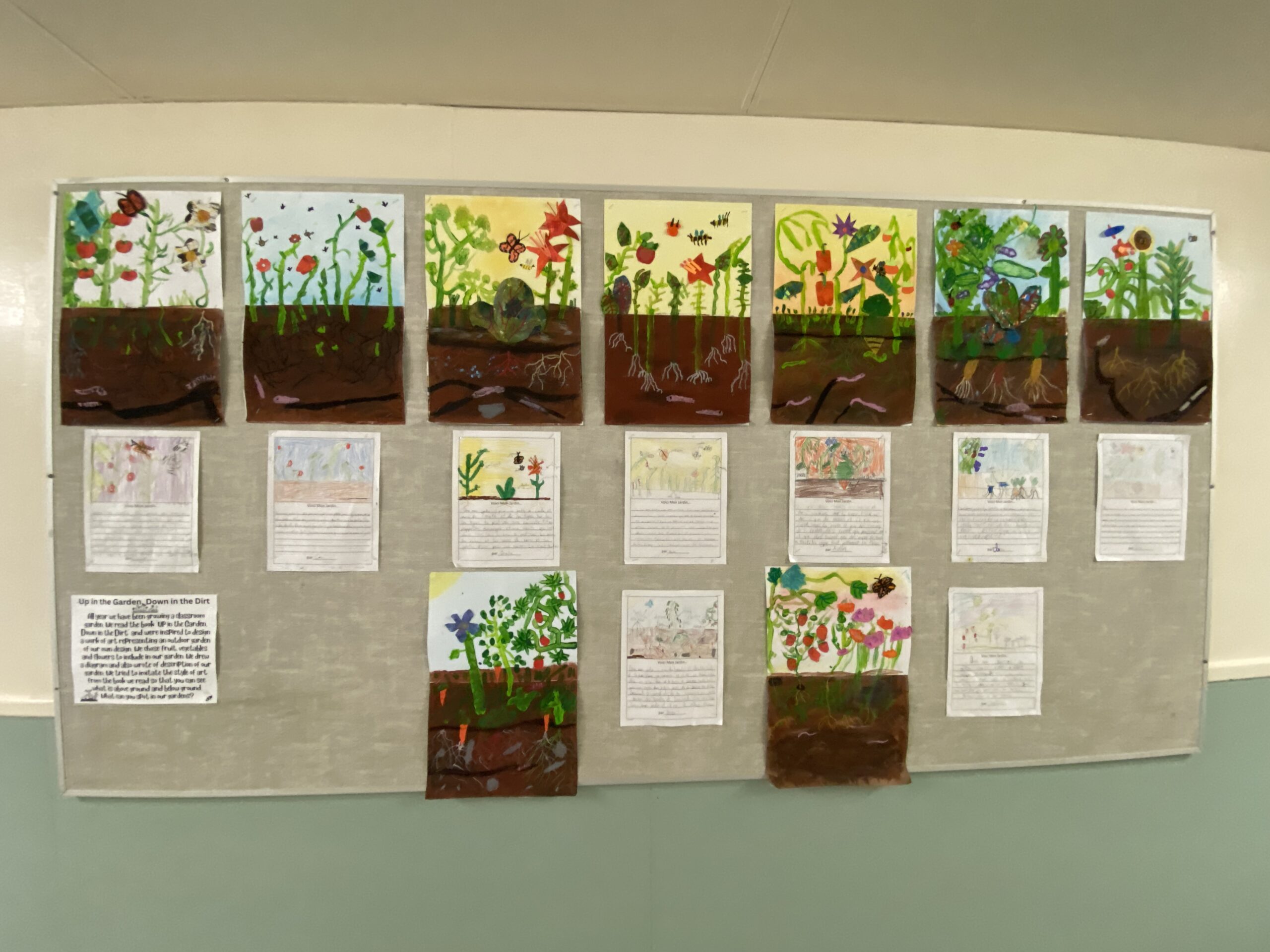
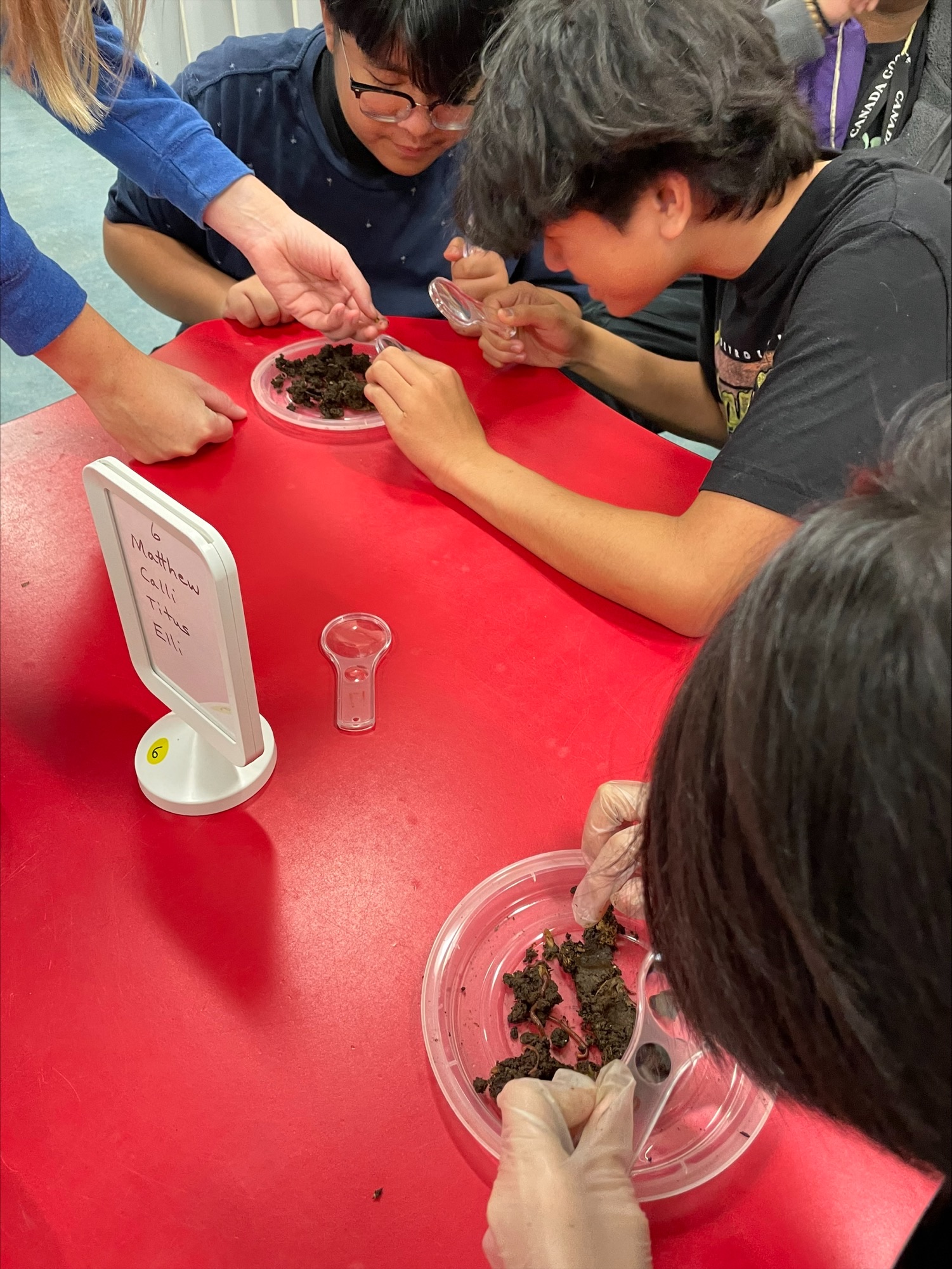
Why classroom gardens? Because they make agriculture real. Students don’t just learn about how food grows; they grow it themselves. Along the way, they explore soil health, sustainability, food security, and more. Teachers consistently report higher engagement across subjects.
These gardens are thriving in schools across Manitoba — from Thompson to Dauphin, Swan River to Ashern — and are now active in English, French, French Immersion and First Nations schools. And the momentum is still growing.


$195,000
donation from Manitoba Crop Alliance (2025)
20
new Little Green Thumbs gardens placed in schools
40
new Little Green Sprouts kits placed in schools
Little Green Thumbs:
Gardens:130 Students reached:8,961
Teachers reached:131

Little Green Sprouts:
Gardens: 94 Students reached: 2,566
Teachers reached: 102
Garden educator training and workshops:
New Little Green Sprouts educators trained: 40
New Little Green Thumbs educators trained: 28
Little Green Thumbs Educator PD Workshop
(new and returning teachers): 51
Amazing Agriculture
Adventure:
Transforming
Food Literacy
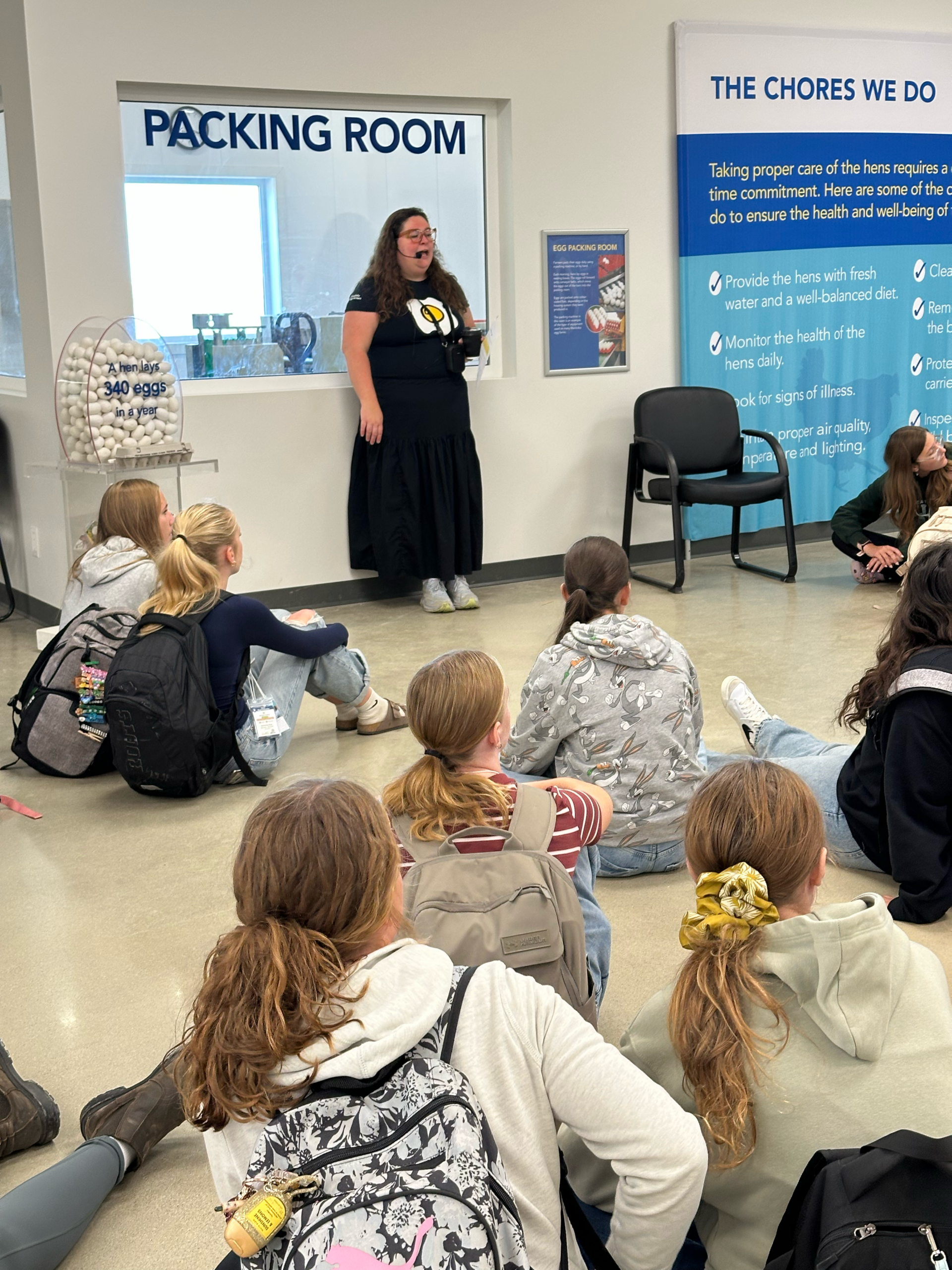
In September, hundreds of Manitoba students
stepped onto a working research farm and left
with a new understanding of where their food
comes from and who makes it possible.
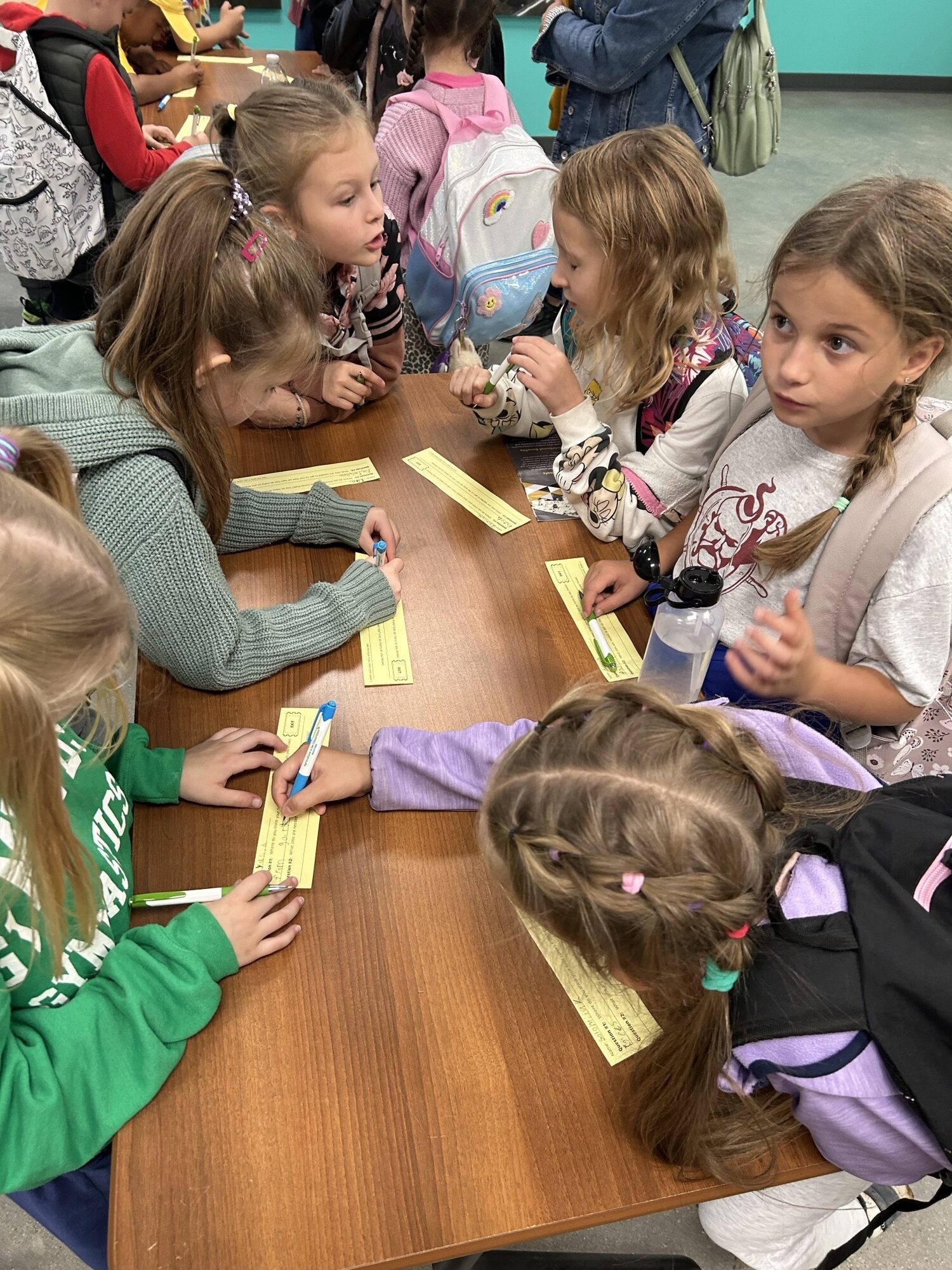
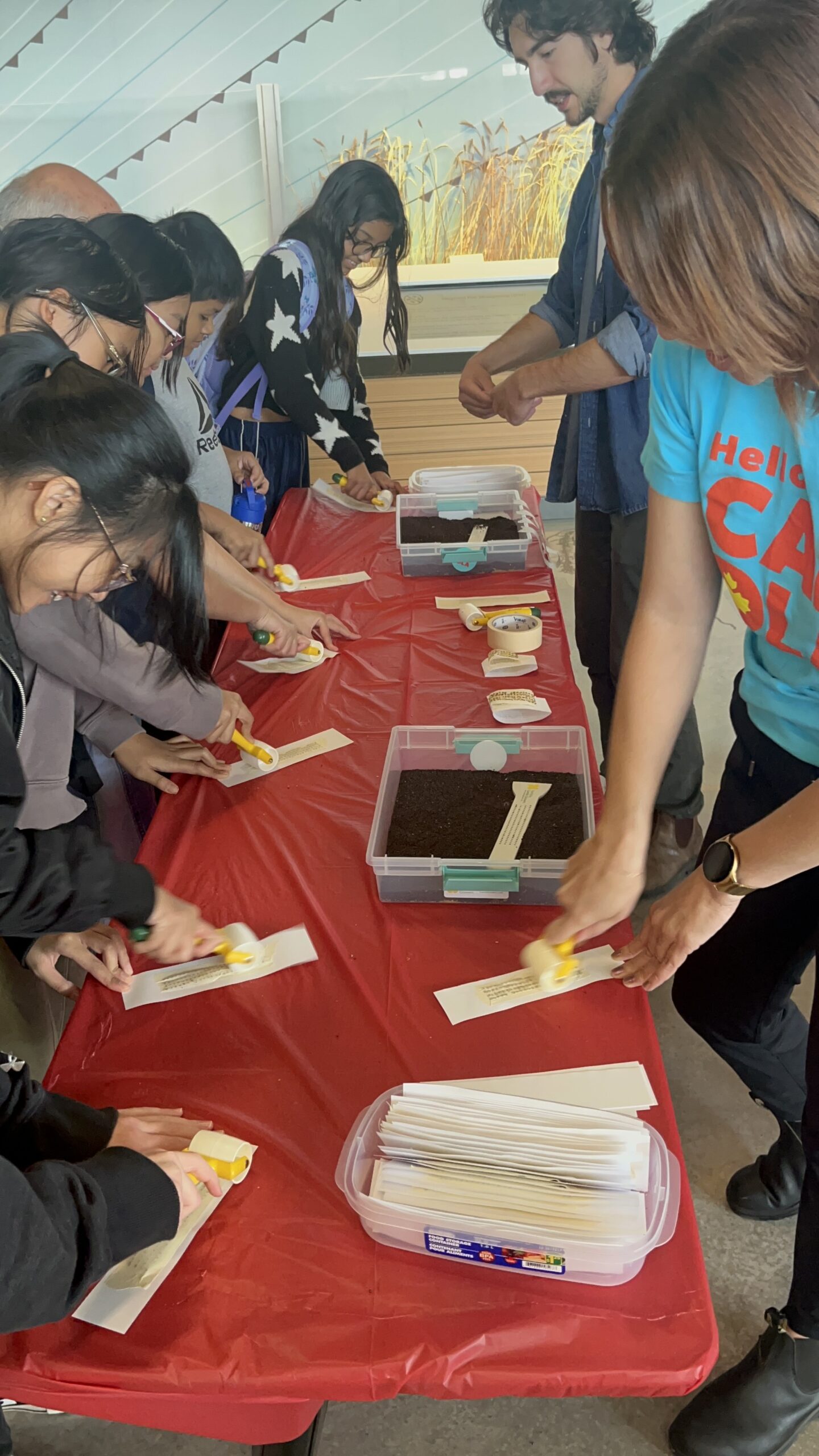
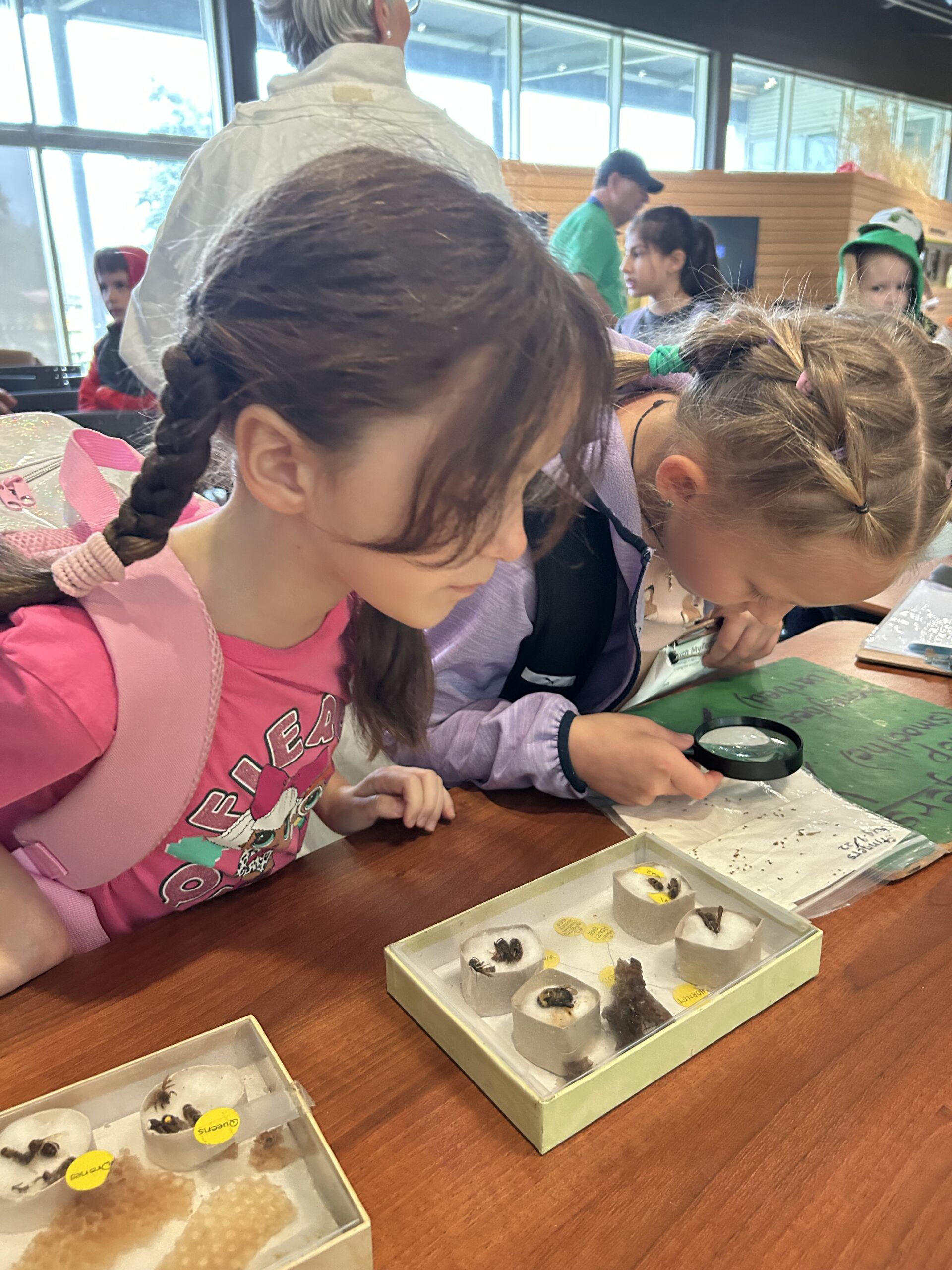
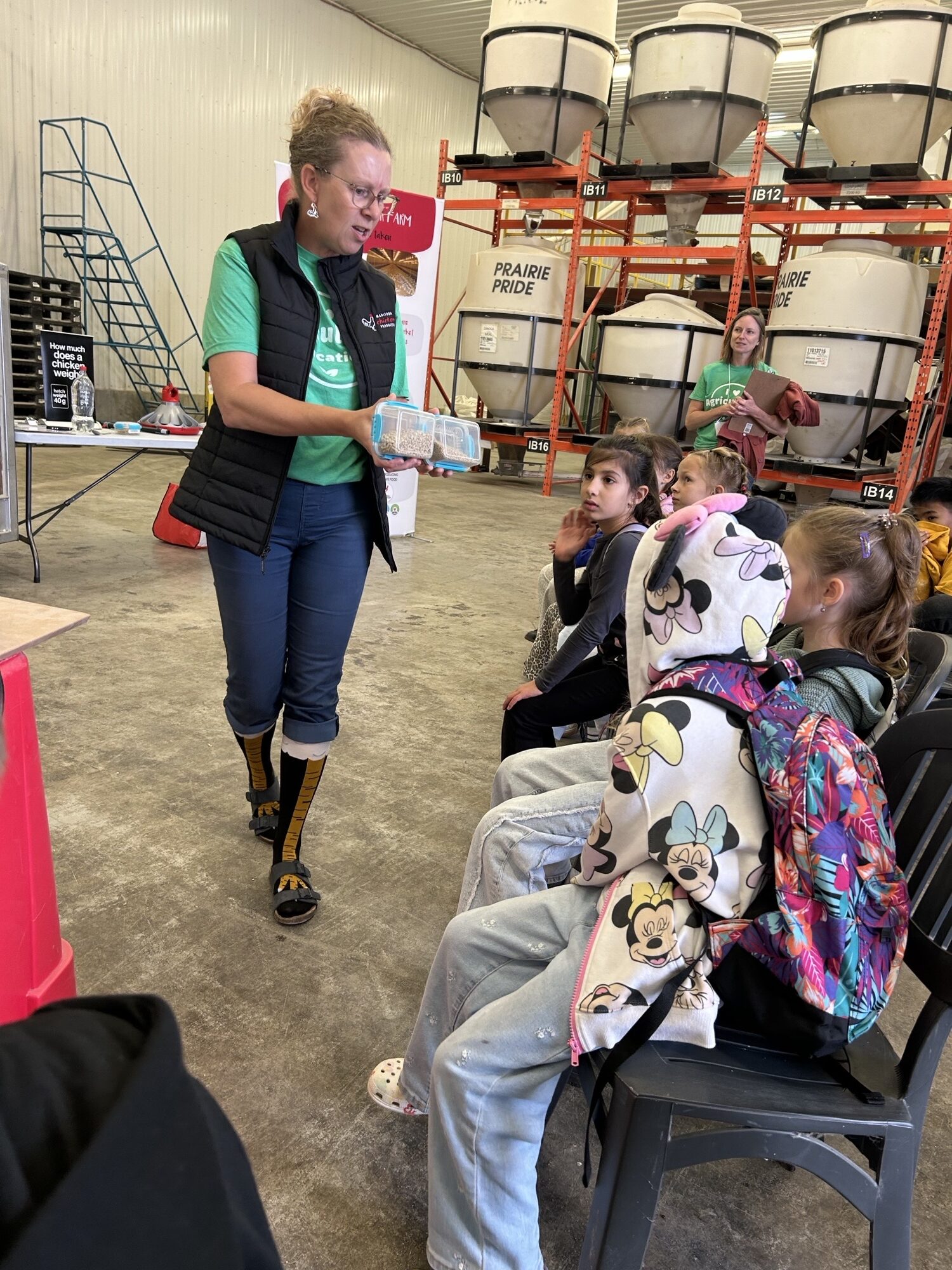
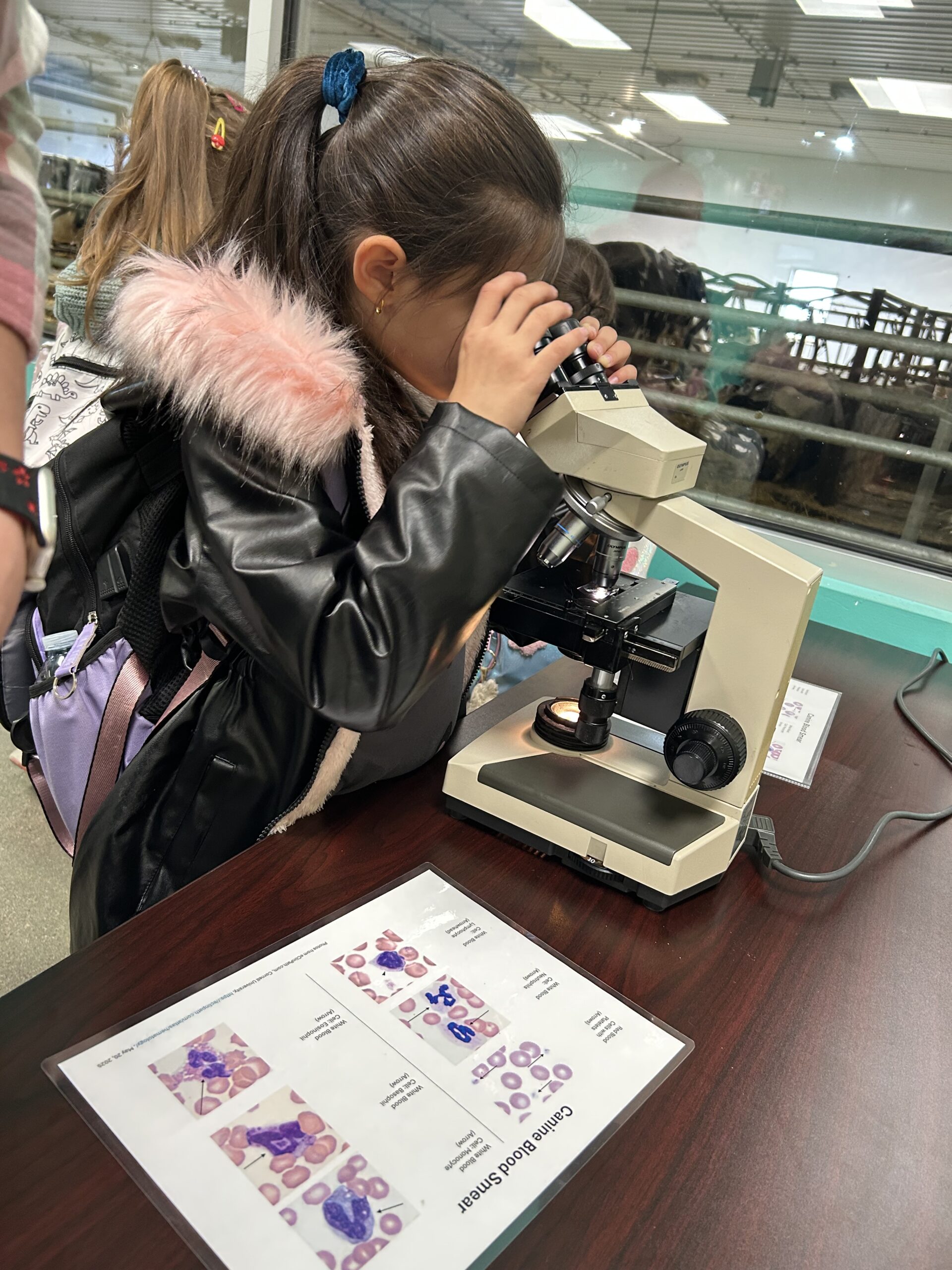
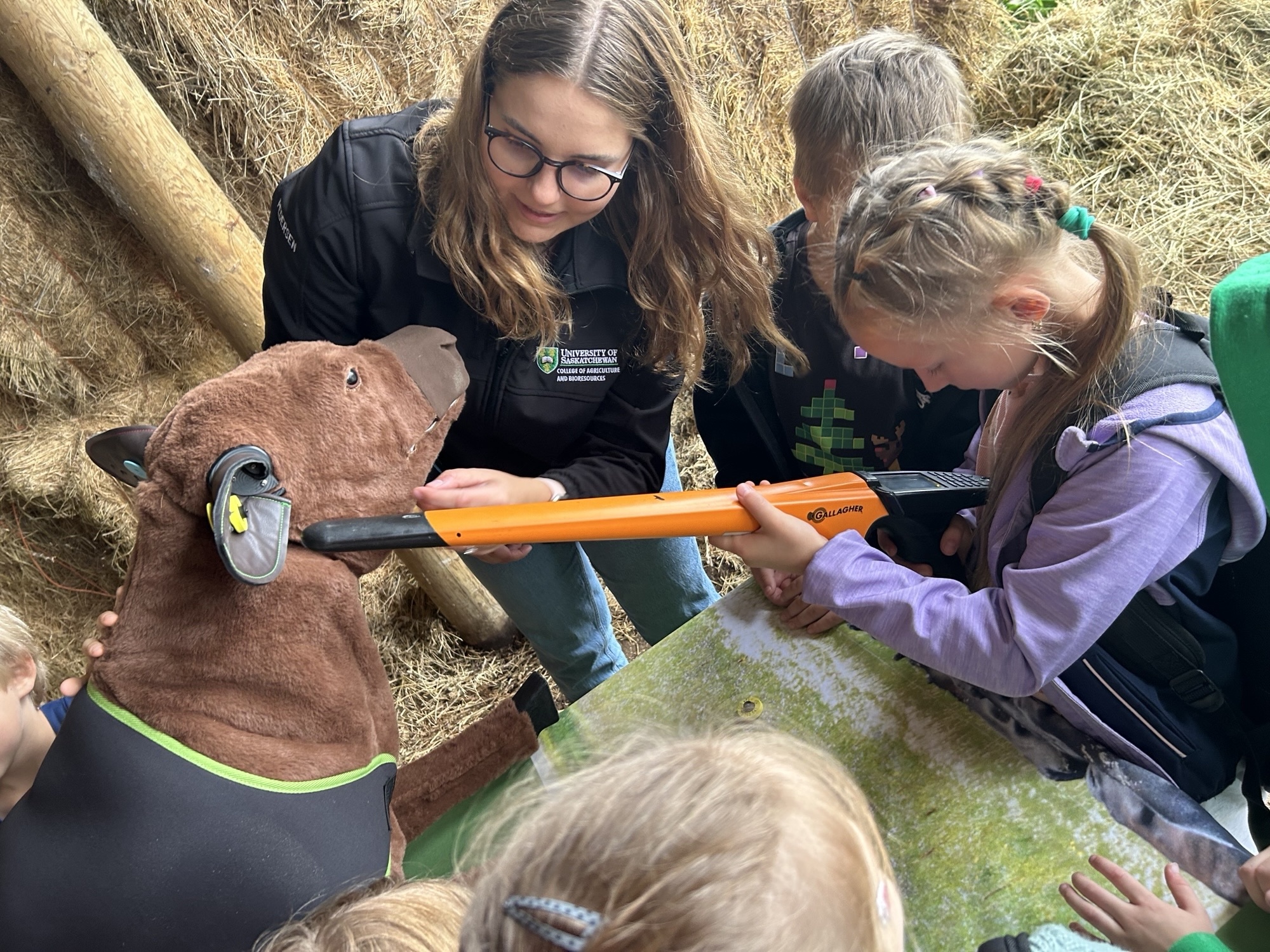
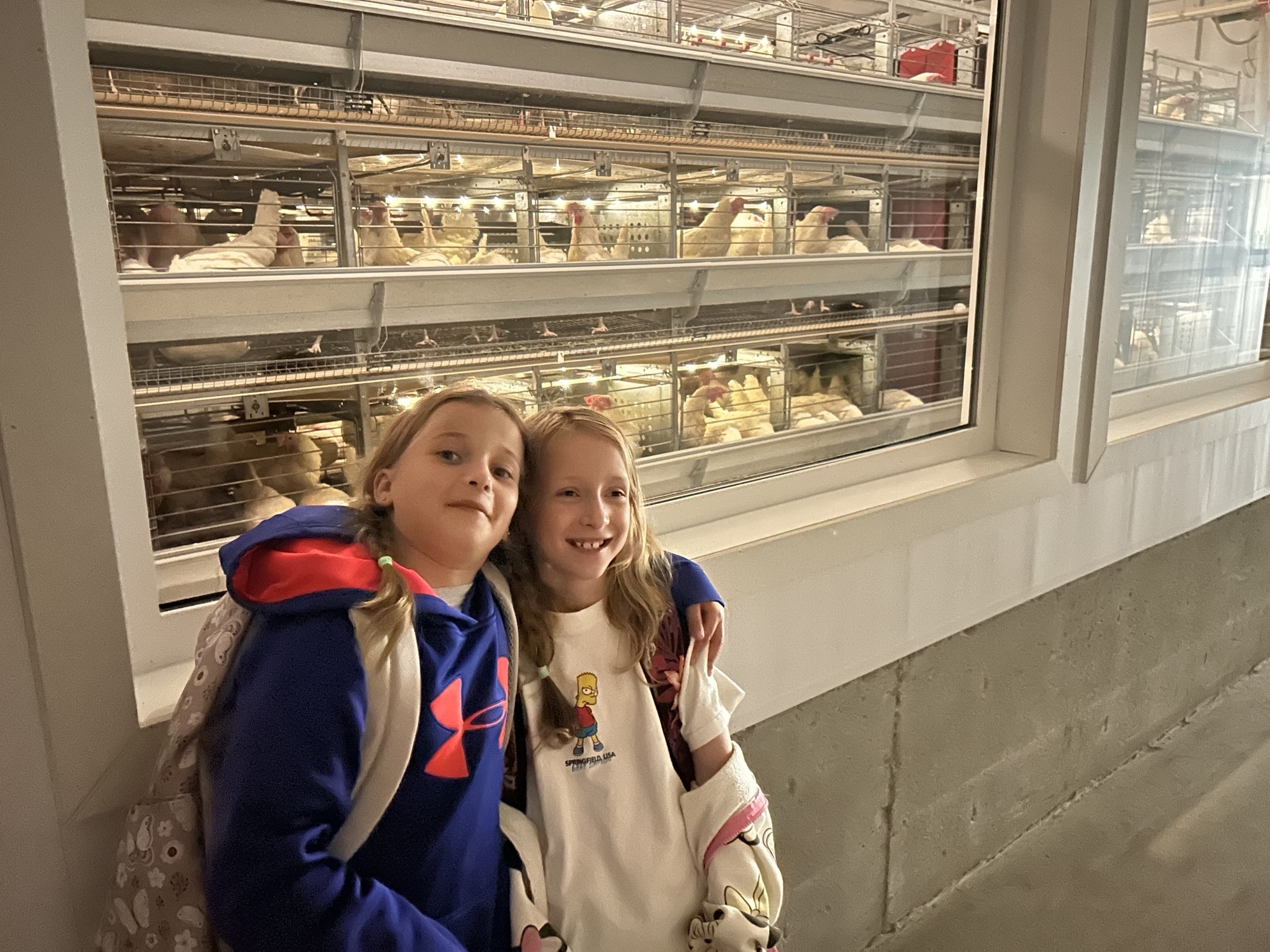
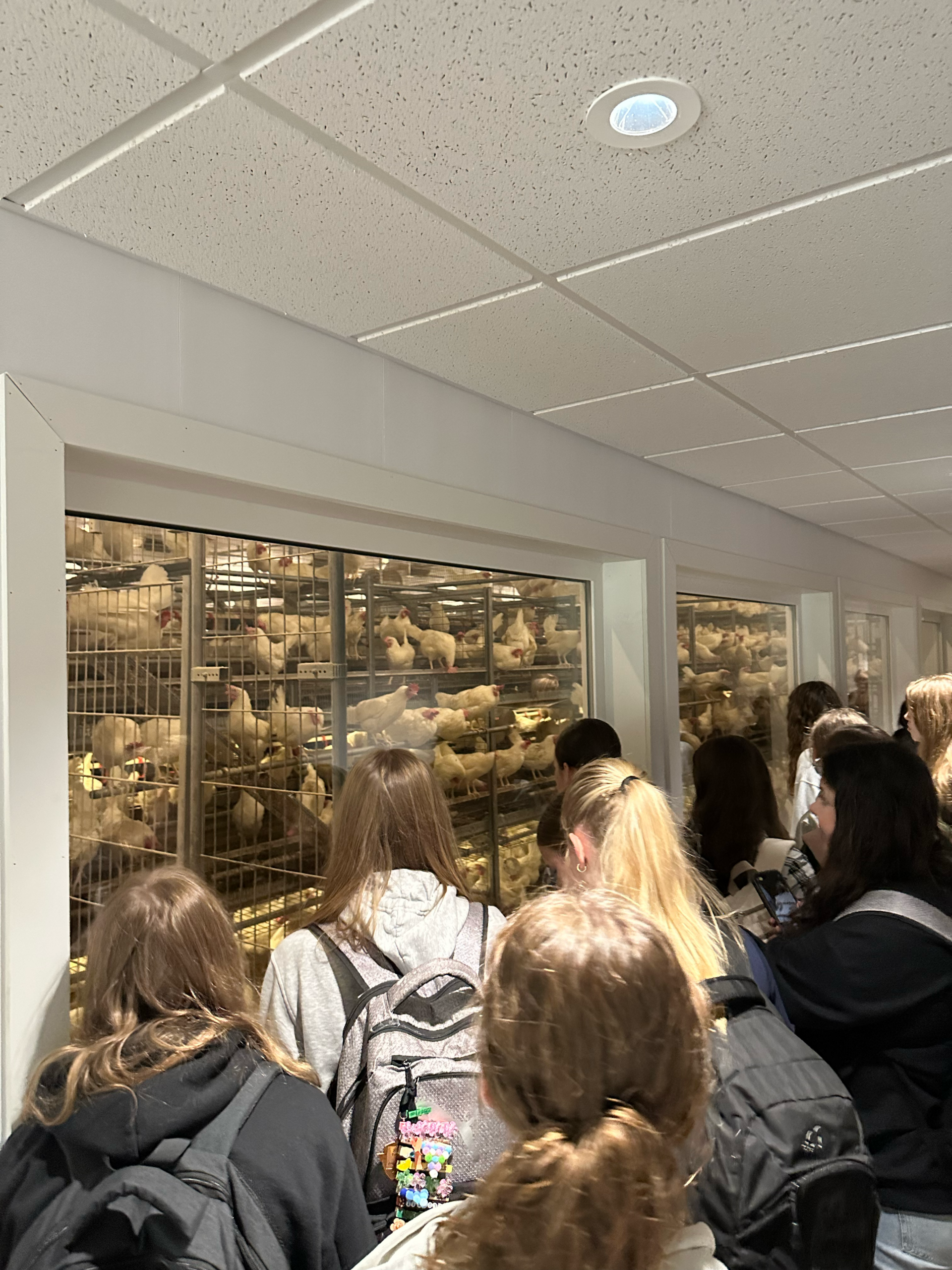
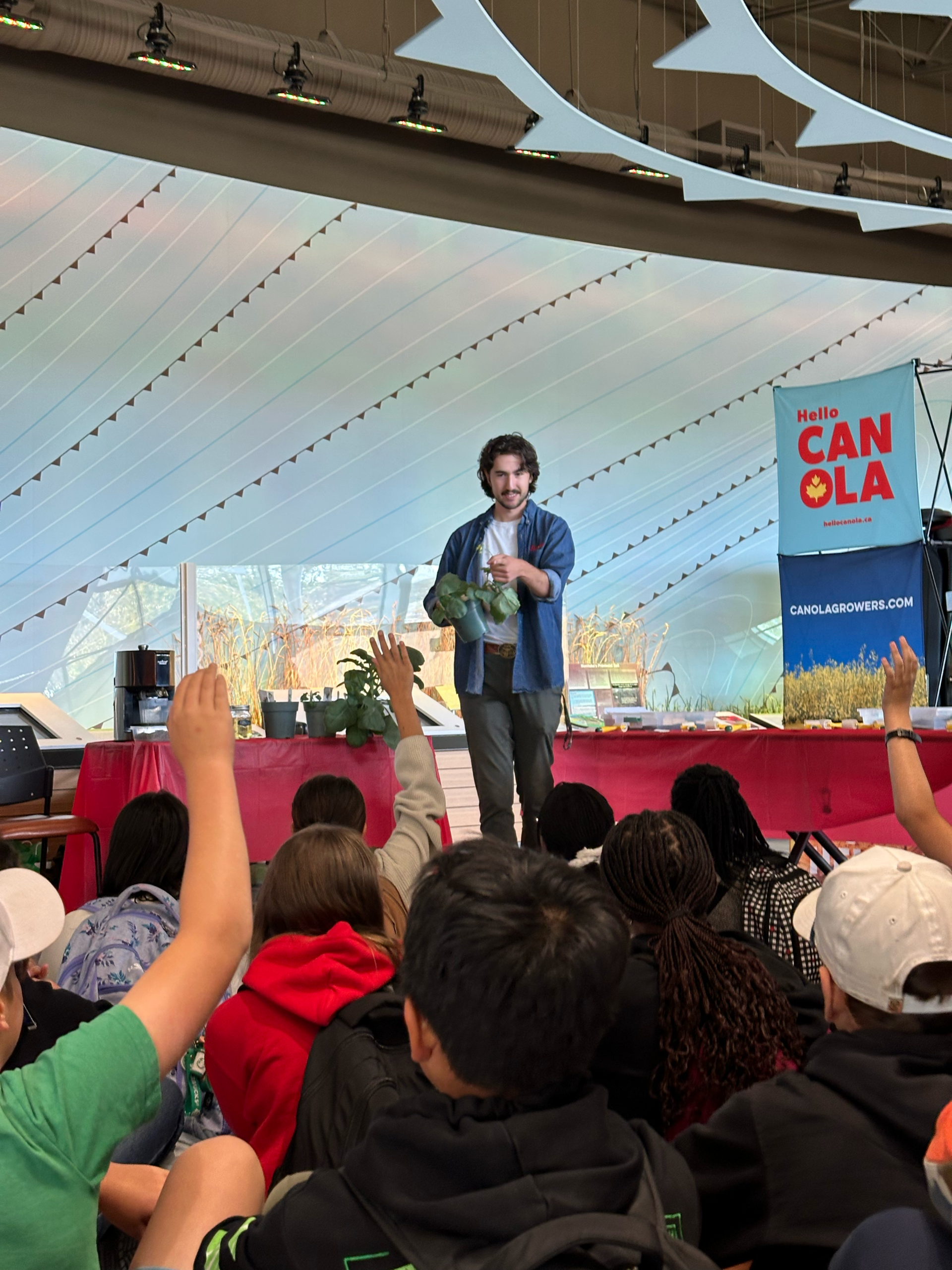
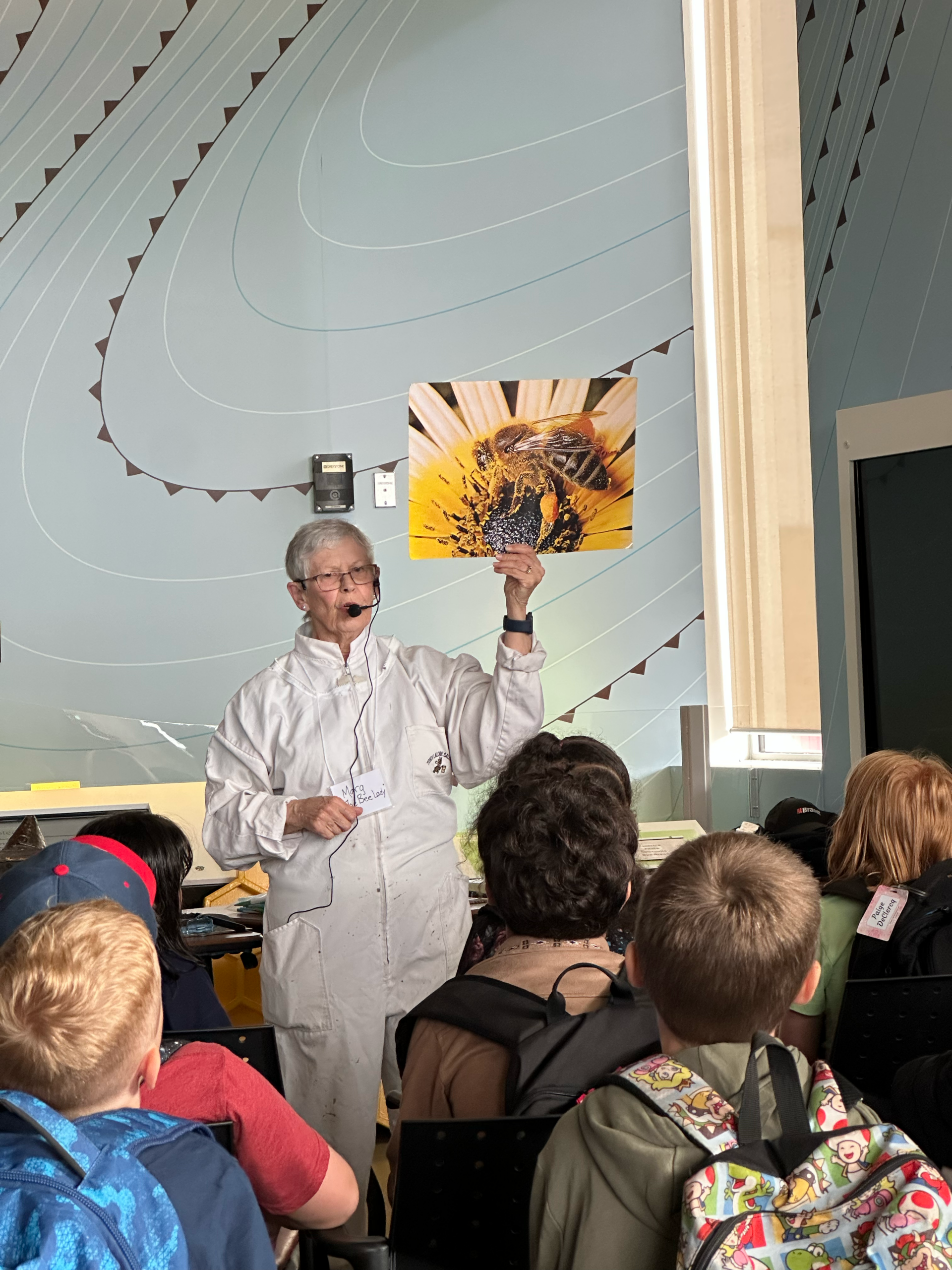
AITC-M’s Amazing Agriculture Adventure (AAA) is a hands-on, curriculum-linked field experience that brings learning to life at the Bruce D. Campbell Farm & Food Discovery Centre. In 2025, AAA leaned even further
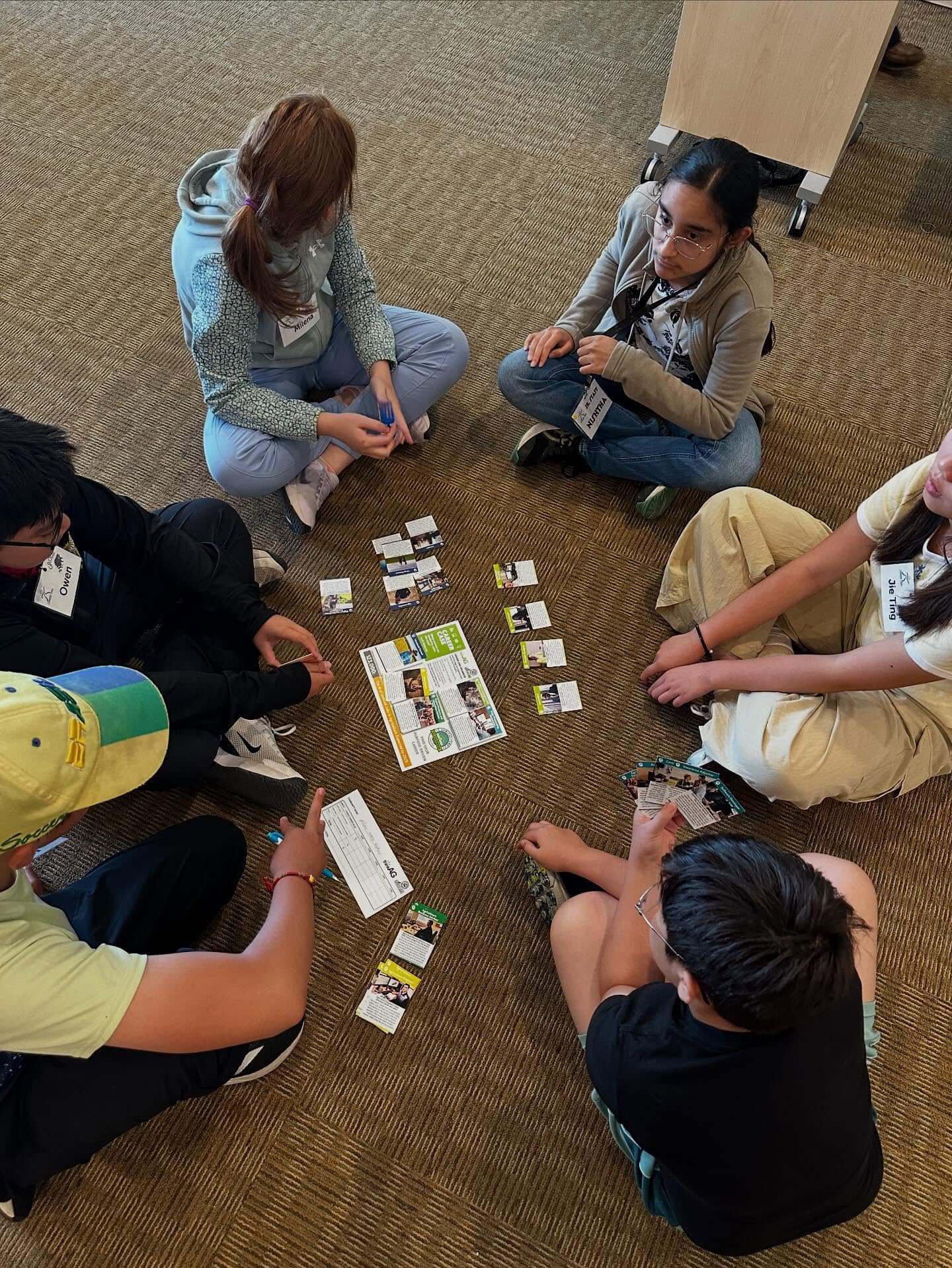
into career exploration and ag technology. High school students tackled Career Case Scenarios that linked
what they saw on-site to real roles, decisions, and skills
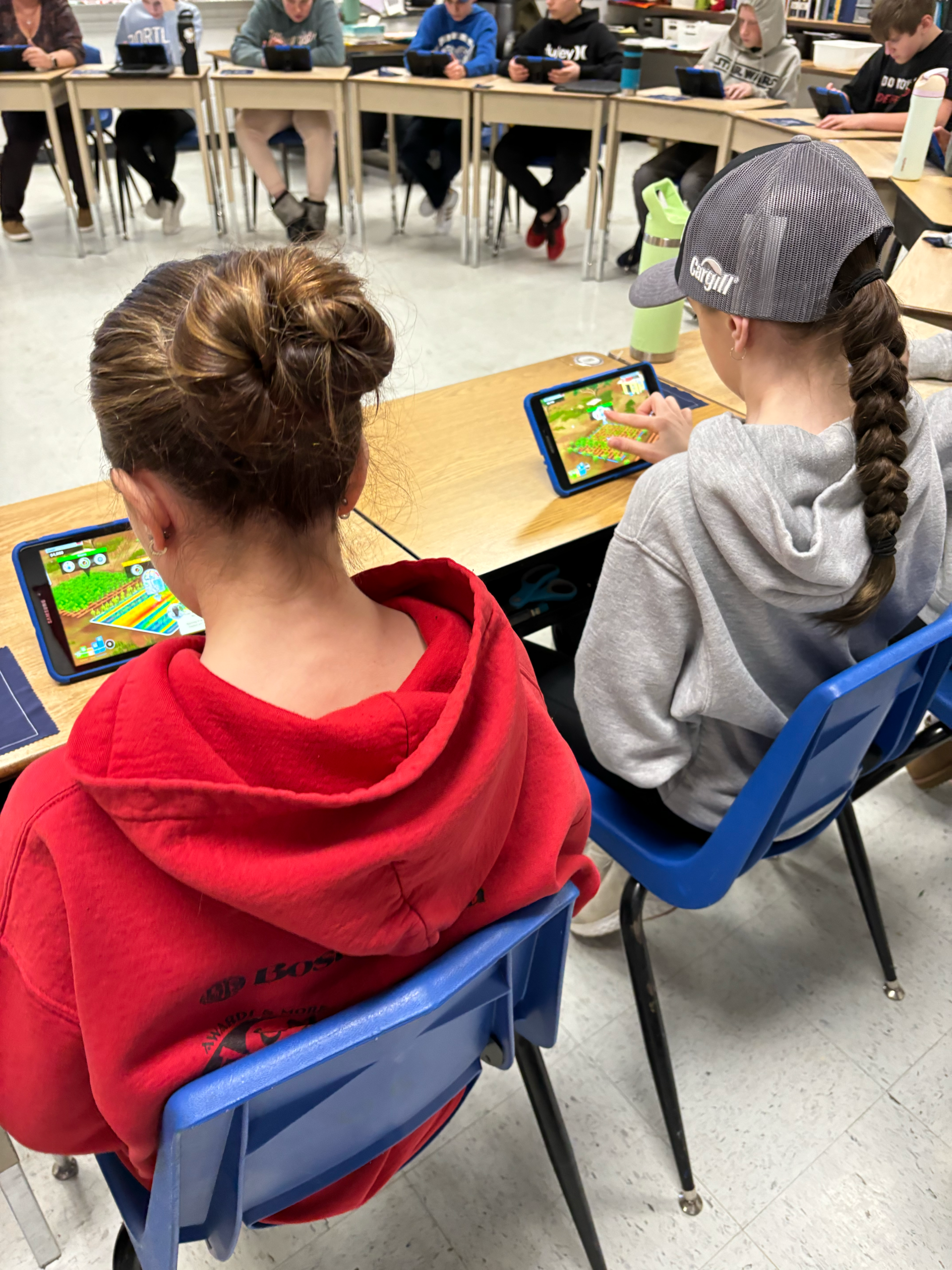
in the agri-food sector. A TELUS-supported Digital
Ag theme introduced ISpy with My Technical Eye,
a classroom activity designed to sharpen tech
awareness before and after the trip.
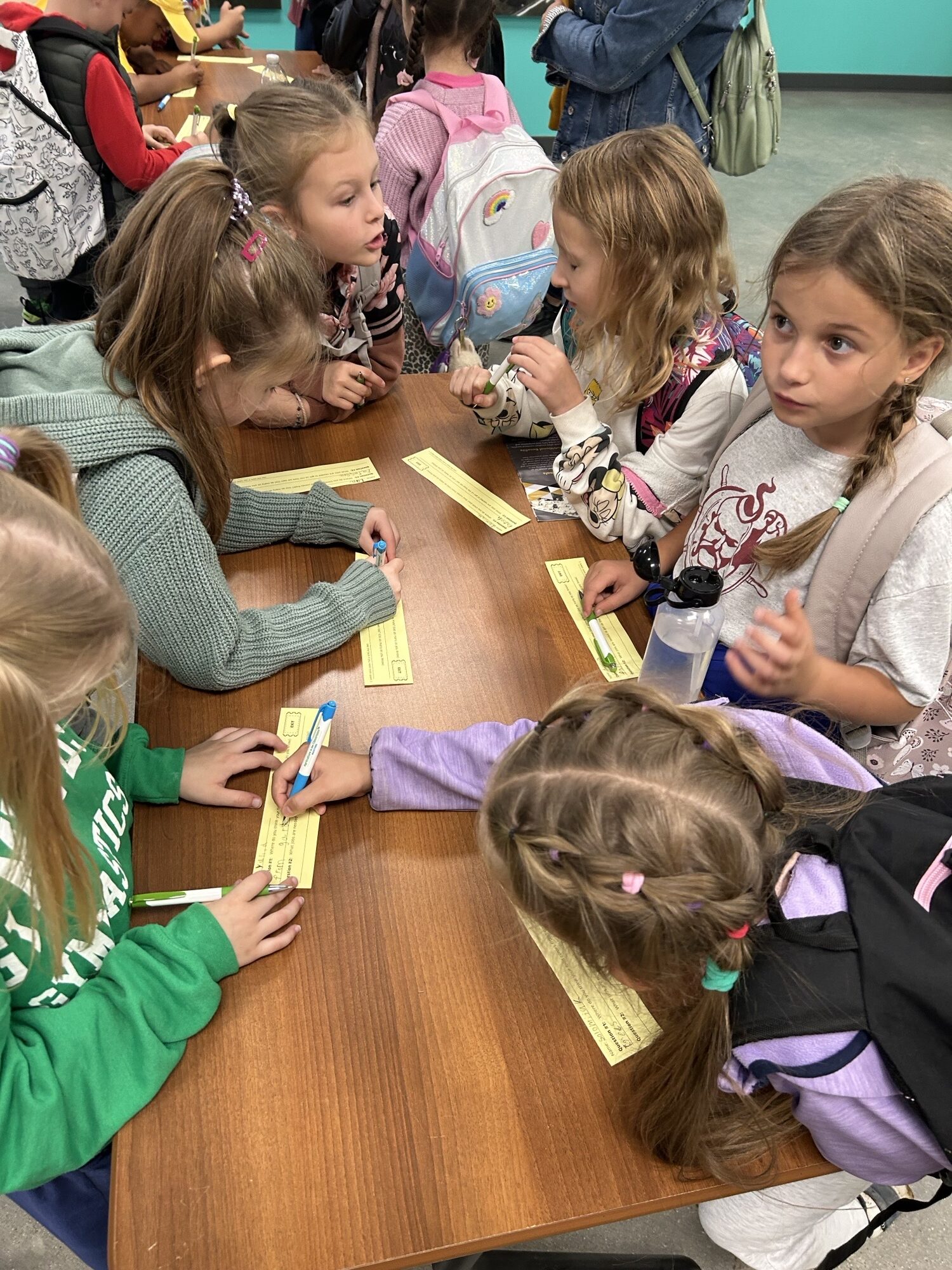
And it worked. Student surveys before and after
the visit showed a dramatic shift in food literacy:
- Before AAA: 68% said food comes from stores
- After AAA: 88% said food comes from farms
Students also connected the dots on careers in agriculture. Mentions of specific roles like truck driver, vet, or egg collector jumped from 20% to 64%.
AAA shows what happens when students experience agriculture firsthand: they start seeing it as essential, and maybe even part of their future.
Educator Feedback
- 100% said students gained a deeper understanding of agriculture and careers
- 90% said they were more likely to use AITC-M programs and resources
- 100% said they were likely or extremely likely to recommend AAA
"During our visit, one of my favourite moments happened at the Beef Station. When the students had the chance to use the RFID scanners, their faces lit up with excitement. One student said, 'I didn't know farmers used this kind of cool technology. This is like real science!' Moments like that showed how much the experience expanded their understanding of modern agriculture."
890 students from 41 classrooms
and 17schools (Grades 2-6 and 10-12)
36 educators participated,
including15 new educators
99 volunteers supported delivery
(57 industry station volunteers; 42 class host/location attendant volunteers)
720
volunteer hours contributed

10
stations
(including new additions in 2025: Canola and Sheep)
42 classrooms from 25 schools
on the 2026 waitlist
42
classrooms from
25
schools on the 2026 waitlist
Thank You, Partners
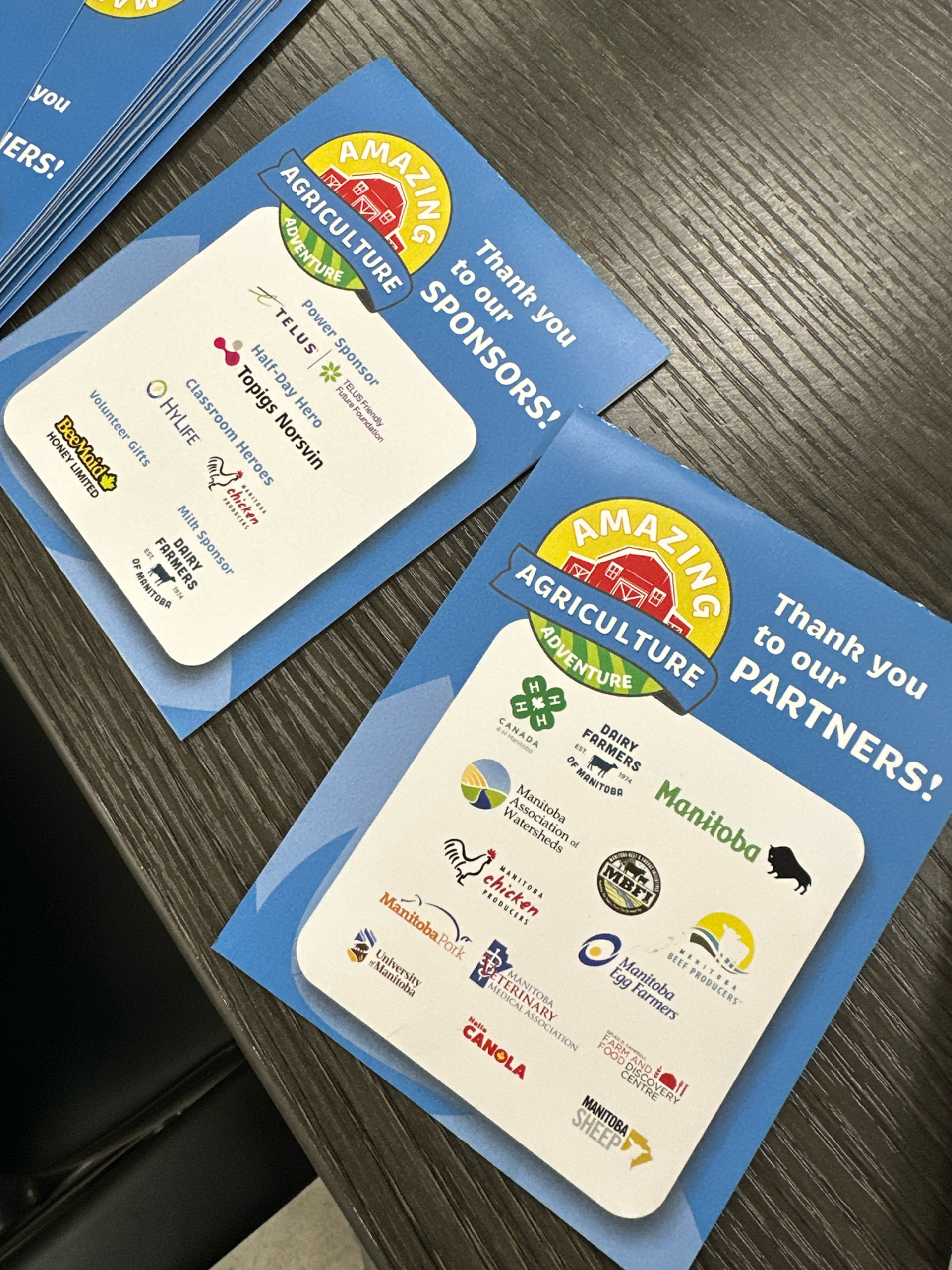
AAA was delivered with partner investment and volunteer support. Thank you to TELUS, Topigs Norsvin, Manitoba Chicken Producers, HyLife, Dairy Farmers (in-kind milk), BeeMaid Honey (volunteer gift sponsor), and the many industry and education supporters who contributed time and expertise to bring AAA to life for students.
Canadian Agriculture Literacy Month (CALM): Agriculture in Every Bite
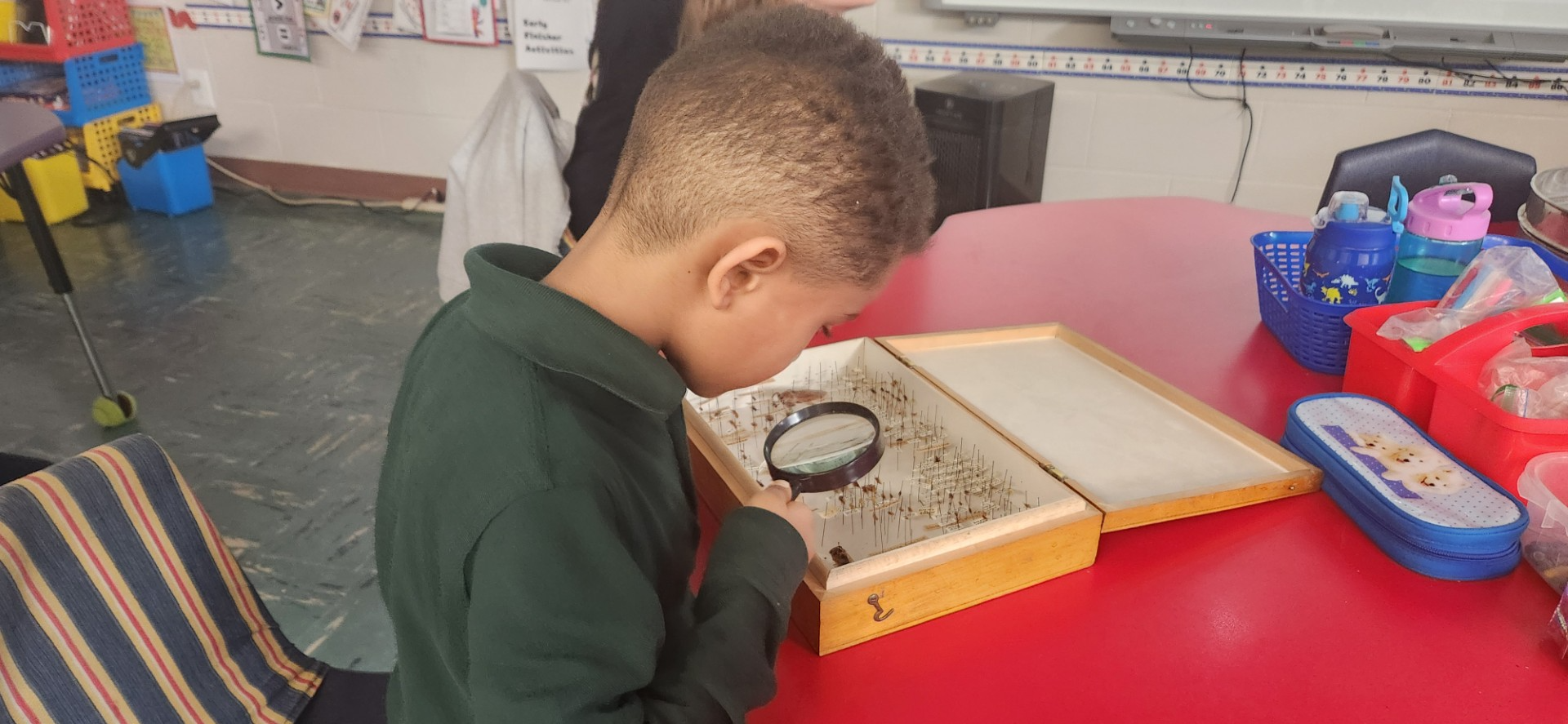
From crackers to carrots, students across Manitoba spent March tracing their favourite foods back to the farms and people who make them possible.
Through Canadian Agriculture Literacy Month (CALM), Grade 2–4 students met real farmers and agriculture professionals who brought food systems to life with classroom visits, storybooks, and hands-on activities. CALM remains one of the most powerful ways AITC-M builds agriculture literacy at scale: rooted in strong partnerships, grounded in curriculum, and powered
by volunteers.
In 2025, a new classroom activity, What’s in Your Lunchbox?, helped students connect everyday
foods to the crops, animals, and people behind
them. The result? Practical, memorable learning
that makes agriculture personal, not abstract.

Each class also received All the Farms You Would Know,
a storybook designed to keep the learning going long after the visit and to reflect CALM’s core values: that agriculture education should be accessible, balanced,
and current. In other words: for every classroom,
every student, and every corner of the province.
Agriculture isn’t somewhere else. It’s right here:
on plates, in communities, and in the stories students carry home.
6,475
students participated
243
teachers registered
from163schools
134 industry volunteers
visited 309classrooms

Thank You, Partners
Agriculture in the Classroom Canada, Cargill
Follow the Farmers:
Live from the Farm
When students have never set foot on a farm, it’s harder to understand how food is produced, and harder to build trust in the people who grow it.
That’s where Follow the Farmers comes in:
by bringing the farm to the classroom.
Now in its fourth season, this curriculum-linked virtual
field trip series connected Grade 3–5 students directly with Manitoba producers through live, interactive tours and real-time Q&As. Students followed food production step by step and spoke with farmers in real time,
turning a lesson into a conversation.
This season featured three powerful Manitoba farm stories: bison, corn and honeybees. Each was paired
with ready-to-go classroom activities, including the
crowd favourite, Skittle Bee Dance, which helped students explore how honeybees communicate.

The live Q&A makes all the difference. Students don’t
just watch; they ask, test assumptions, and have real conversations with real farmers. It’s why Follow the Farmers continues to grow: it’s grounded in trusted content, strong farm and partner support, and the
simple power of letting students talk directly to the
people who produce their food.

2,818
Students
120
Classrooms
Bison Tour: Total views: 1,043
26,075 student views
Corn Tour: Total views: 653
16,325 student views
Bees Tour: Total views:597
14,925 student views
* Student view totals estimated based on average classroom size.

Follow the Farmer Season 4
is made possible thanks to
Agrihub
Seed Survivor:
Learning on Wheels
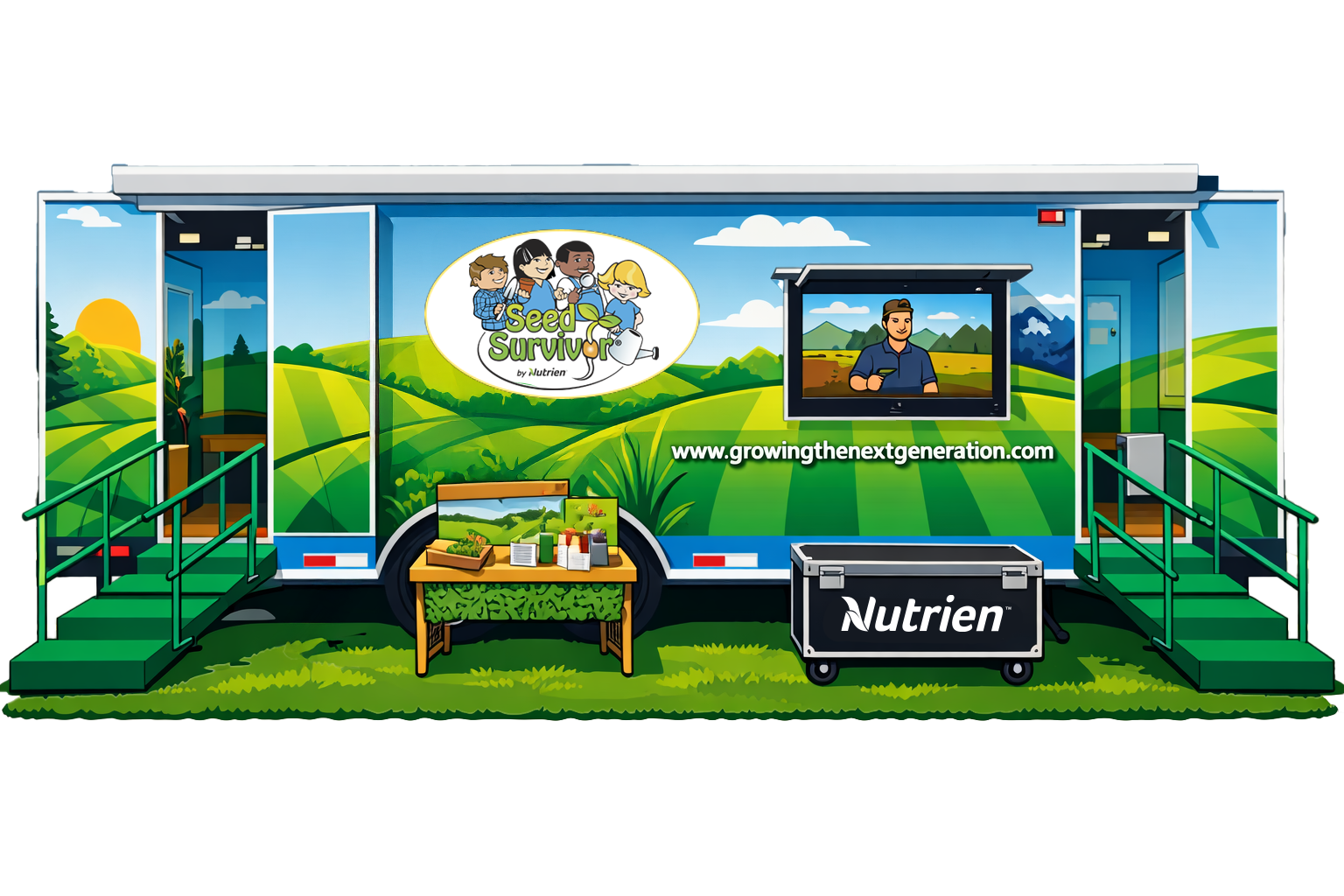
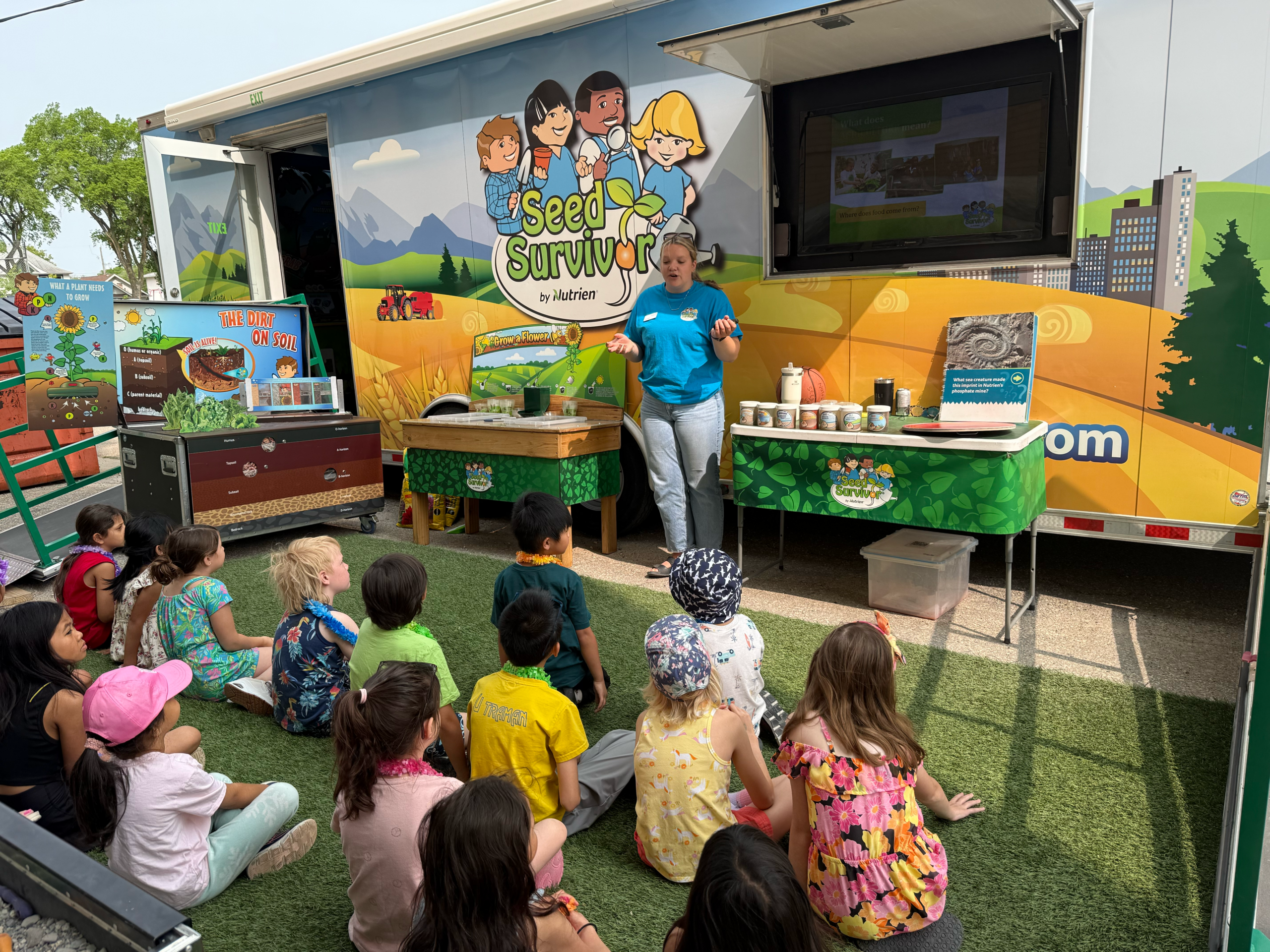
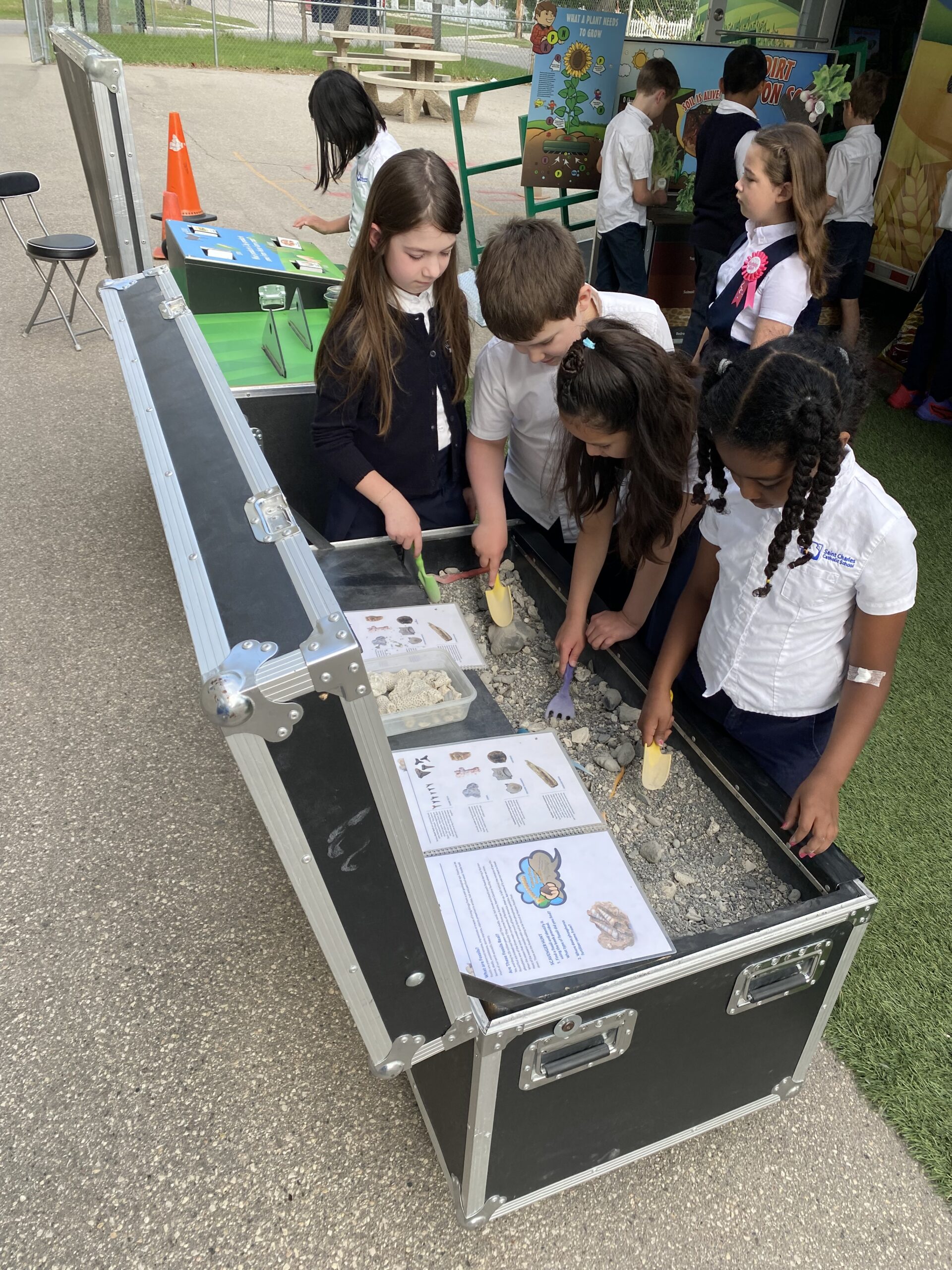
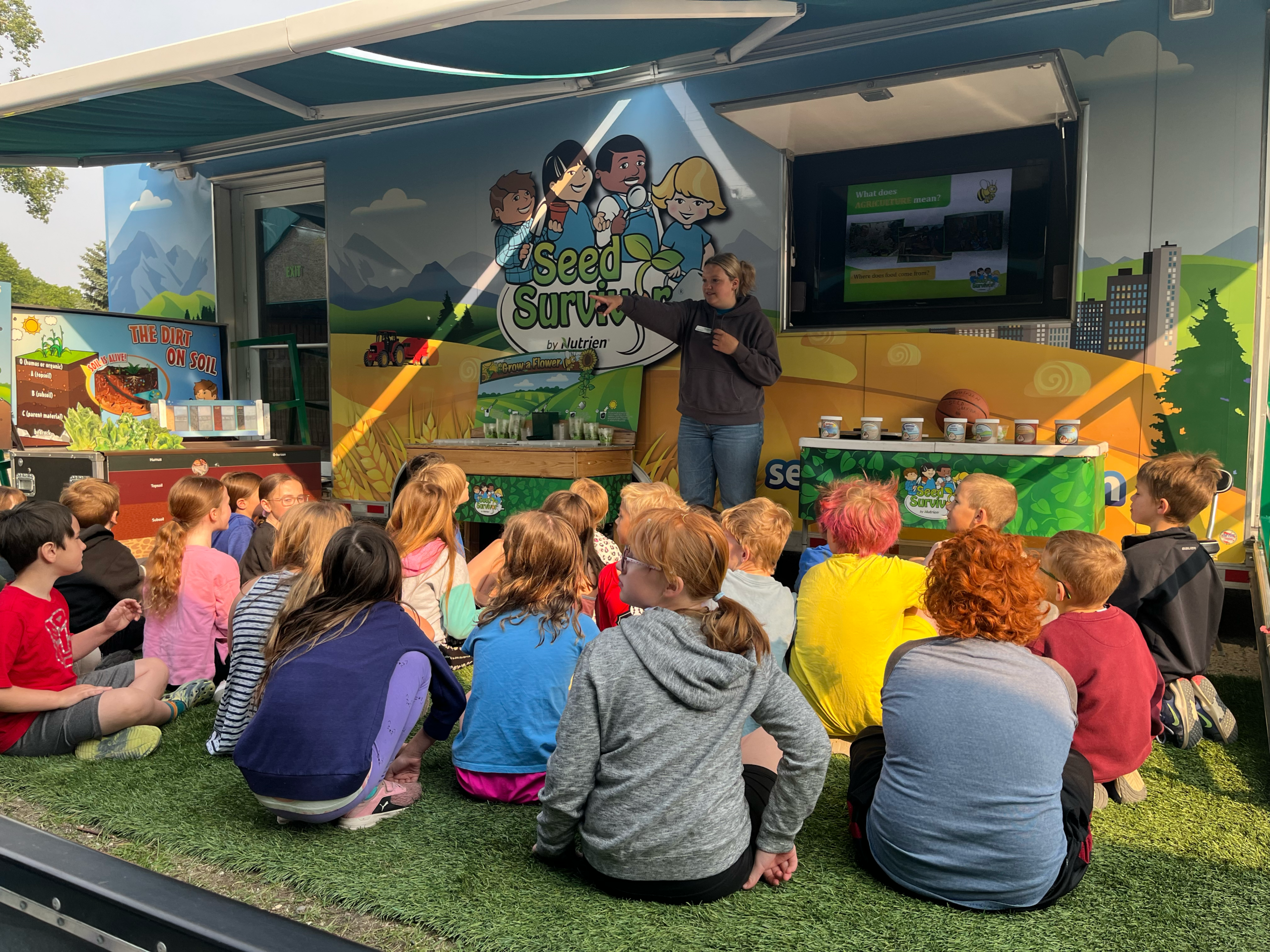
Not every school can hop on a bus to a farm. In 2025, Seed Survivor brought the farm experience to them.
Powered by Nutrien and delivered by AITC-M, this mobile classroom hit the road to reach students in urban, rural, and remote communities, bringing hands-on agriculture learning straight to schoolyards across Manitoba.
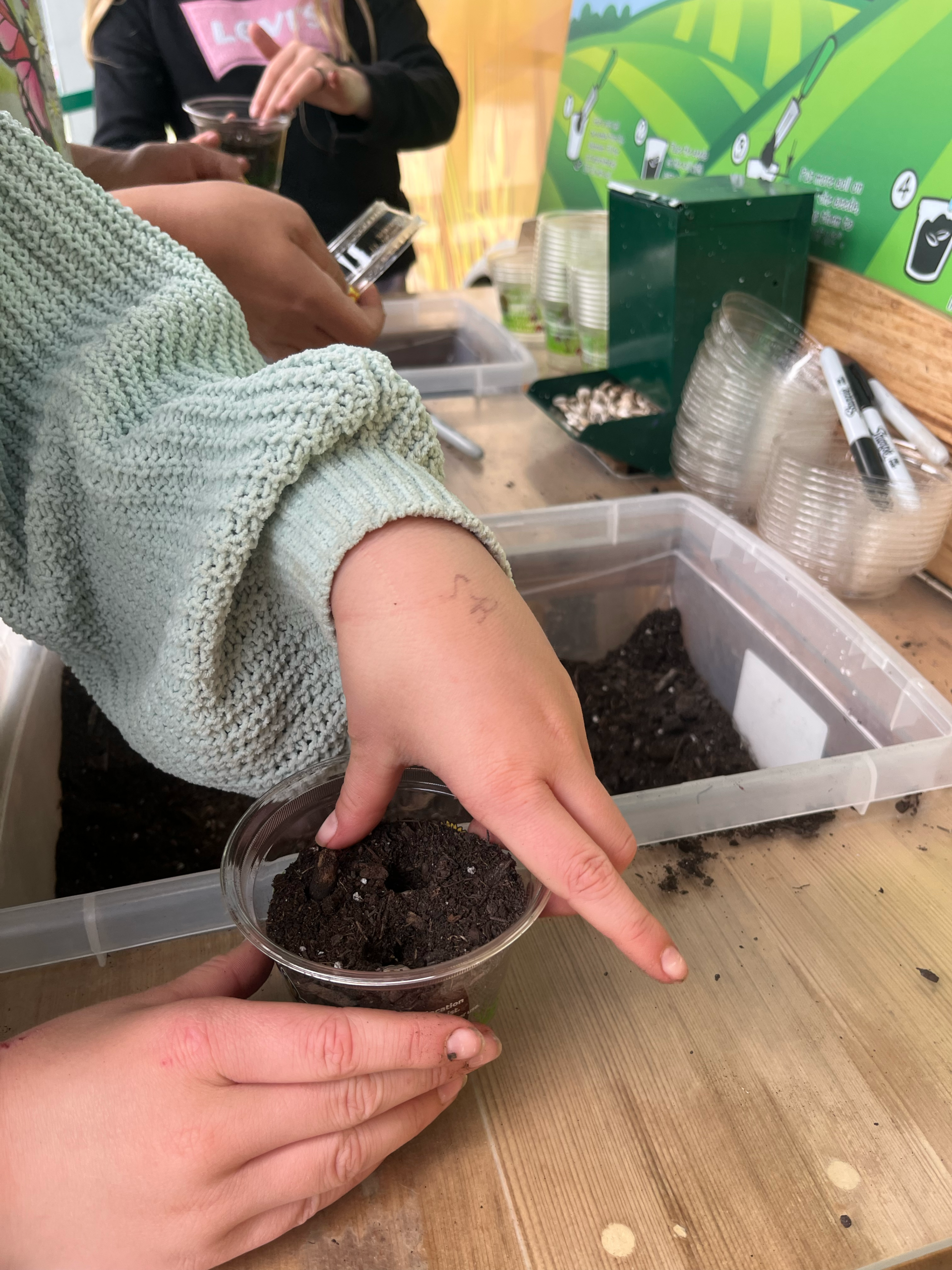
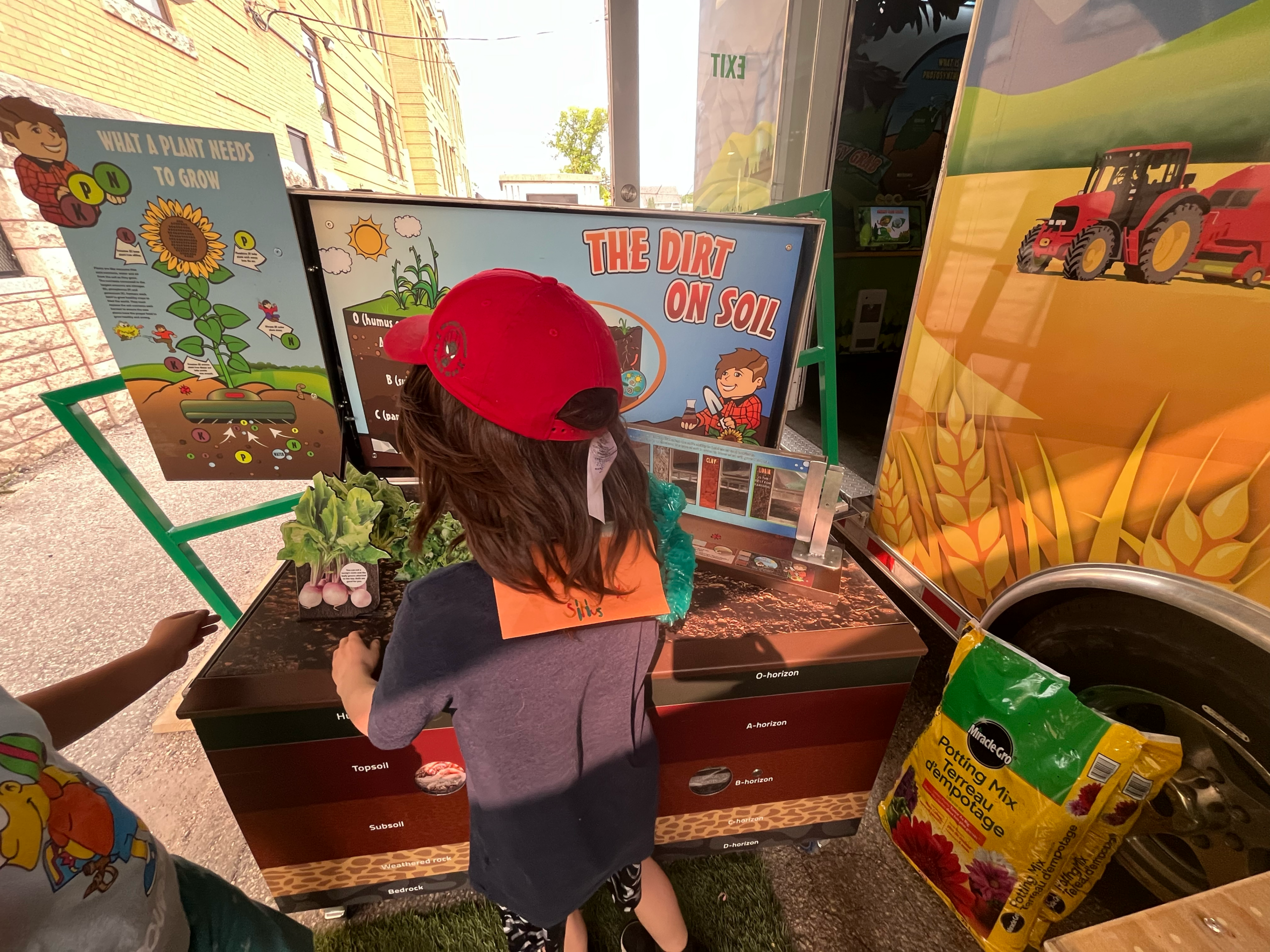
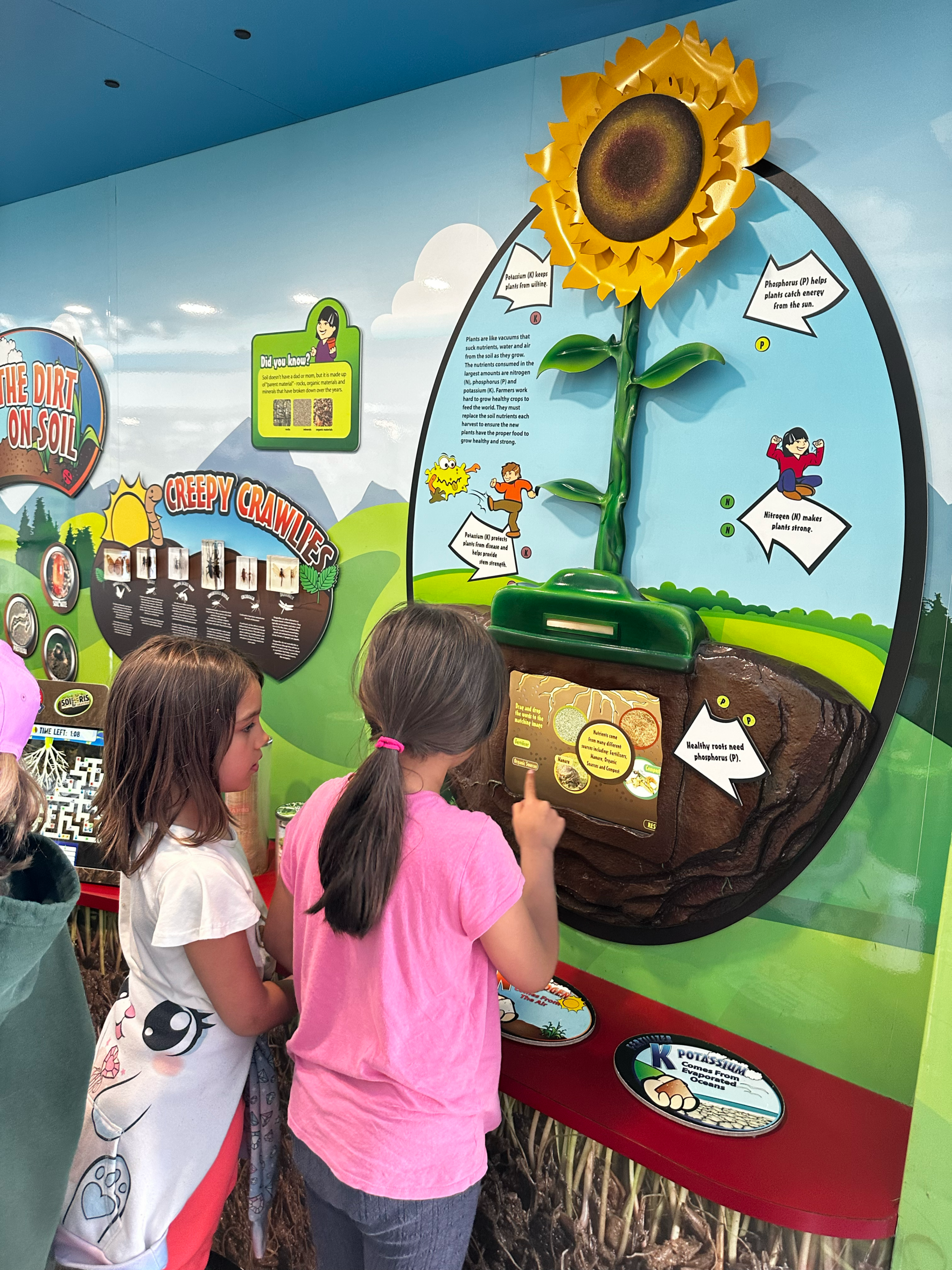
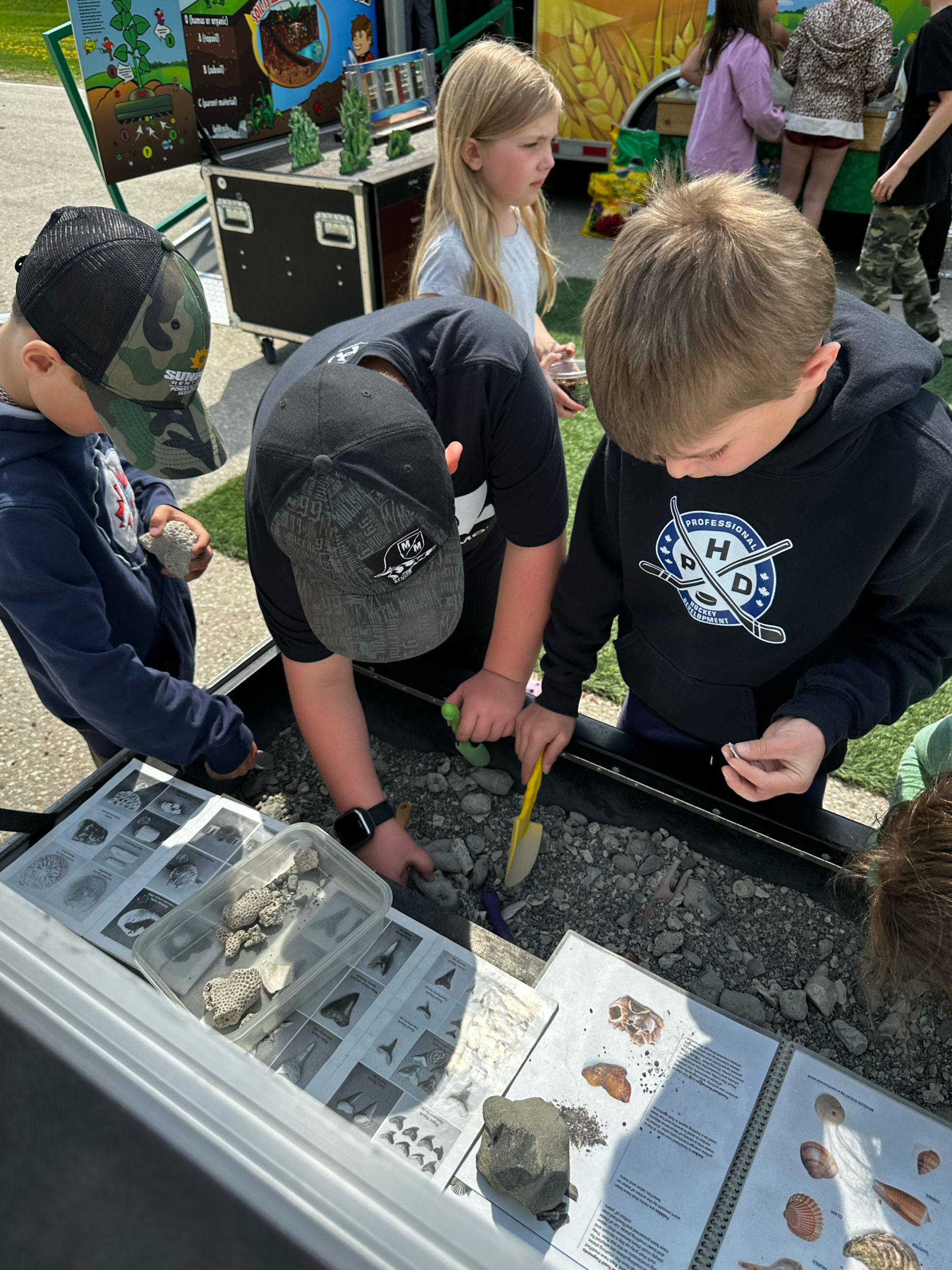
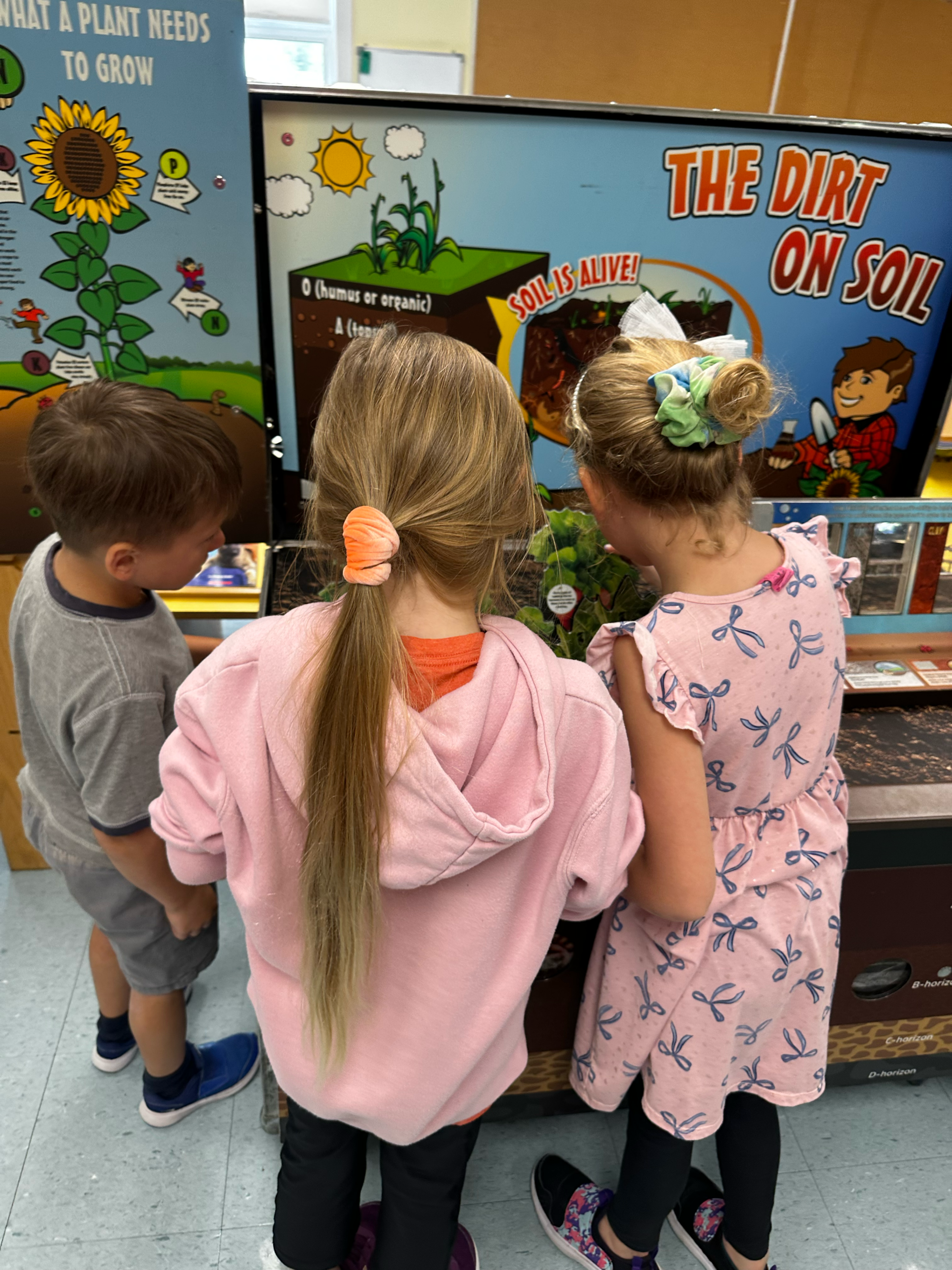
Inside Seed Survivor, students explored plant growth,
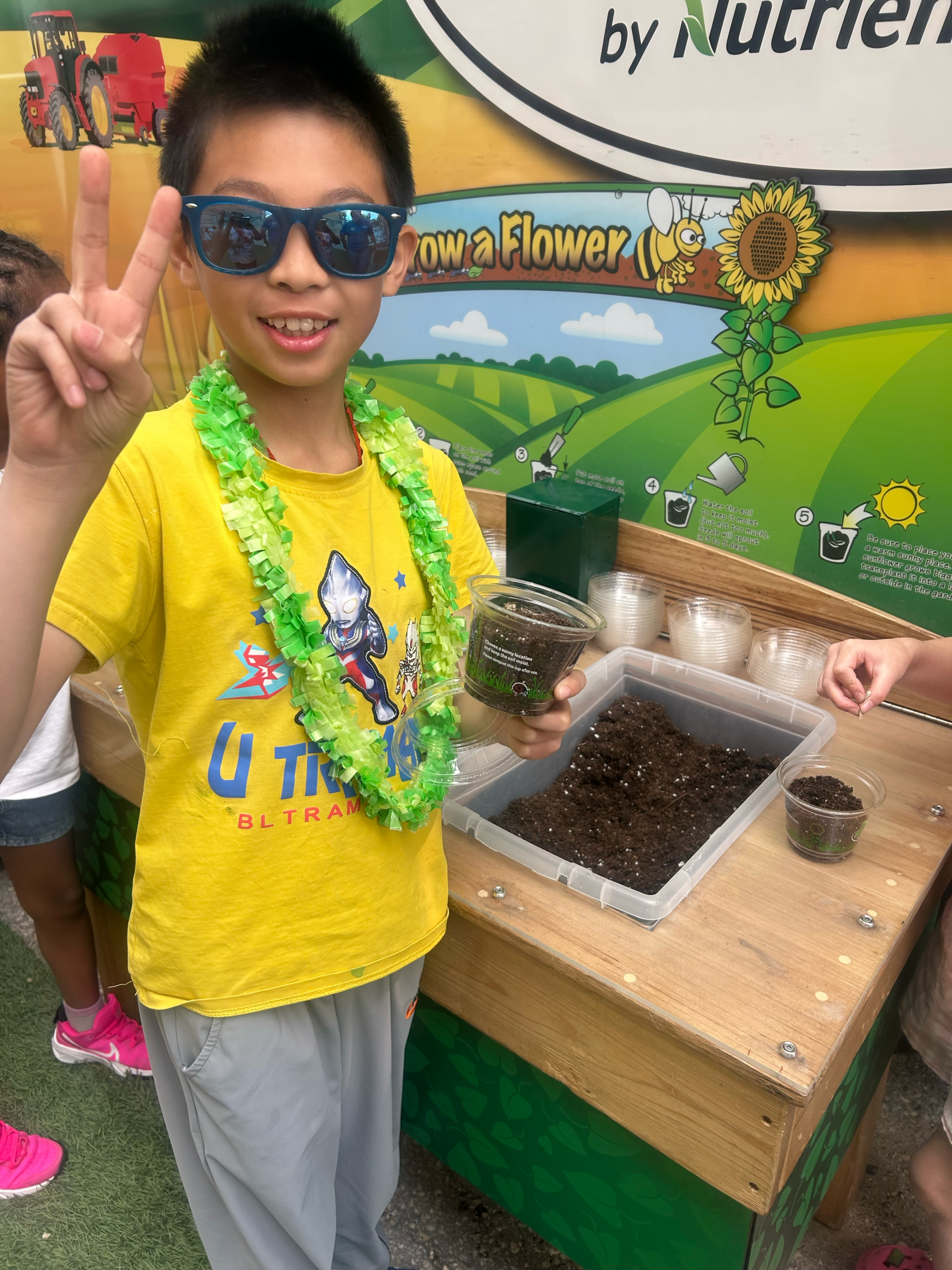
soil health, and food production through interactive games, digital exhibits, and activities that made learning stick. Every student also planted a sunflower seed
to take home.
This program is impact on wheels: backed by strong partner support and a proven model that makes food literacy more equitable by reaching students who
might otherwise miss out on hands-on ag experiences.
Big thanks to our 2025 summer students, Nick and
Nicky, for helping deliver one of our best years yet.

“Thank you so much for an incredible day! Our students had an absolutely fantastic experience—from start to finish. They were fully engaged, learned so much, and were thrilled to bring their plants home and share what they had learned with their families.”
“Thanks for making a difference in this world.”
5,494
students
52
schools
20+
communities visited
37
schools on 2026 wait list




Journey 2050: Feeding the Future
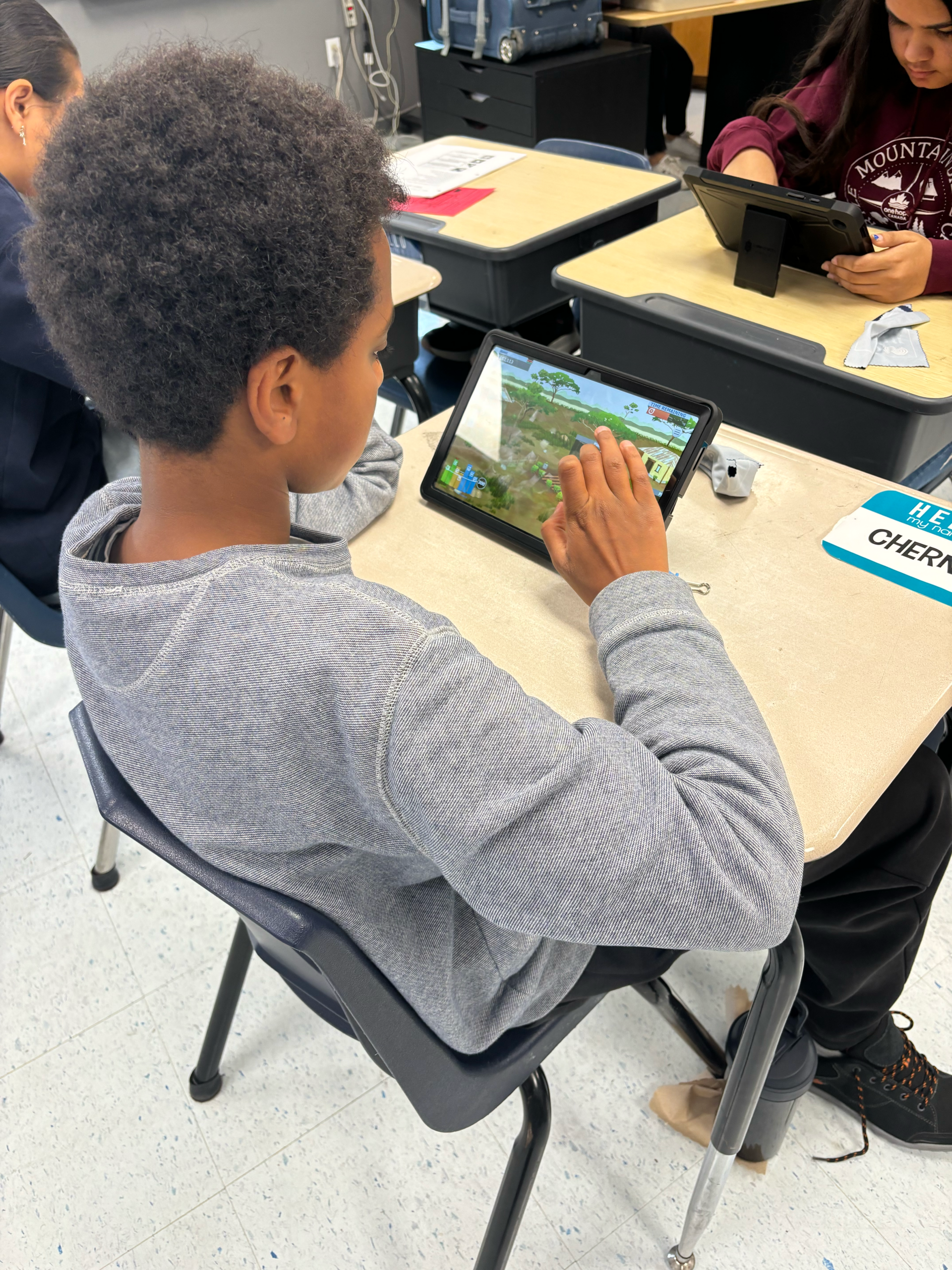
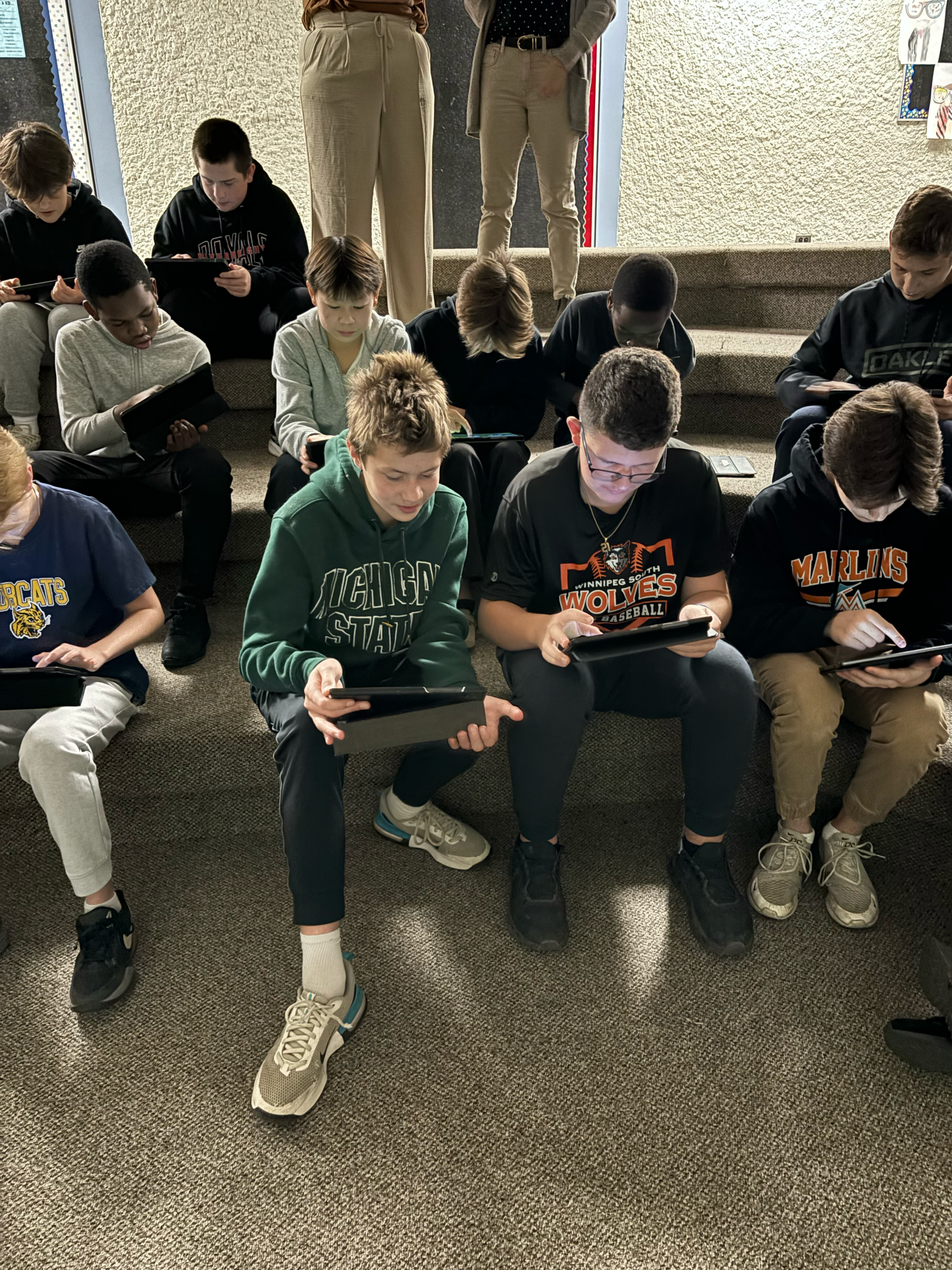
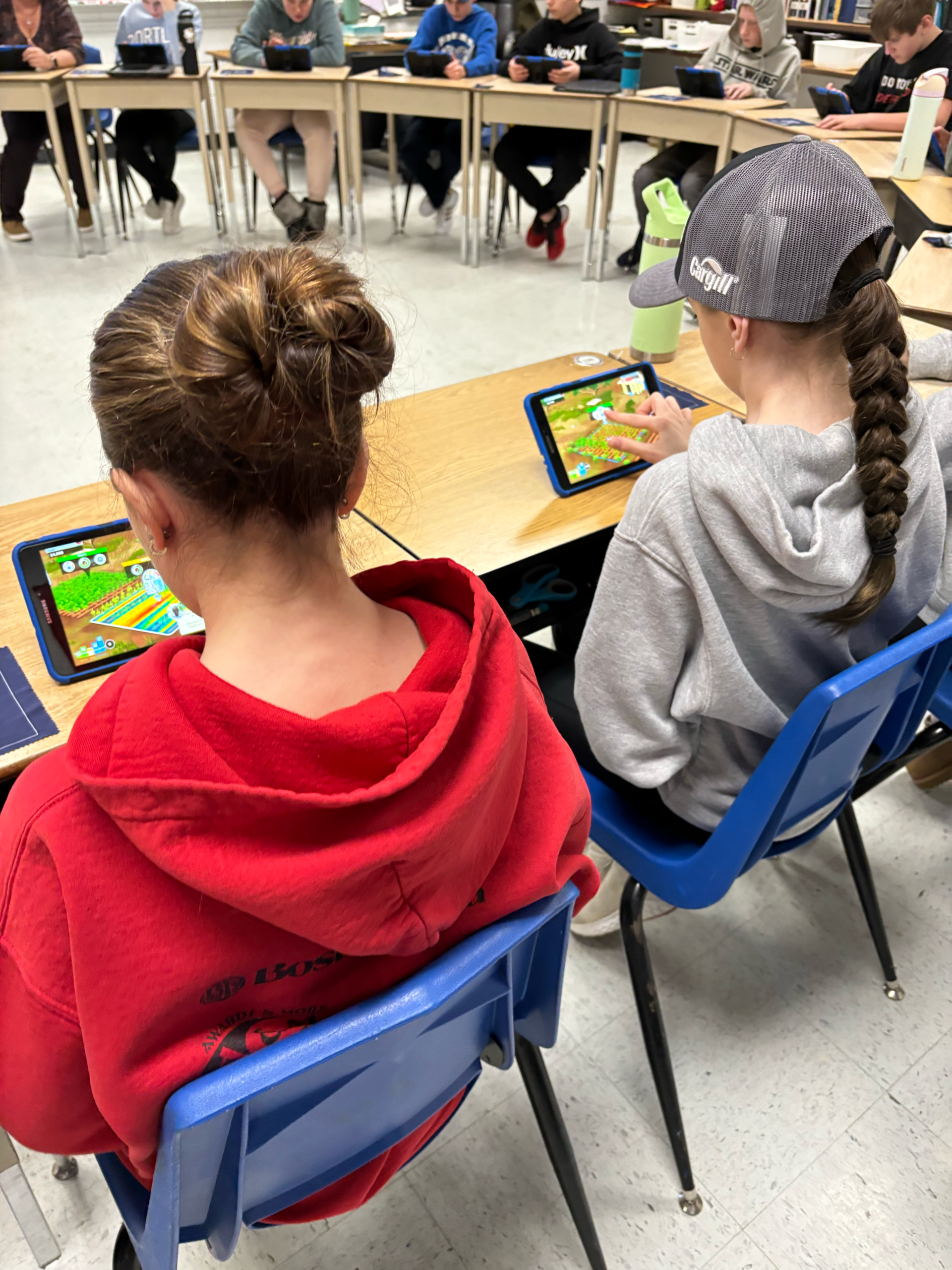
In 2025, Journey 2050 reached classrooms in Souris, Wawanesa, and Glenboro for the first time, expanding access to a program that challenges Grade 7–12 students to grapple with one of agriculture’s biggest questions: how can we feed a growing world while protecting land, water, and the viability of farms?
Delivered in-class by AITC-M staff, Journey 2050 drops students into an interactive farming simulation where every
decision matters. They weigh inputs, manage production, consider soil and water health, adopt new technologies,
and see the ripple effects of their choices in real time across economics, sustainability, and community well-being.
Students also explore agricultural realities around the globe, compare practices, and see how innovation
shapes outcomes. The core lesson? Responsible agriculture isn’t about perfect solutions; it’s about
informed choices grounded in evidence, values, and long-term thinking.
13
schools reached
25
Presentations delivered
"The students were able to gather a lot of information from the presentation and, given the nature of
the game, were able to understand more of what it takes to create sustainability within the ag sector."
447
Students reached
19
Teachers engaged
“If it was this easy in real life, I would definitely be a farmer!”
COMMUNITIES REACHED
Brandon, Minnedosa,
Miami, Portage la Prairie – and, for the first time, Souris, Wawanesa and Glenboro!
100 PER CENT OF TEACHERS
who hosted a presentation said they
would want to participate again
ACE: Making Career Pathways Part
of Every Lesson
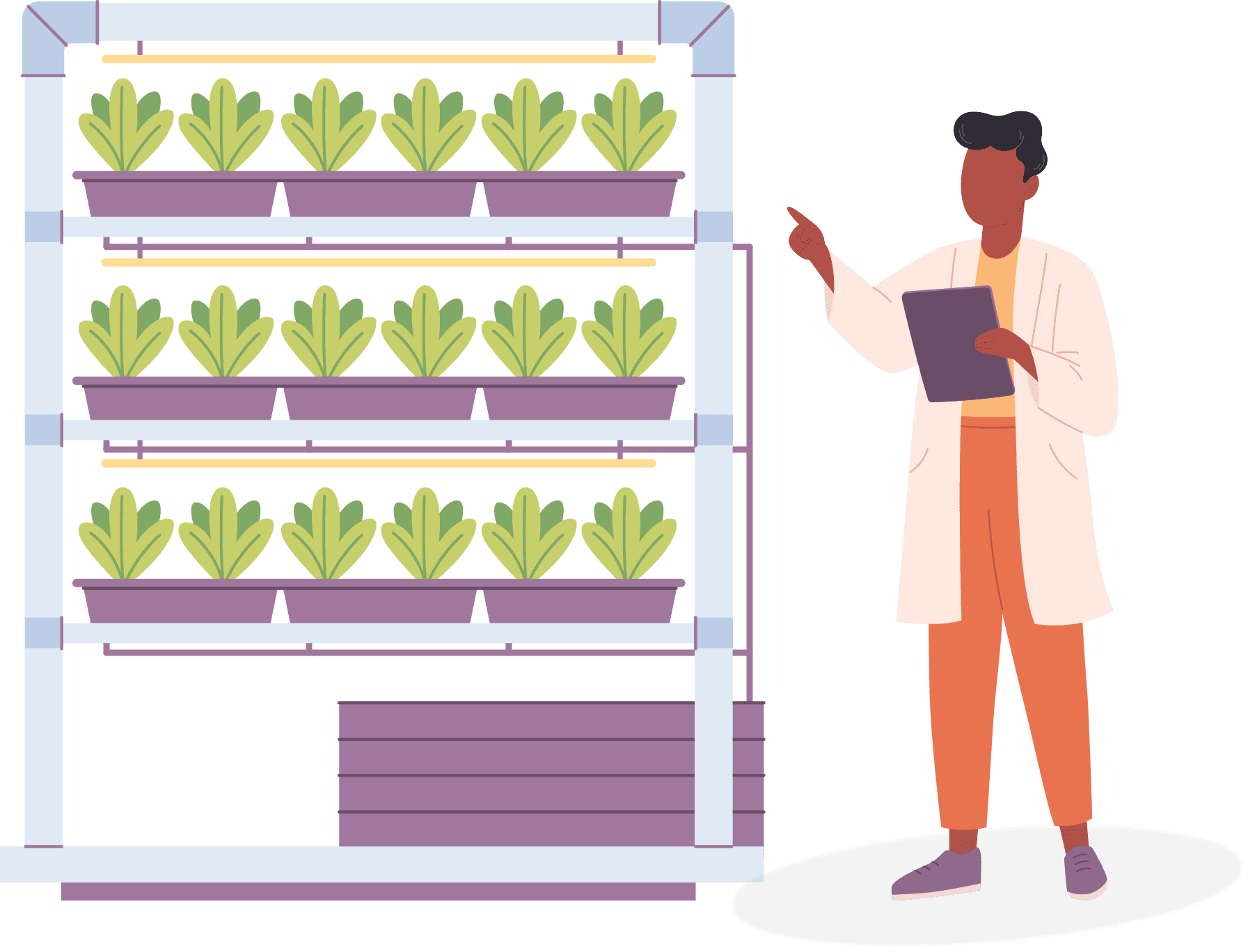
In 2025, AITC-M took a major step forward in
its Agricultural Career Education (ACE) delivery
by moving away from one-off events to embracing
a fully integrated approach. Instead of treating career learning as a stand-alone activity,
we’re now embedding it into every program
and resource we deliver.
It’s a strategic shift. Career learning is now scaffolded across grades: sparking real-world connections in elementary, deepening systems and technology awareness in middle years, and building explicit career pathways in high school.
This evolution builds on what already works — our trusted programs and partnerships — while reaching more classrooms, engaging more educators, and creating stronger industry connections.
It also meets the moment. As agriculture evolves, early and repeated exposure helps students see real opportunities and imagine themselves in the field. By weaving career learning into everything we do, we’re helping students connect food and farming to future pathways and helping Manitoba grow the talent its agriculture sector needs.
13,058
students reached
105
teacher experiences supported

"Seeing the kids engage and be curious gave me a glimpse of hope for the future generation of ag leaders. I feel like we're at a pivotal time in agriculture with the transitions and rising costs of farms right now, and it's so important that these younger generations learn more about the importance of ag."
Where Career Exploration
Showed Up in 2025
- Programs and classroom learning: Career connections were embedded across AITC-M programming, including AAA (Amazing Agriculture Adventure), CALM (Canadian Agriculture Literacy Month) and Journey 2050.
- Career-focused resources: Educators continued to use career-learning tools such as Cultivate Your Career and Career Case to connect classroom learning to real roles in agriculture and food systems.
- Industry and educator events/expos: We participated in major career-related events that connected students with agriculture, food and related industries, including AgVenture at Manitoba Ag Days, Brandon Career Symposium, Future Now Expo, RETSD Career Fair and the Tech Voc WSD Career Expo.
- Hands-on career moments: Students also took part in targeted, experience-based learning through activities and events such as the Volatus Field Day and our Summer Ag Discovery partnership with Career Trek (below).
.
55 schools and
13 school divisions engaged
Career Education Spotlight:
Summer Ag Discovery
Sometimes, the most effective way to reach young people is by enhancing what others are already doing with our trusted, hands-on agriculture learning.
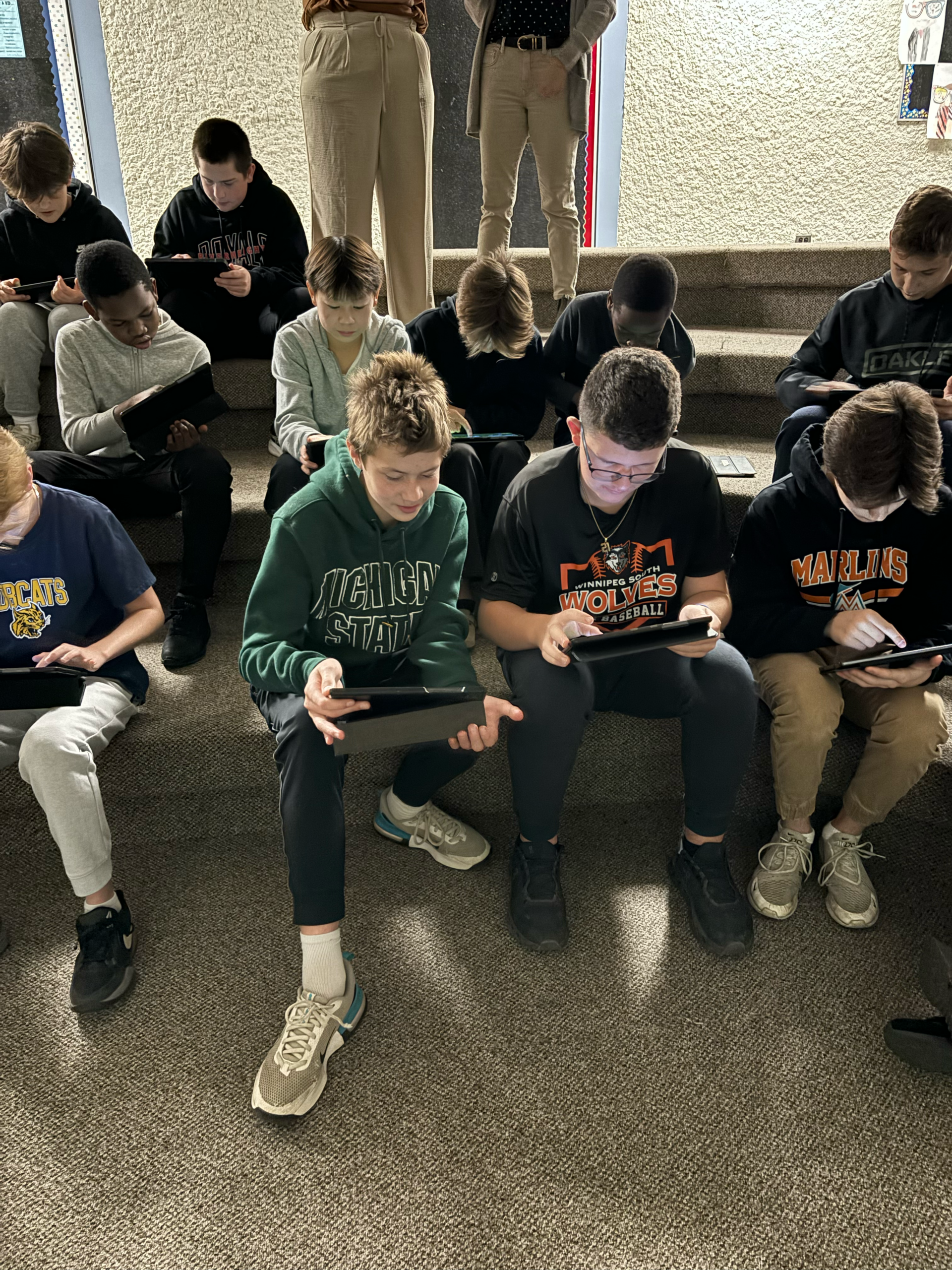
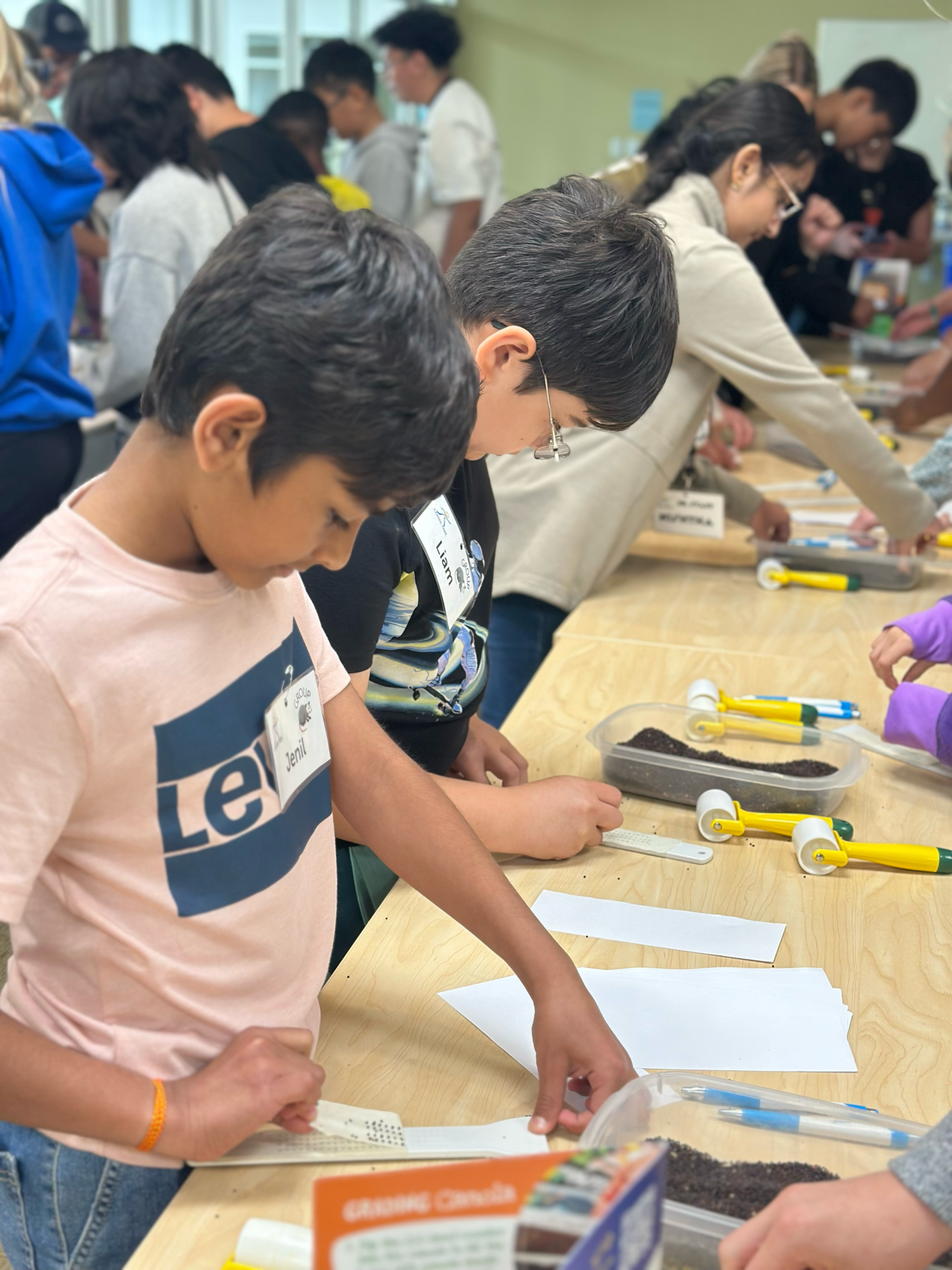
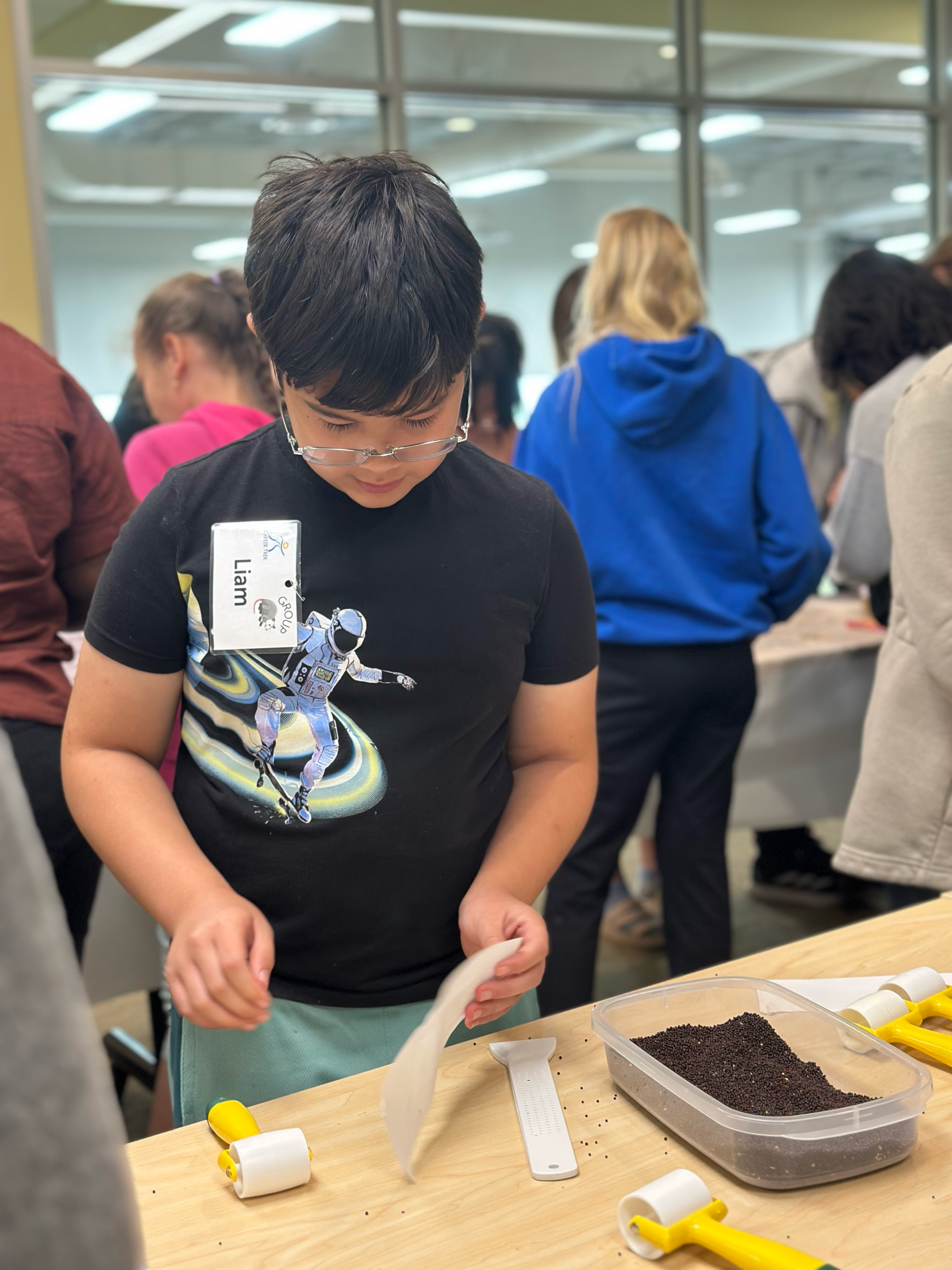
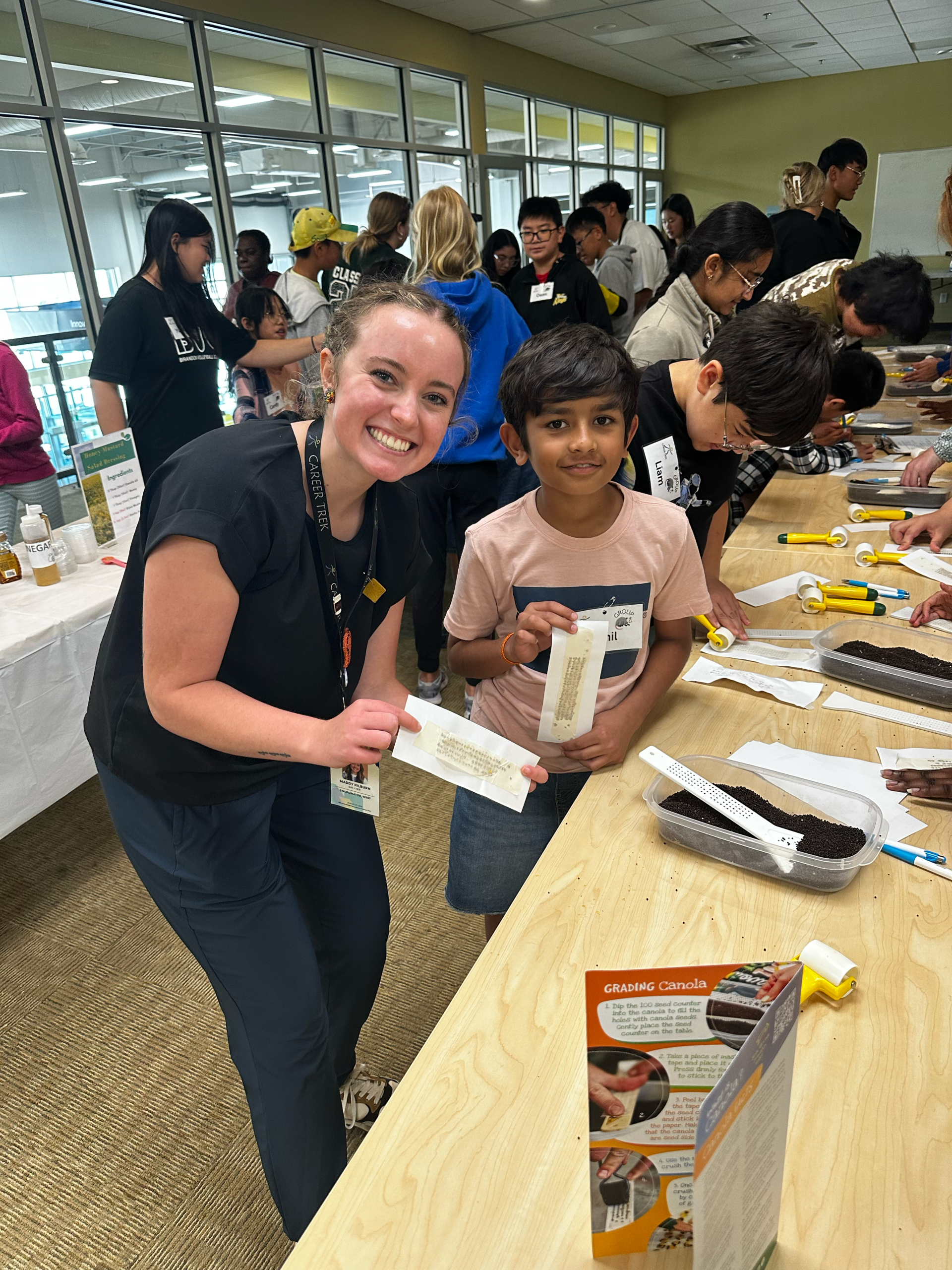
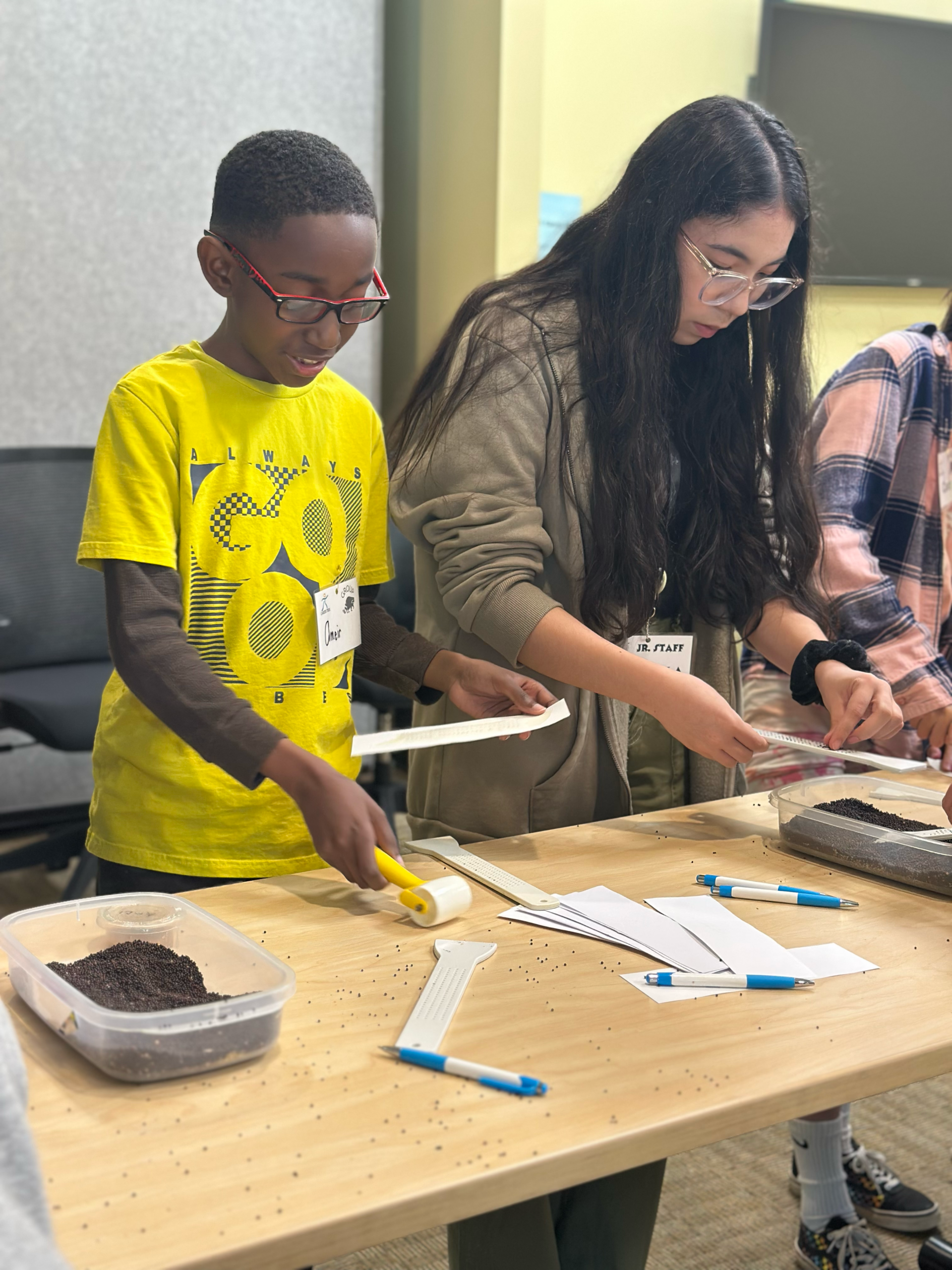
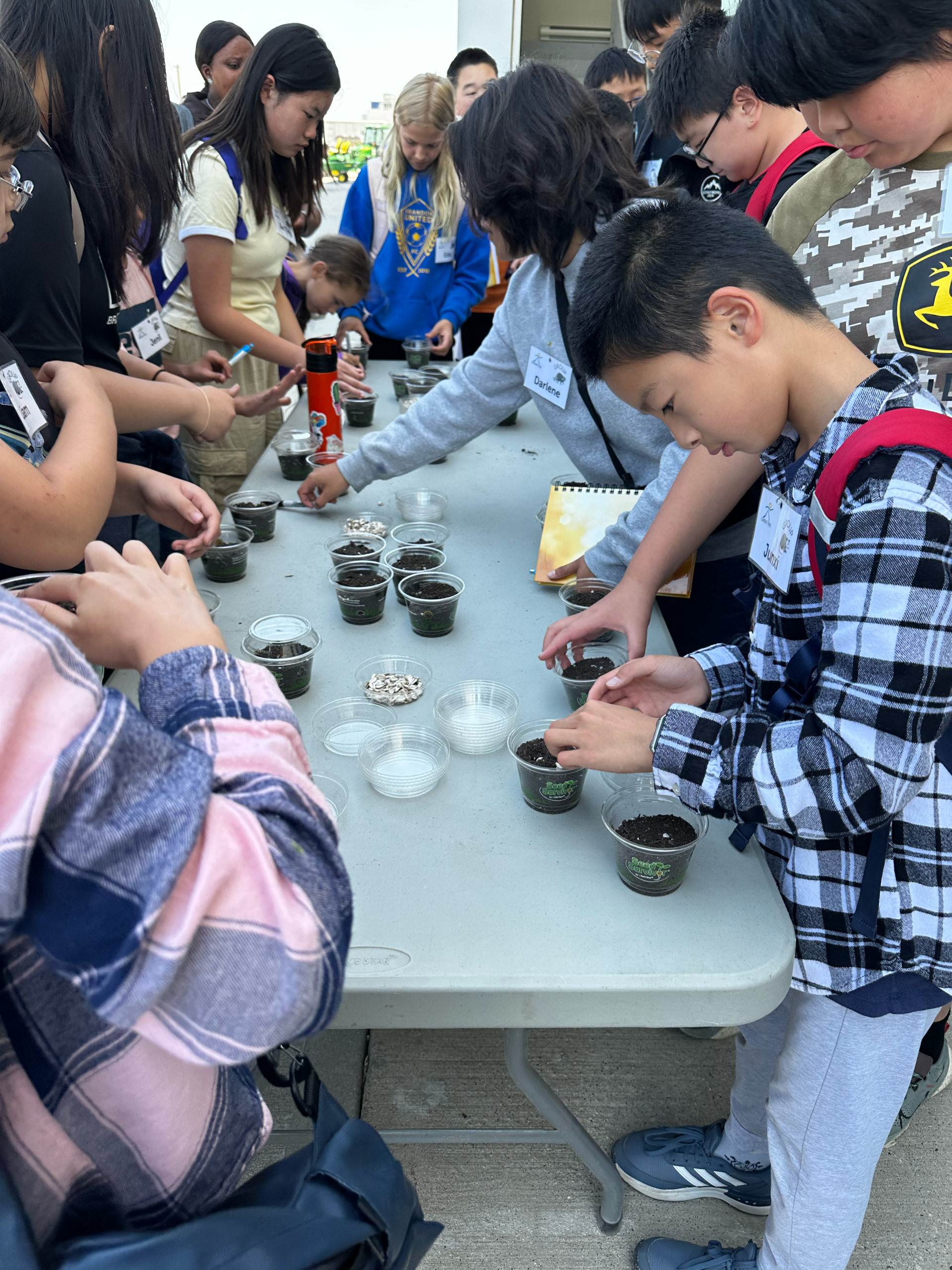
In summer 2025, AITC-M teamed up with Career Trek to deliver Summer Ag Discovery: a three-day, hands-on experience that helped young people connect food, farming, science and innovation to real-world careers. The program reached 95 participants in two Career Trek initiatives: The Future Is Now and The Wonder of Work.
Through interactive stations, career-focused presentations, and AITC-M learning activities, youth explored agriculture as a modern, high-tech industry filled with possibilities. In The Future Is Now, they tested skills, solved challenges, and saw how classroom learning translates into real jobs. In The Wonder of Work, they built on that foundation, including a tour of an Enns Brothers location that revealed how agriculture touches everything from equipment and sustainability to business and community impact.

Career Education Spotlight:
Future Now Expo
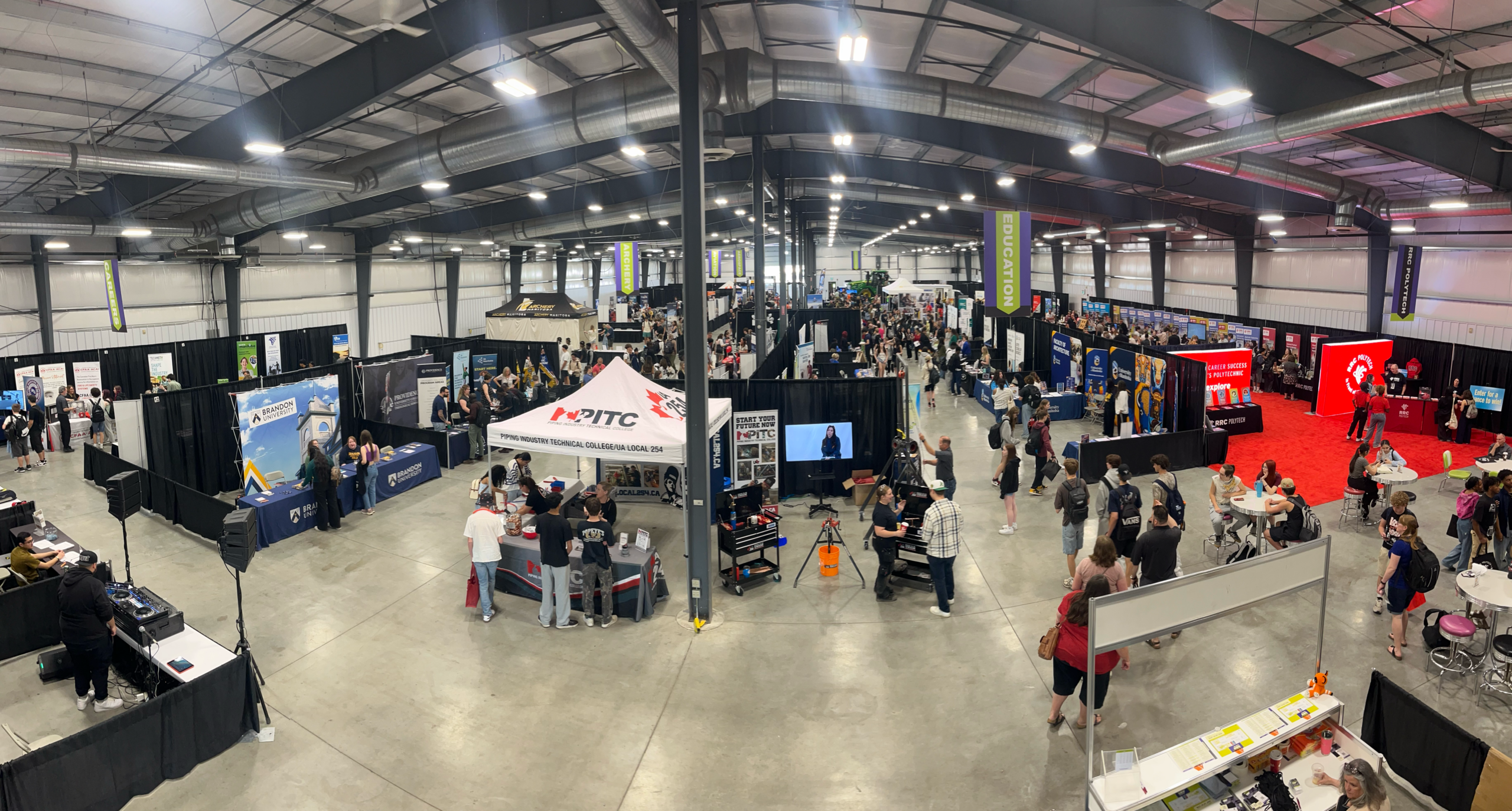
One of the fastest ways to expand career learning is to bring AITC-M’s trusted, hands-on approach into events that already gather thousands of students.
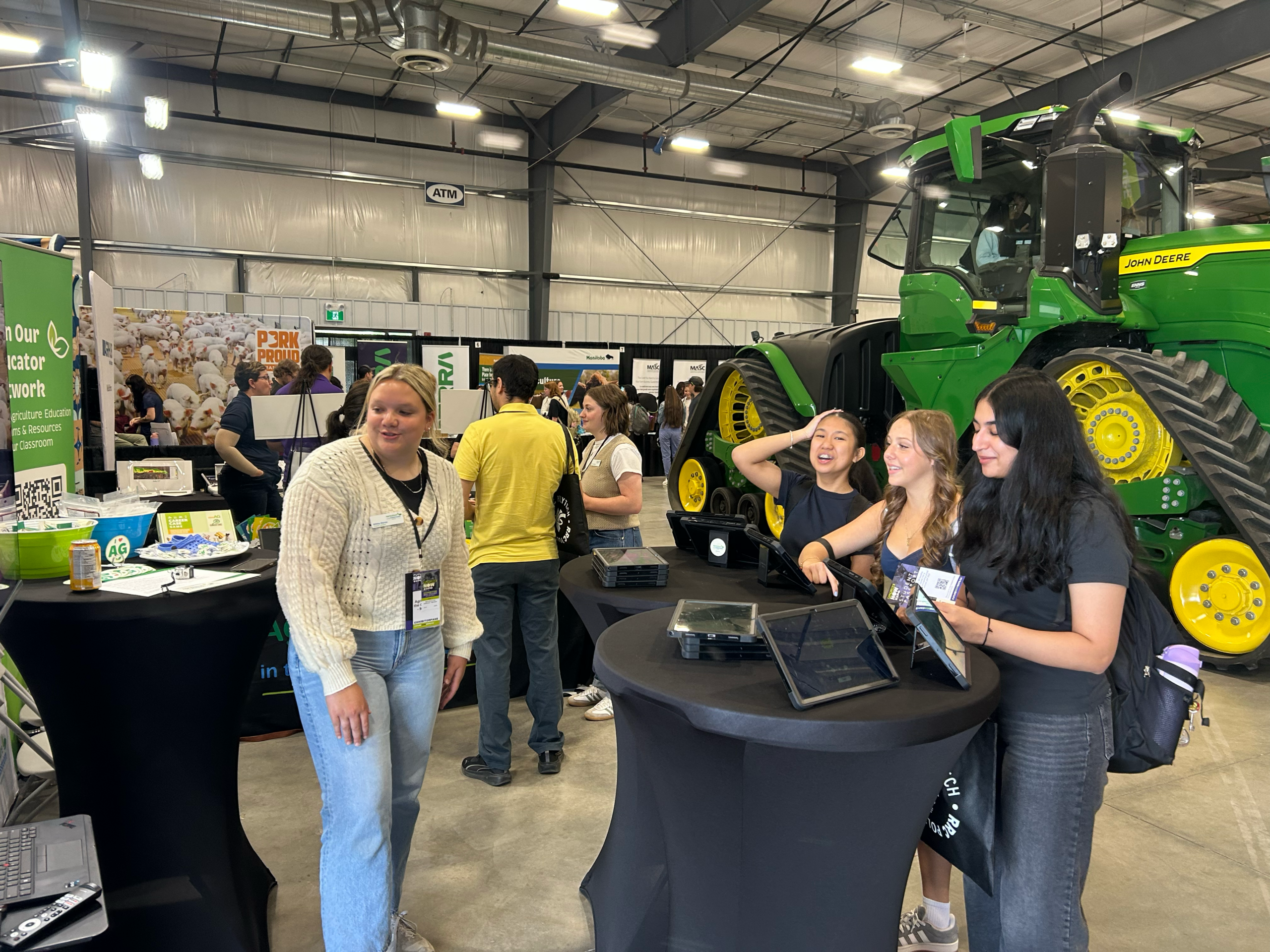
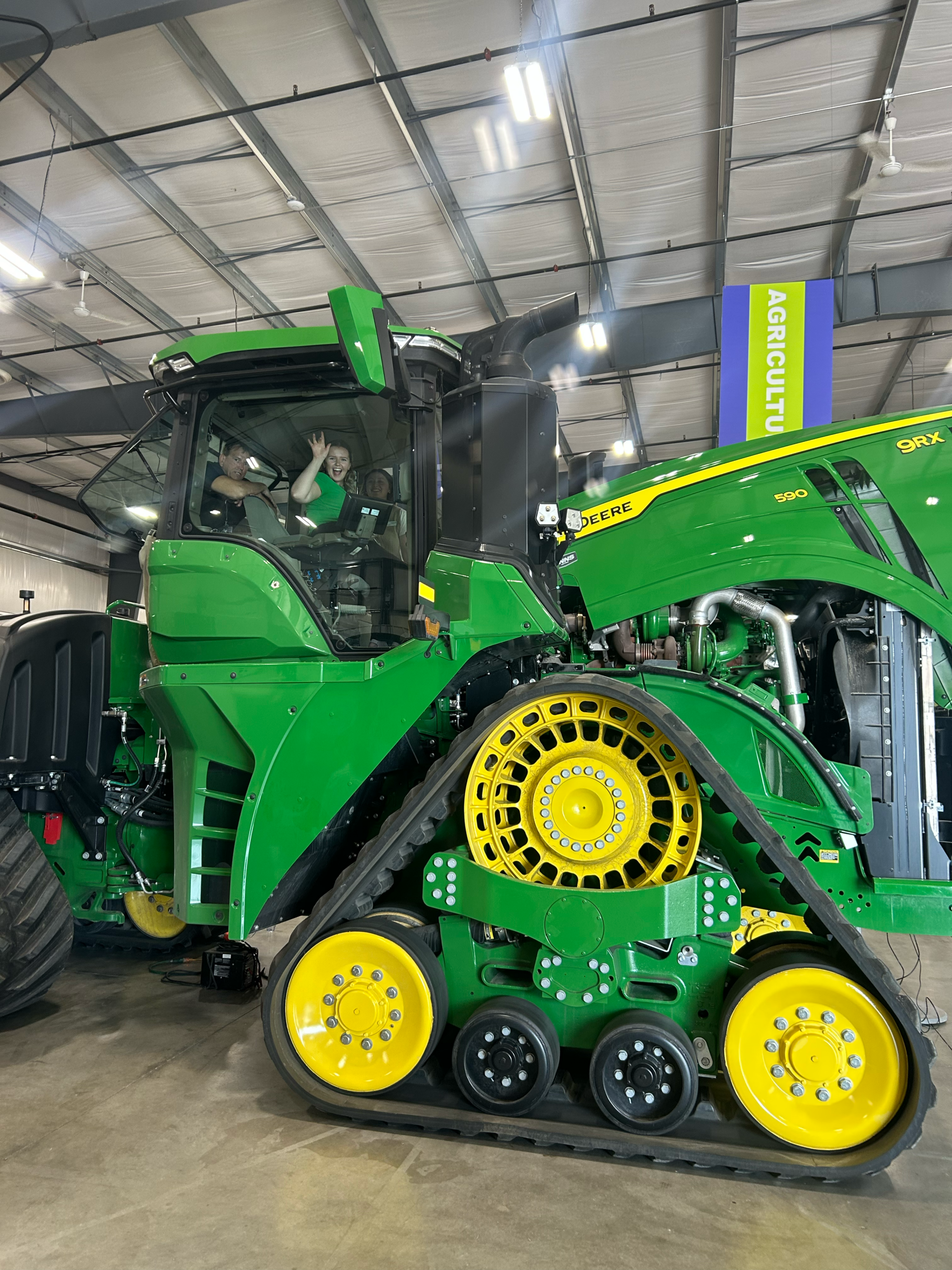
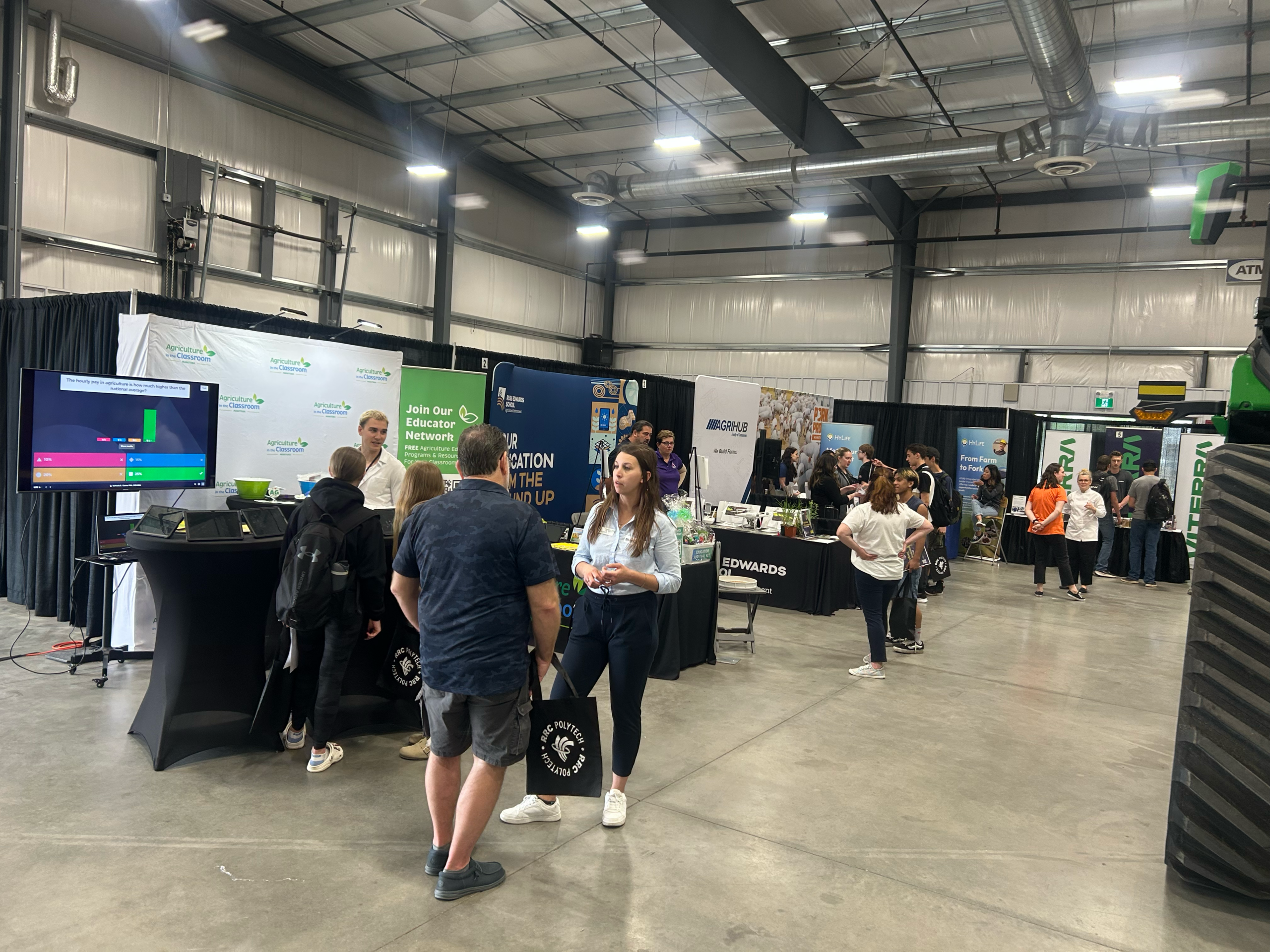
On May 28–29, 2025, AITC-M joined the Future Now Expo at the Red River Exhibition grounds in Winnipeg. Within the Agriculture Hub, we created a simple, high-energy entry point to career exploration: a Kahoot activity that helped students connect what they were seeing on-site to real agriculture roles, skills and opportunities.
The Agriculture Hub reached 3,500 students and supported 209 student experiences across program windows, along with 30 educator experiences. Engagement at the AITC-M booth was strong: 80 per cent of visiting students participated (168 of 209), and 76 per cent of players said they were interested in learning more about agriculture careers (127 of 168). Educator follow-up potential was strong as well, with 100 per cent of surveyed teachers signing up for AITC-M’s e-news (21 teachers), creating a direct channel to keep career learning going after the event.

ENGAGEMENT
Deepening the Relationships
Behind Our Work

Strong programs don’t come from guessing what schools and communities need. They come from staying close
to the people who use them, support them, and expect them to be accurate, balanced, current and inclusive.
In 2025, AITC-M strengthened engagement on three fronts: we formalized educator feedback and advocacy,
showed up strategically with partners and the public, and invested in staff learning so our classroom work
stays credible and connected to real-world agriculture.
Growing Educator Champions
Teachers are at the centre of AITC-M’s impact. One well-supported educator can reach hundreds of students
over multiple years, carry learning across subjects and grades, and extend impact further as resources and ideas
spread through schools and divisions.
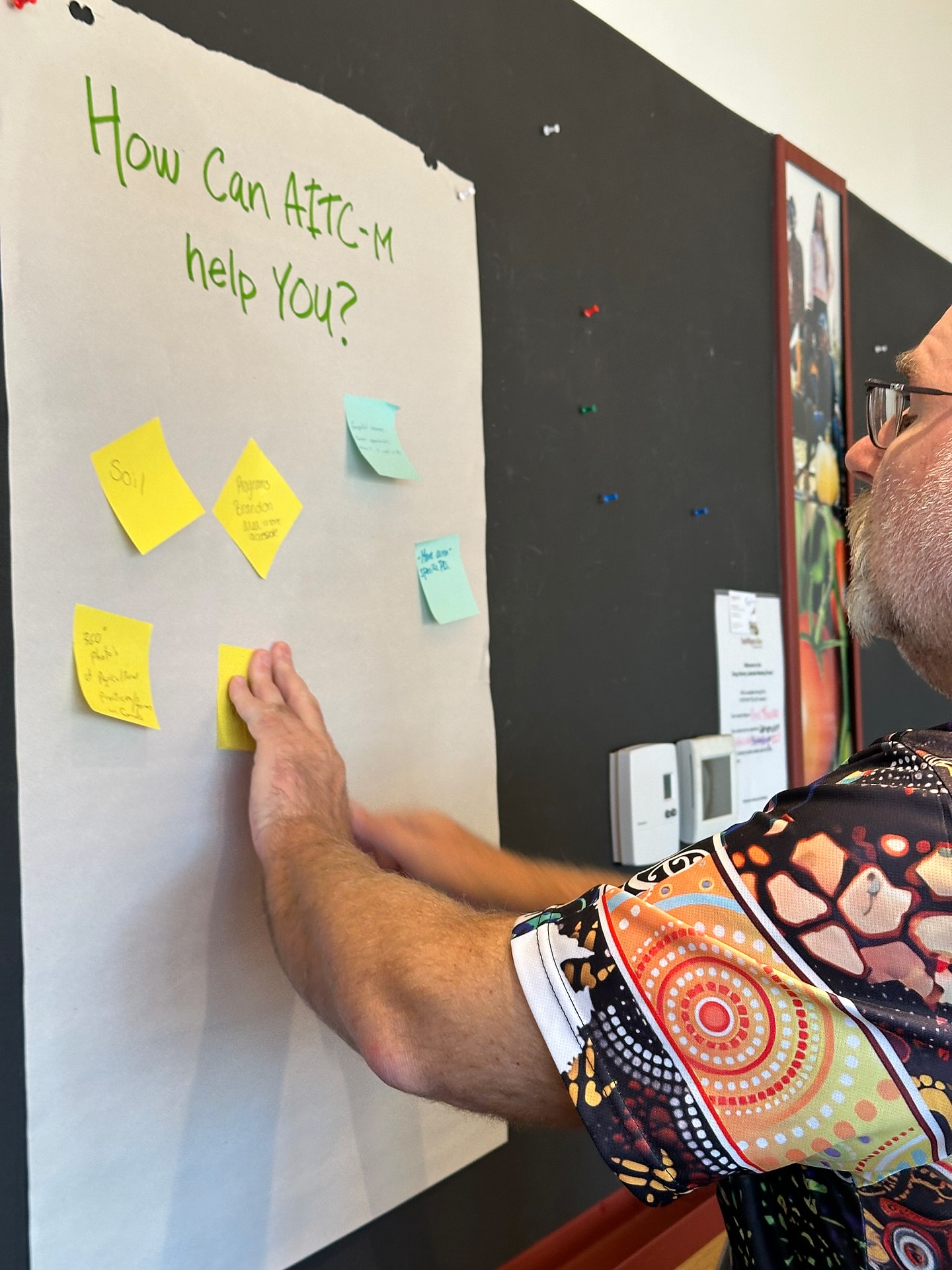
In 2025, we strengthened educator engagement in two ways: we created a formal feedback loop through the
new Educator Steering Committee, and we expanded professional learning that gives teachers practical tools
they can use right away.
Educator Steering Committee: Strengthening AITC-M’s Educator Voice
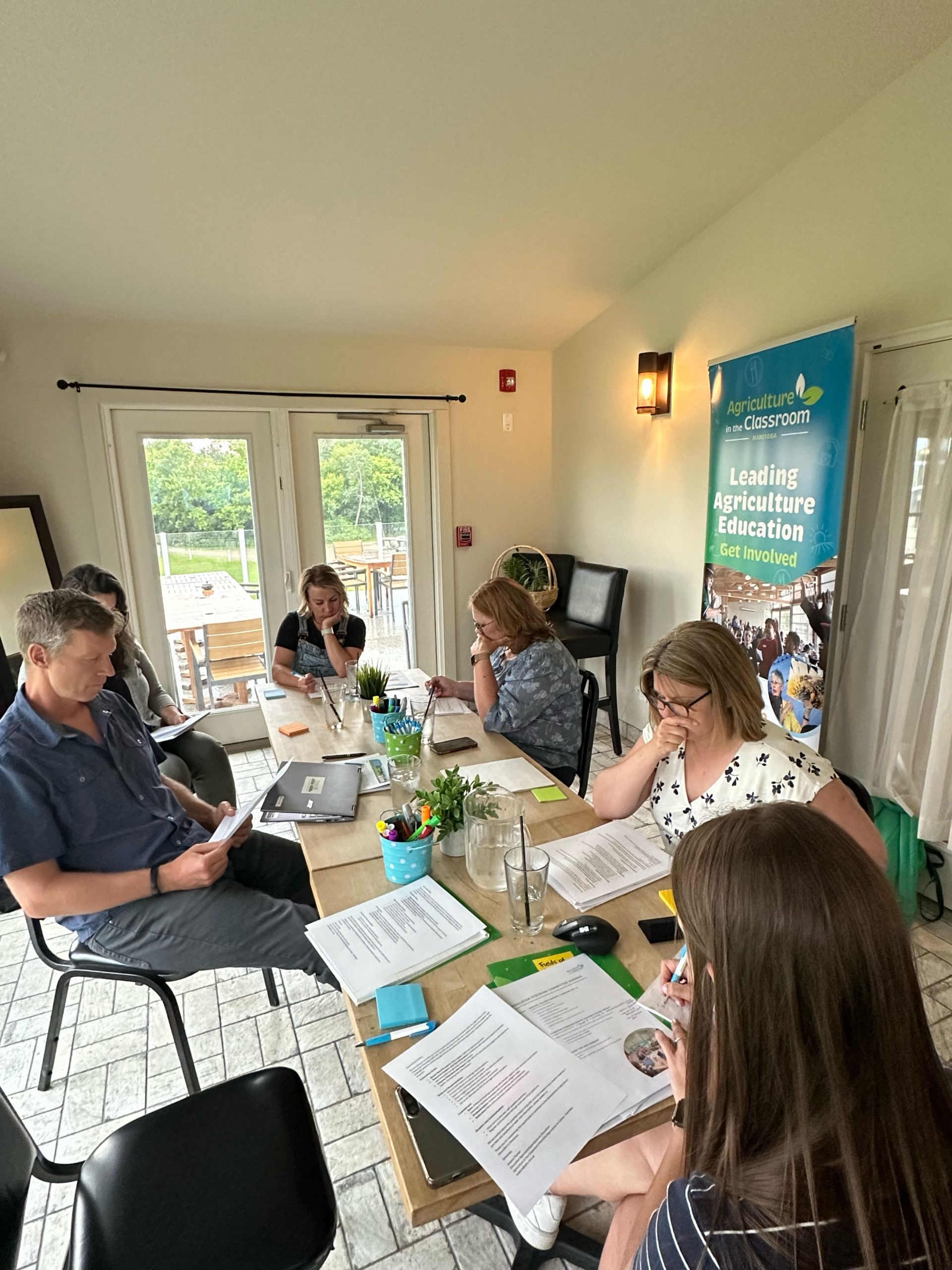
In 2025, AITC-M launched an Educator Steering Committee (ESC) to strengthen credibility, deepen classroom relevance and create a clearer feedback loop between Manitoba educators and AITC-M programming.
The ESC met for the first time in October, bringing together 11 educators from communities including Elm Creek, Brandon, Winnipeg, Portage la Prairie and Pierson. Educators met with our education specialists to explore the
current education context and gained a deeper understanding of AITC-M's reach and impact.
Moving forward, the ESC helps ensure AITC-M programs and resources stay grounded in real classroom needs,
while also building educator-led advocacy that extends AITC-M's visibility and influence within school divisions.
ESC's commitments:
- To champion AITC-M at divisional-level departmental, staff and board meetings
- To provide feedback on AITC-M programming and resources
- To work with AITC-M's education specialists throughout the year
Equipping Teachers to Bring Agriculture to Life
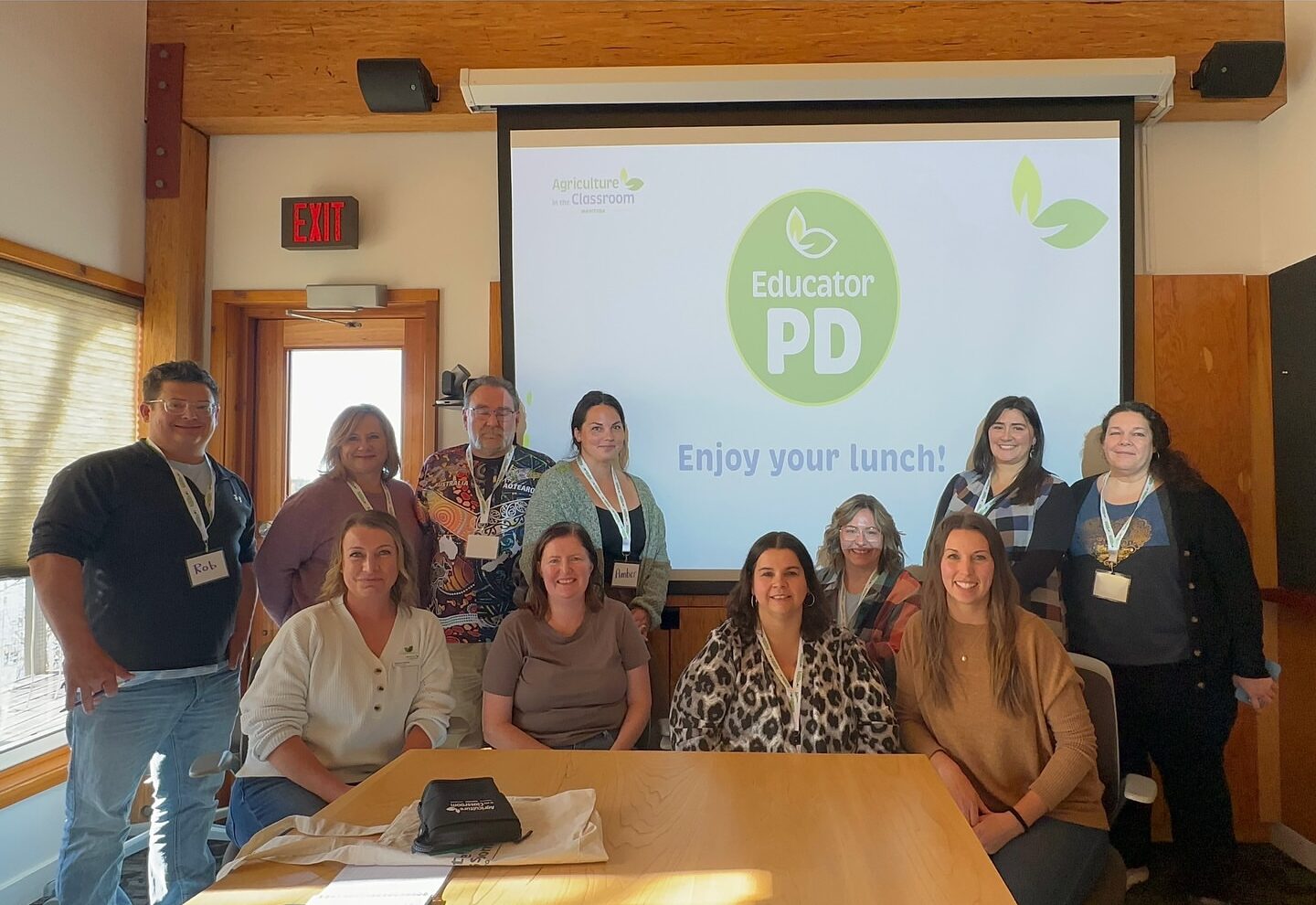
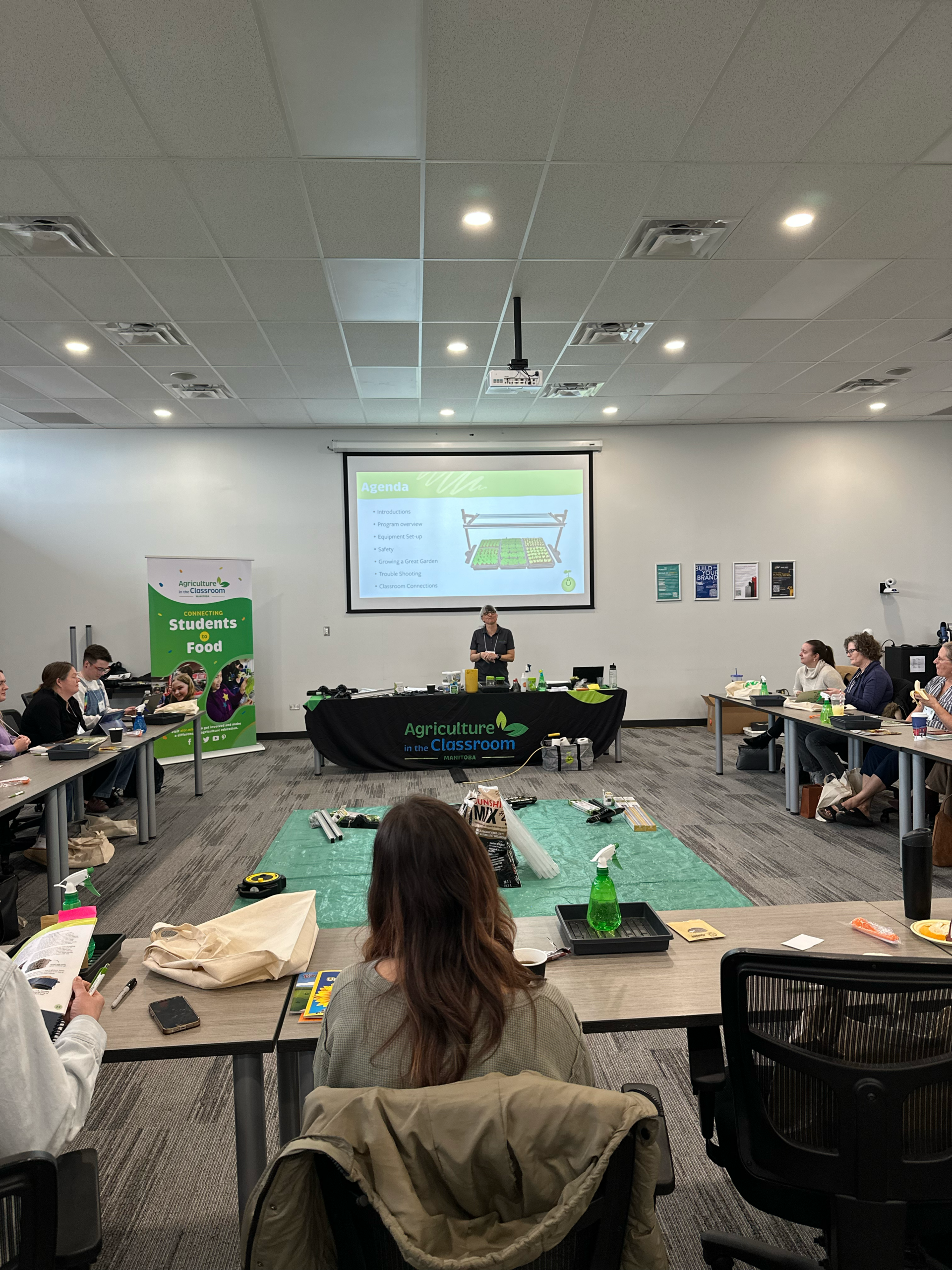
AITC-M expanded teacher professional development in 2025 by showing up in more places and being strategic about what we delivered in each one. The goal was consistent: give educators practical, classroom-ready tools and credible, current content they can use right away, while strengthening relationships that support agriculture learning across Manitoba.
Tackling complex topics with confidence
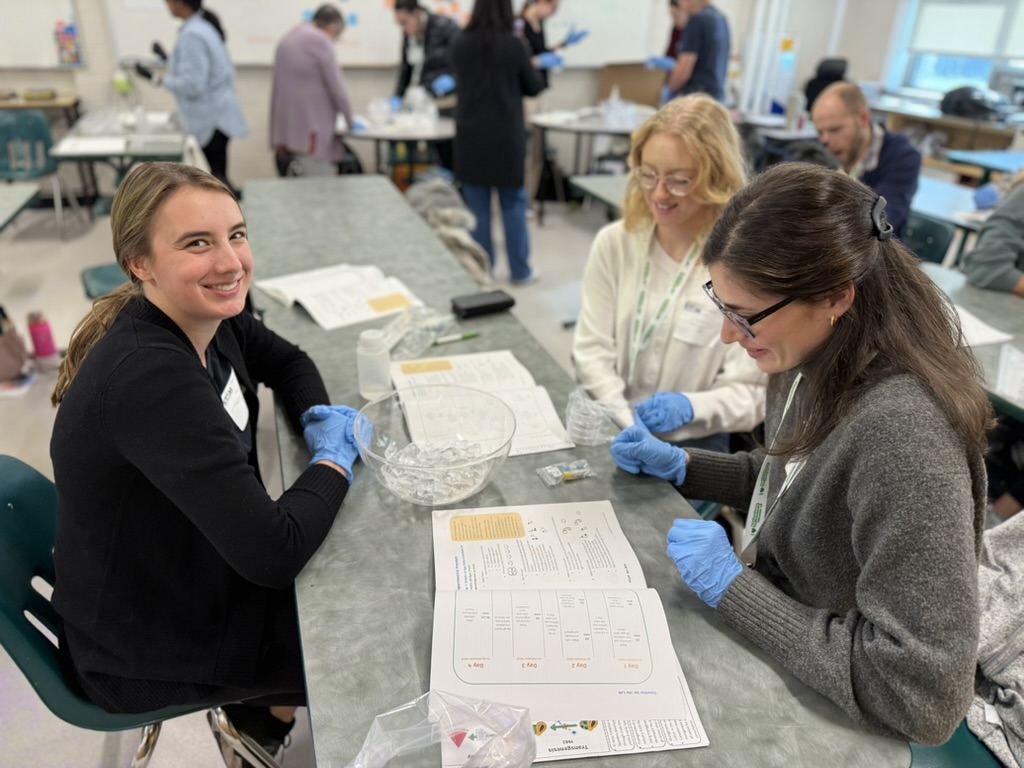
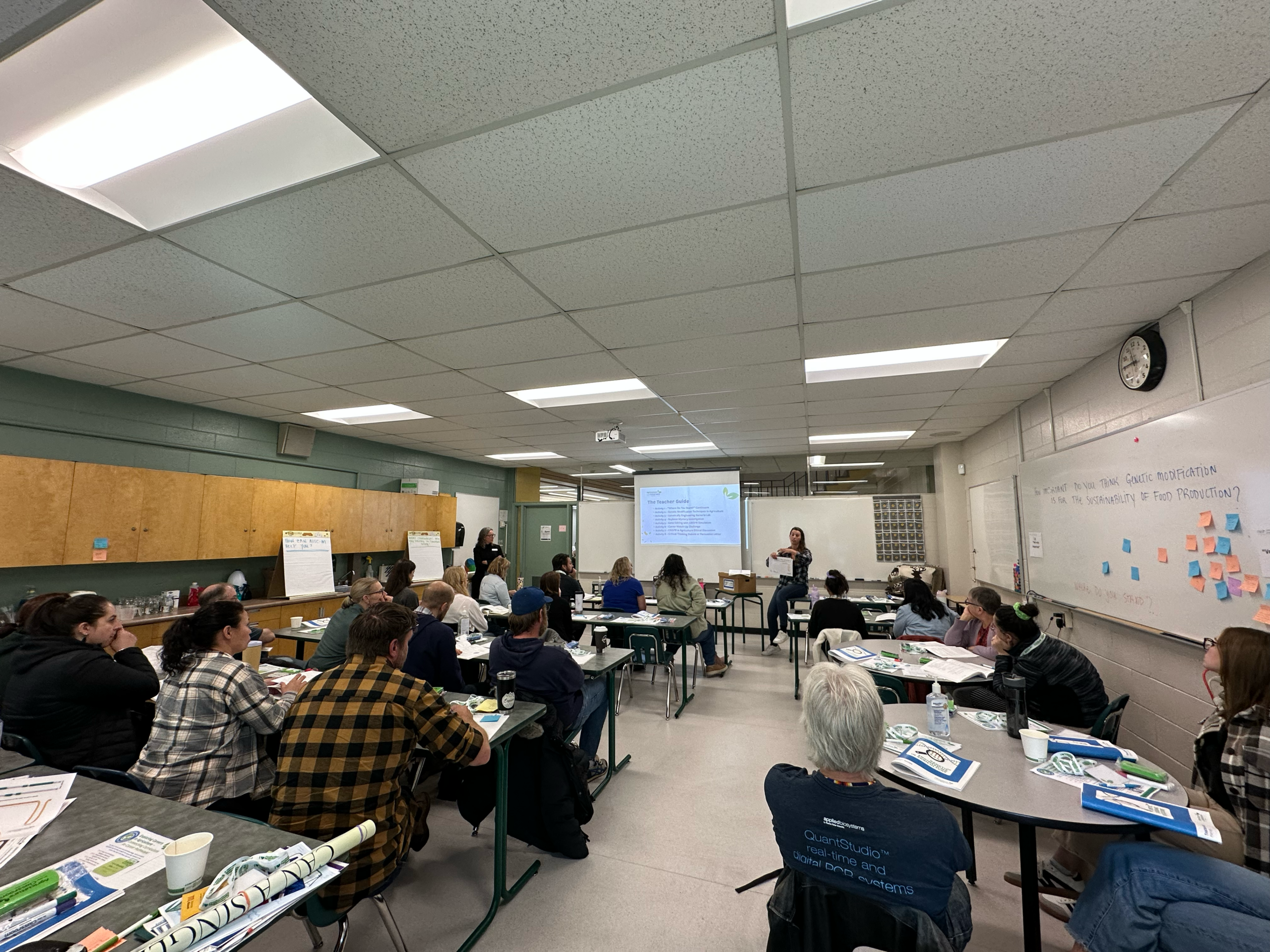
At the Science Teachers’ Association of Manitoba (STAM) conference, we introduced Grades 9–12 educators to practical biotechnology and food activities and launched the classroom pilot of AITC-M’s Genetic Engineering in Agriculture kit. Strong engagement at our booth led to more teachers connecting with resources they could use immediately.
Growing the teacher skills that drive
garden-based learning
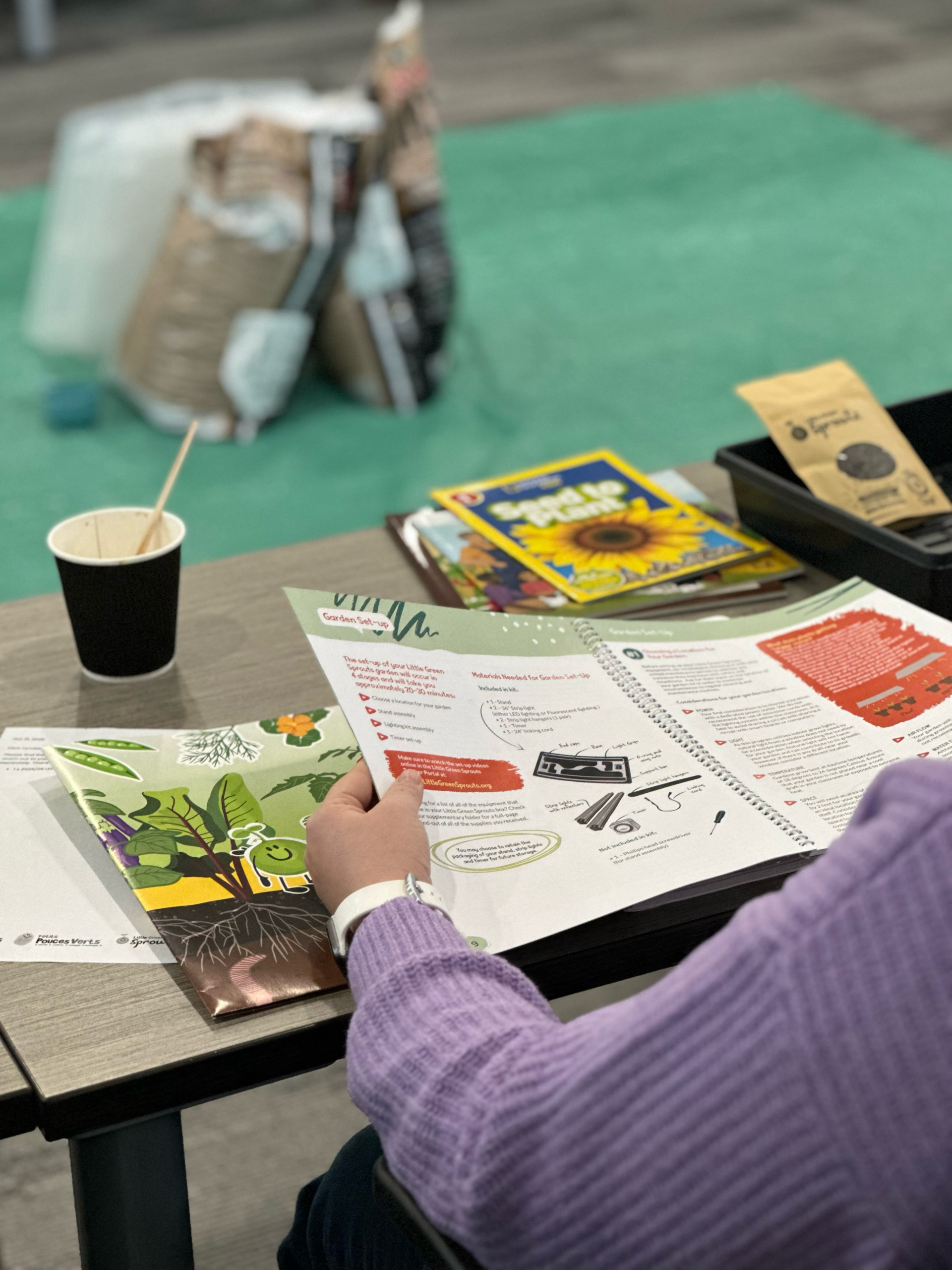
Manitoba Crop Alliance’s $195,000 investment in our classroom garden programs also supported the educator training and workshops that help teachers run garden programs well, from setup and troubleshooting to connecting what students grow to curriculum. This was the largest garden-focused PD expansion in program history, strengthening training for both Little Green Sprouts and Little Green Thumbs.


Strengthening senior years agriculture learning
AITC-M partnered with Enns Brothers to bring senior years educators together in Portage la Prairie for Agriculture: A Cornerstone Industry. The day helped teachers from across the province connect curriculum to real Manitoba industry context, share ideas with peers, and leave with practical tools they could put to work right away.
Helping teachers deliver hands-on
learning through play
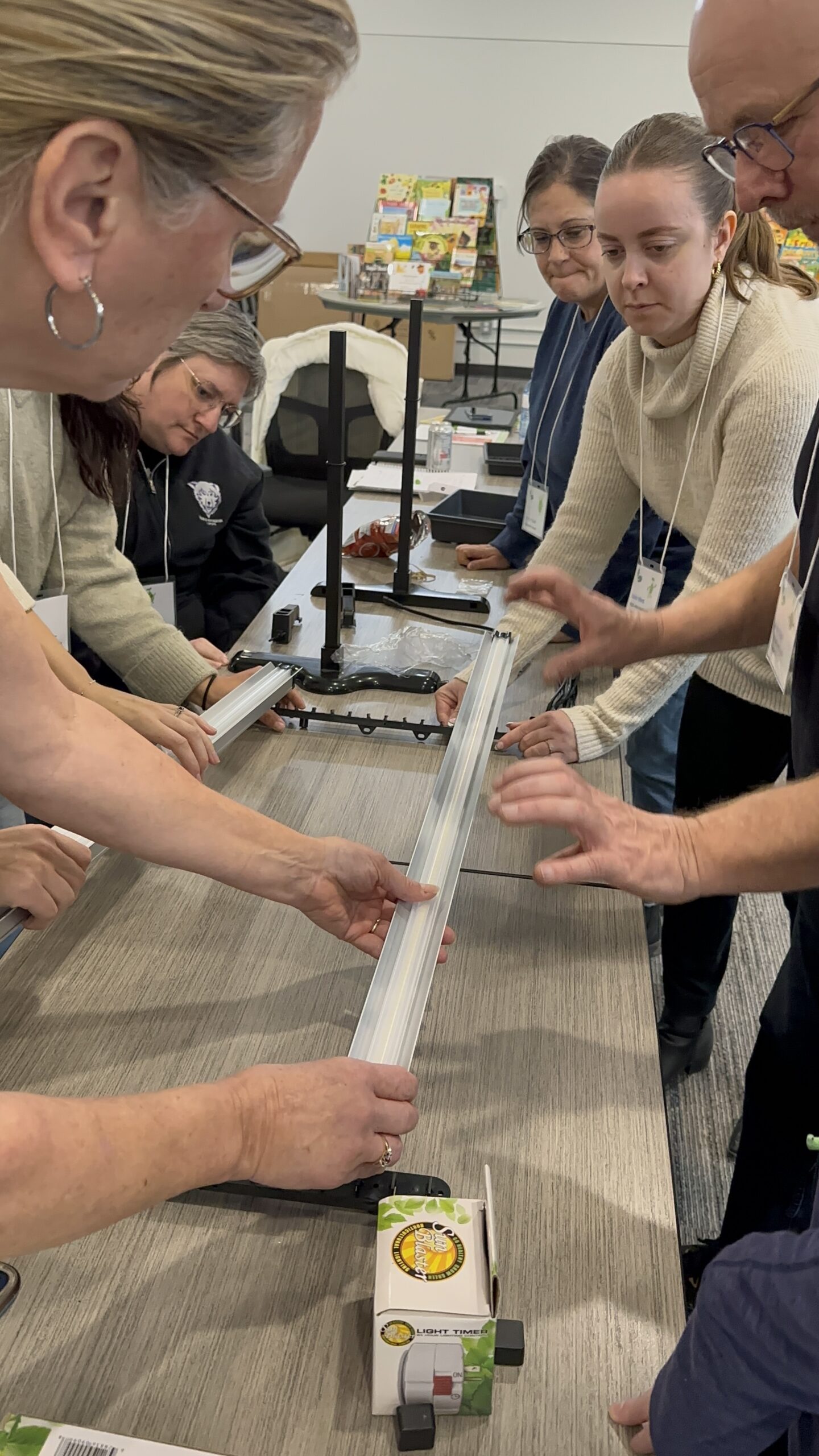
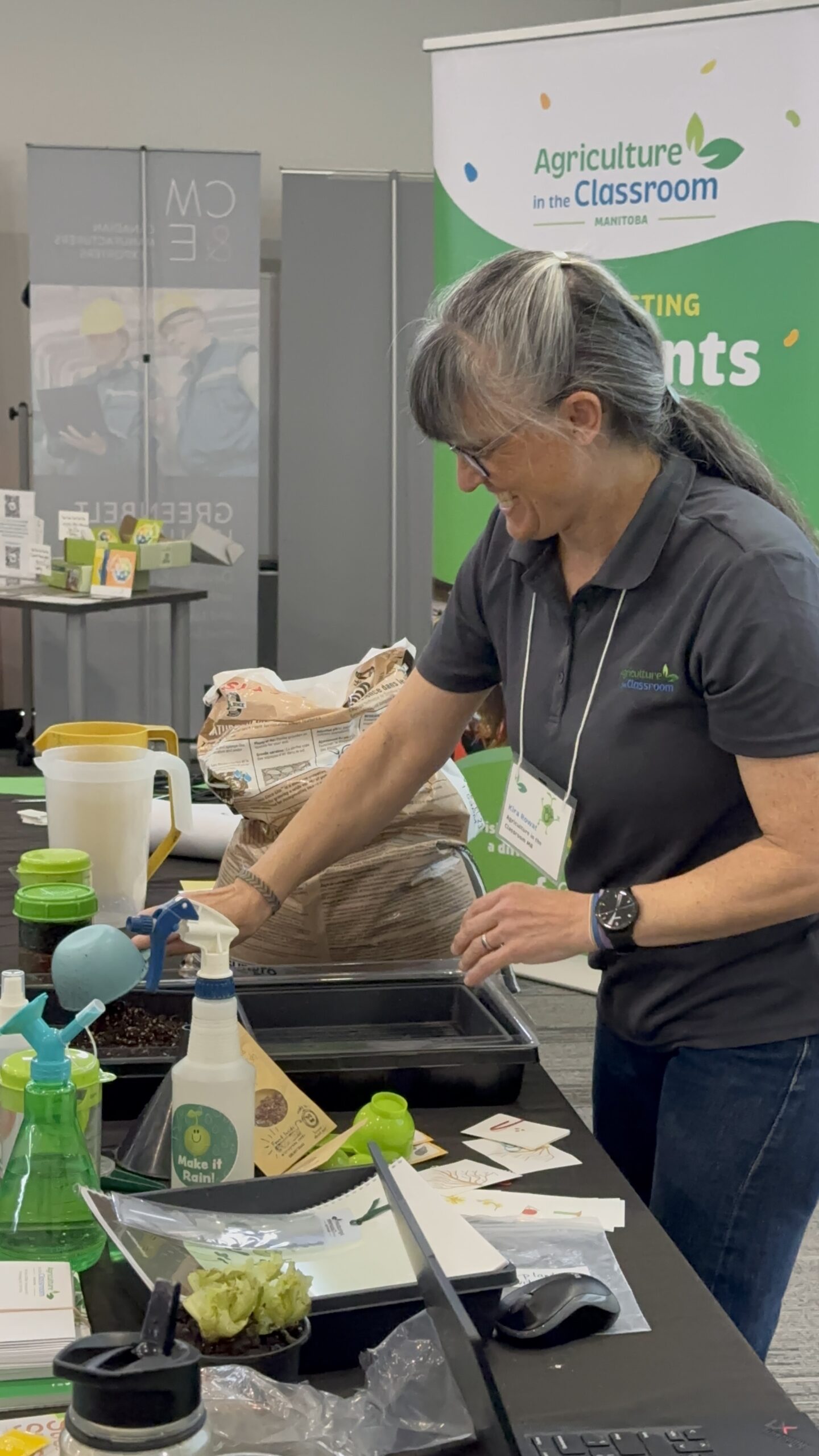
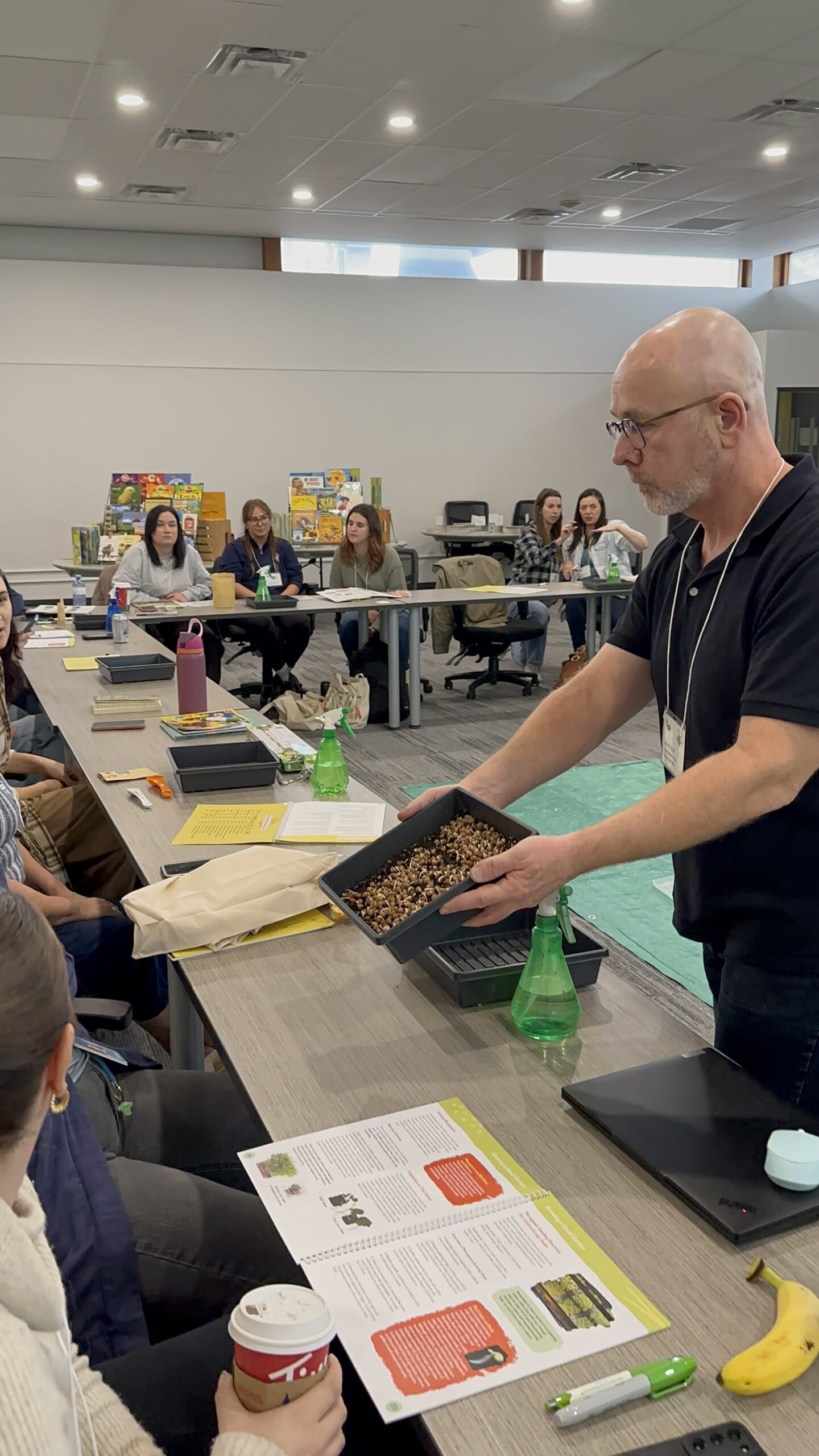
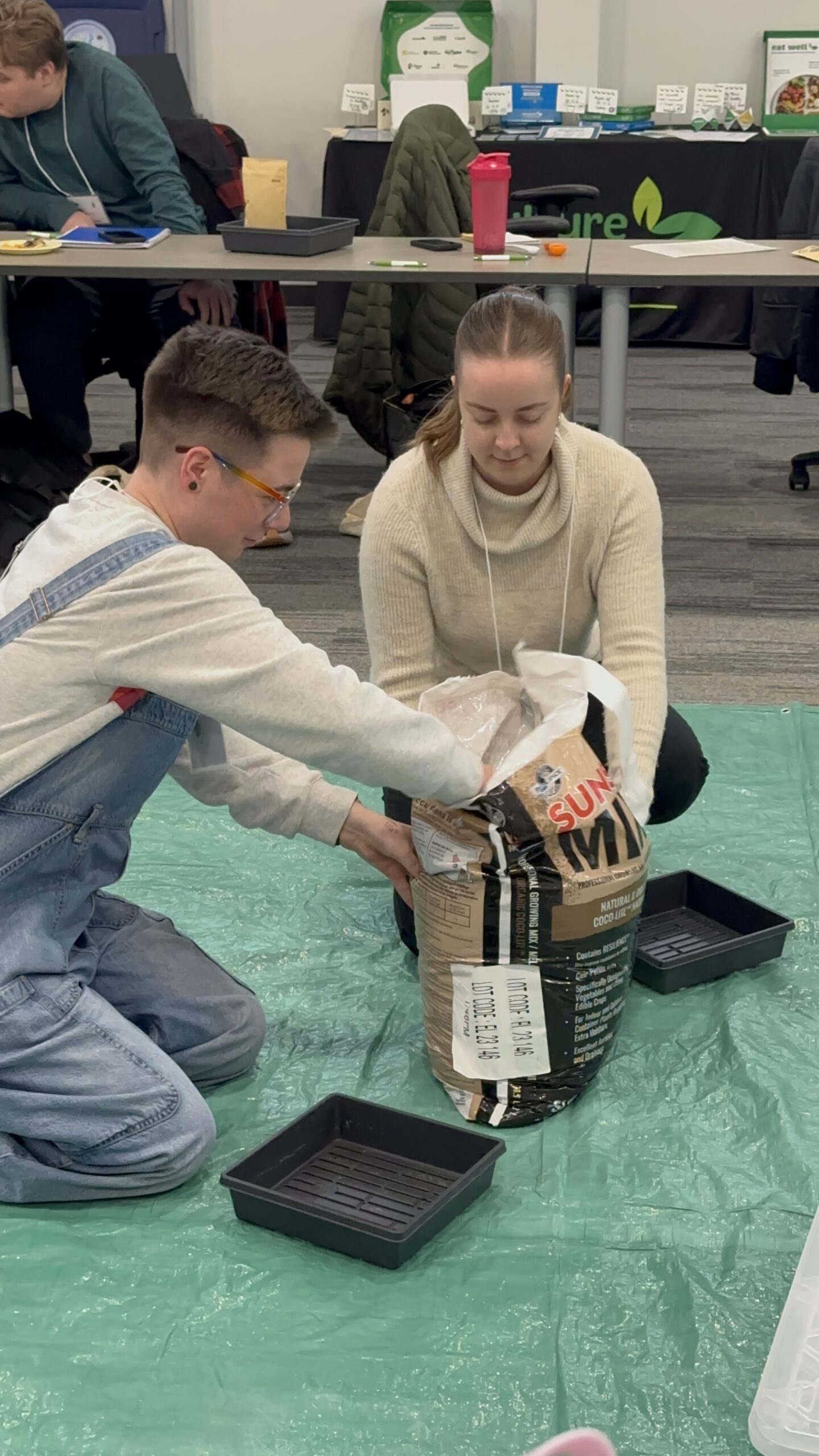
At the Brandon Teachers’ Association’s LIFT conference, AITC-M piloted a full-day session, Hands On, Minds On: Teaching Through Play. Educators worked through AITC-M activities the way students would, explored how to adapt lessons across grades, and left with classroom-ready options that make agriculture learning easier to deliver.
Building agriculture literacy into teacher training
In November, AITC-M visited three education methods classes at Brandon University’s Faculty of Education to introduce AITC-M resources and invite future teachers to get involved early. By connecting with student teachers while they’re still in training, we help them enter classrooms already aware of agriculture learning tools and ready to use them from day one.
26
STAM participants
112
STAM booth conversations
40
Little Green Sprouts training participants

28
Little Green Thumbs training participants
51
Little Green Thumbs workshop participants
30
Agriculture: A Cornerstone Industry participants
10
BTA LIFT participants
60
Brandon University student teacher participants
18
Genetics kit pilot sign-ups
83
new AITC-M account sign-ups
Engaging Our Industry

In 2025, AITC-M’s industry outreach did more than raise visibility. It helped families and educators connect agriculture
to everyday life, and showed why agriculture literacy and career awareness matter for Manitoba’s long-term resilience.
By meeting people where they already gather, and by investing in staff learning, we strengthened the relationships
and sector understanding that keep our classroom learning accurate, current and credible.
Grey Cup Partnership
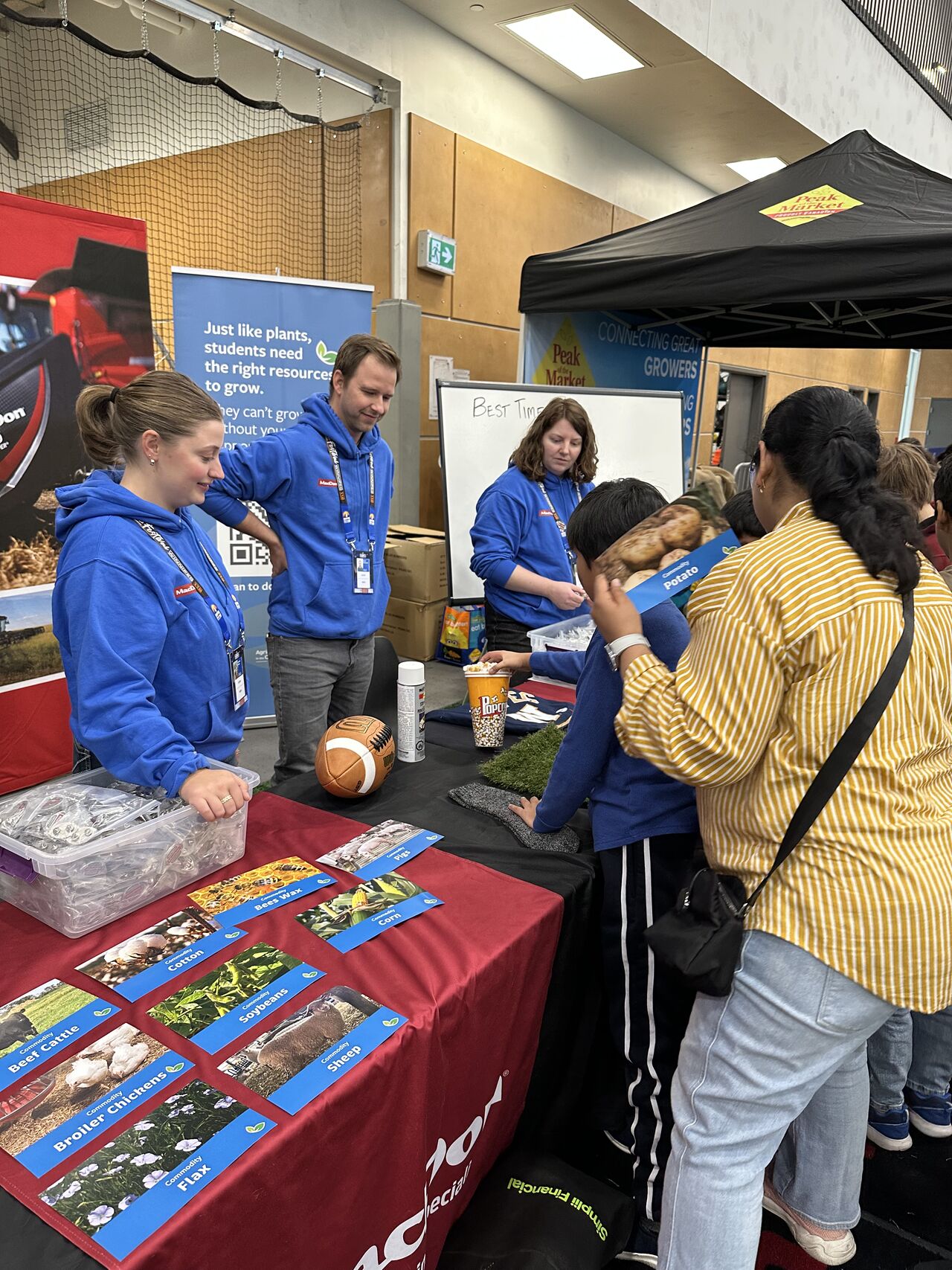
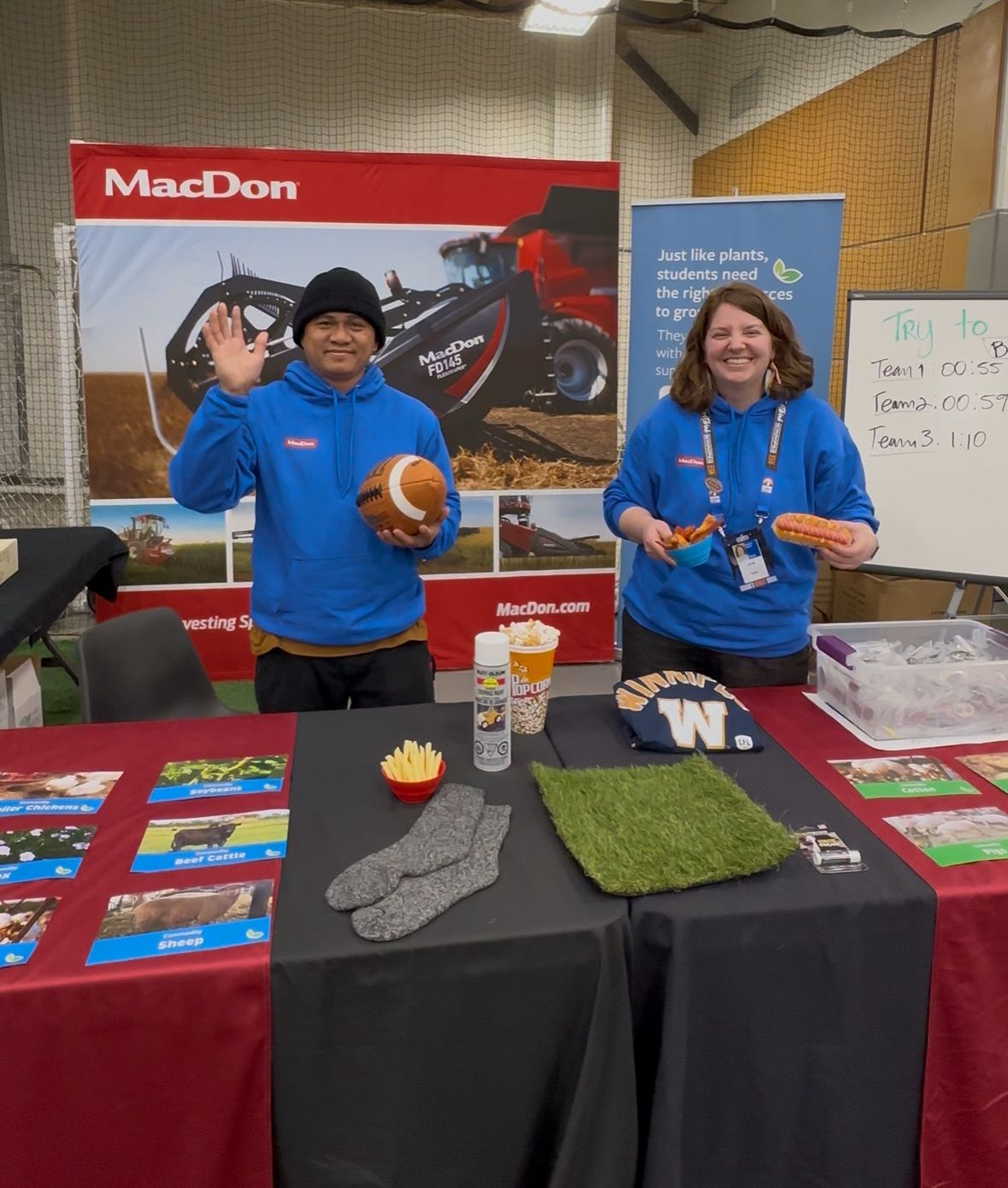
In November, AITC-M supported MacDon’s Grey Cup sponsorship booth at the University of Winnipeg with a fast,
hands-on learning activation designed for high traffic. At MacDon’s request, our team created Match the Commodity,
a football-themed game that paired “fake” foods with real Manitoba-made products to help participants
connect Manitoba commodities to the foods and byproducts they use every day.
Based on the number of MacDon pins distributed, AITC-M estimates about 7,500 people played or experienced
the activity in some way. The booth also created space for relationship-building, including strong conversations
with other sponsors that opened doors for future outreach.


Discover Agriculture in the City
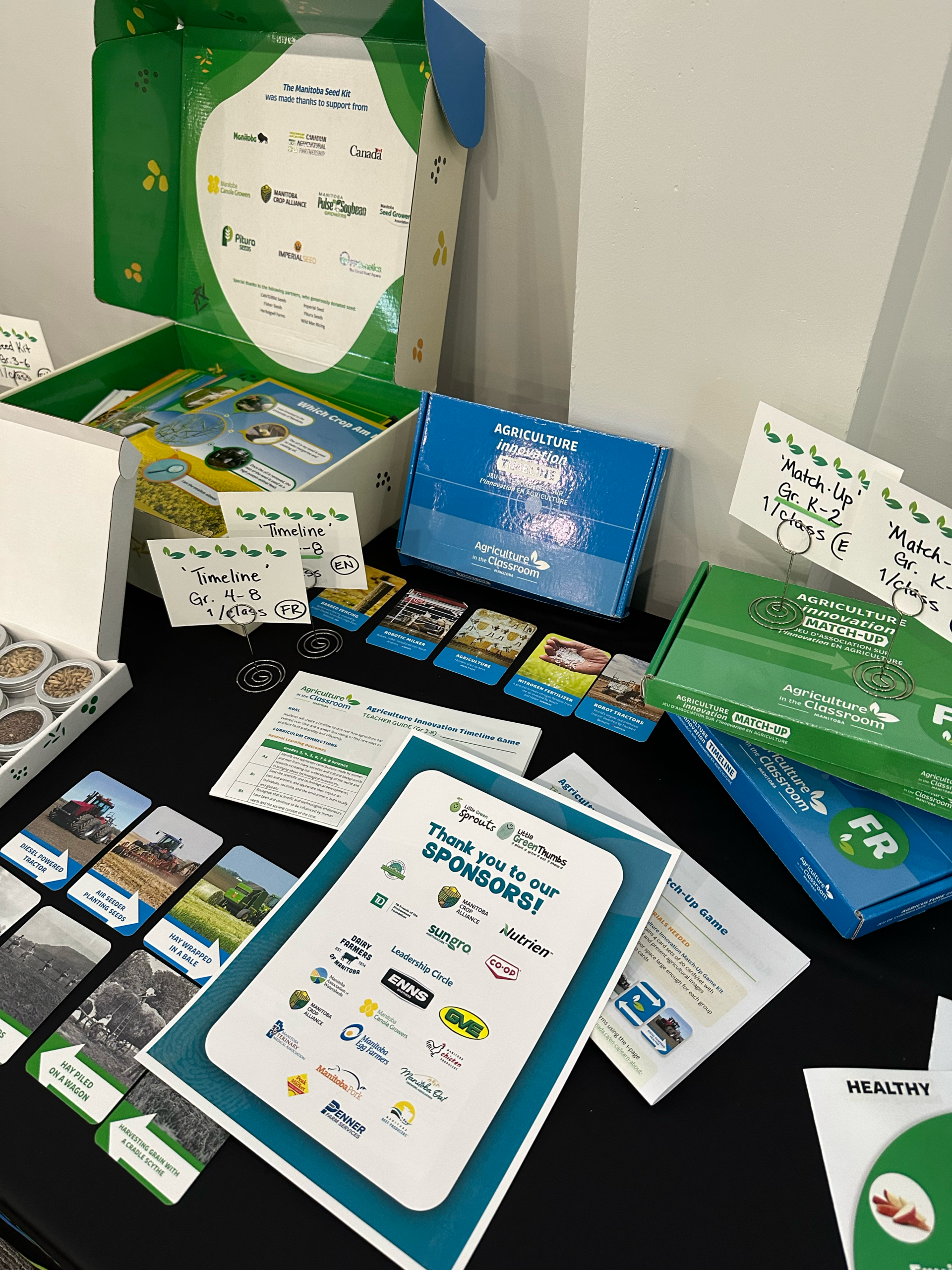
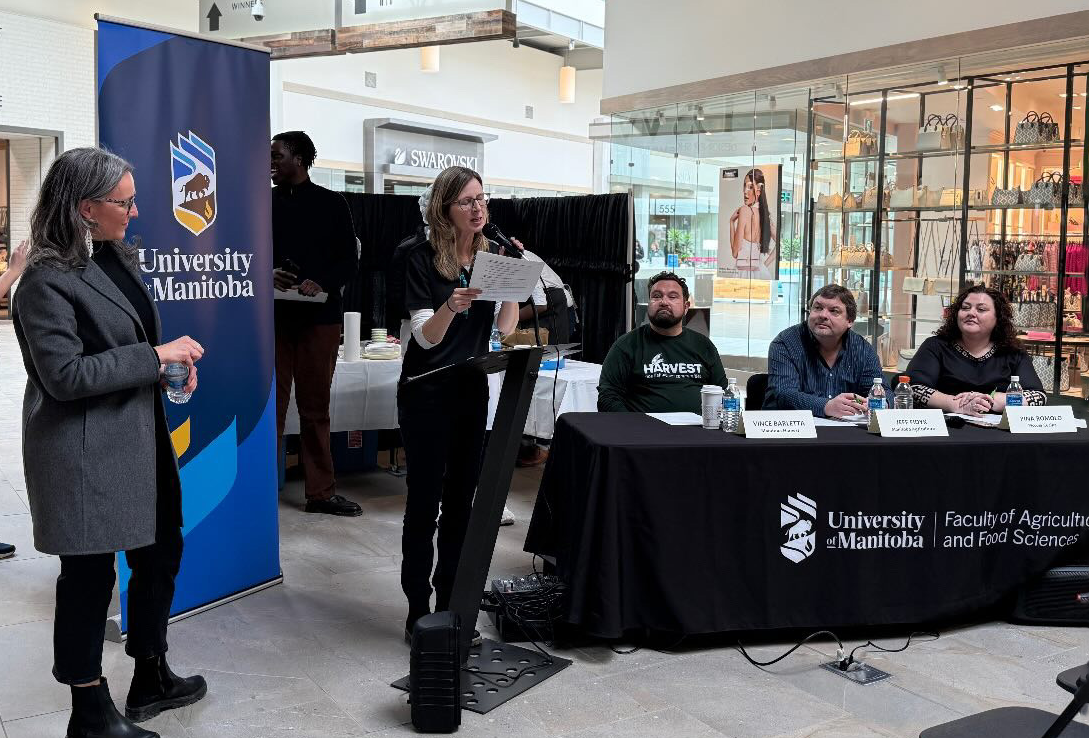
On March 15, 2025, AITC-M took part in Discover Agriculture in the City at Outlet Collection Winnipeg, helping urban families connect what they eat to the people, farms and innovation behind Manitoba agriculture. AITC-M delivered its timeline activity with more than 125 attendees, introduced visitors to classroom programs and resources, and shared brochures with families and educators.
The event also built a broader understanding of agricultural innovation through the University of Manitoba Food Fight, where
students pitched new food product ideas to judges. It generated tangible support, including donations from new donors!
Staff Learning and Development
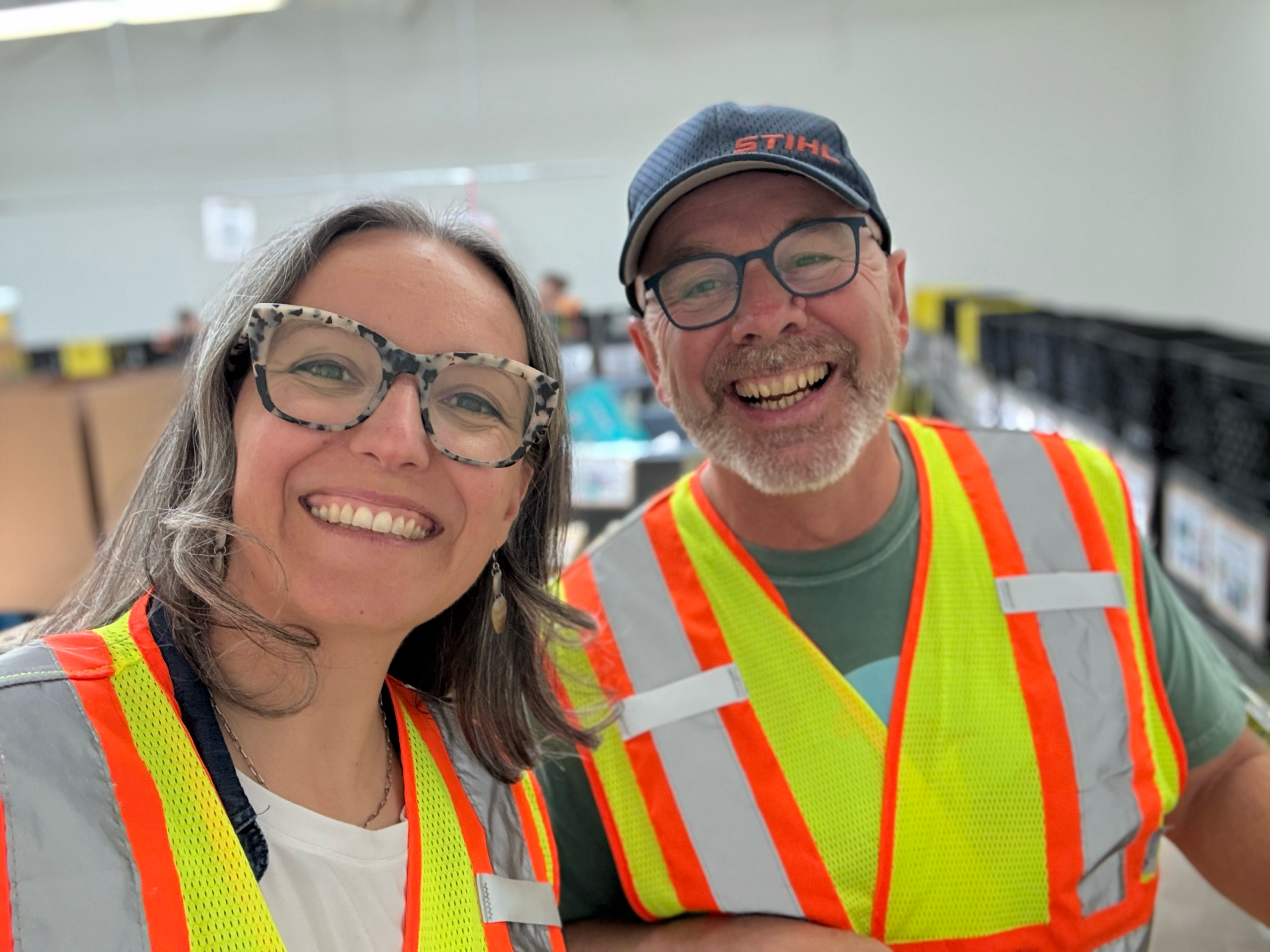
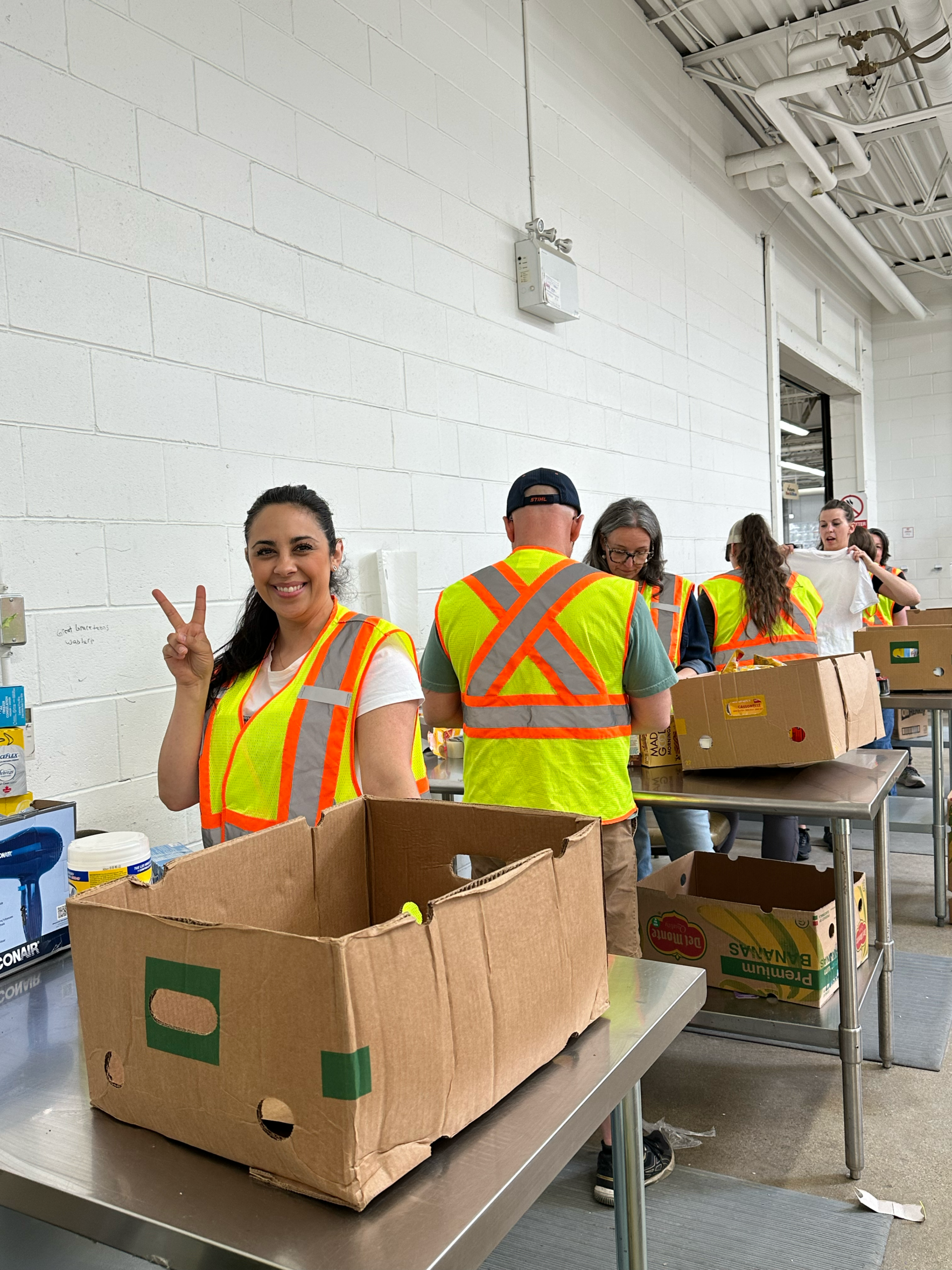
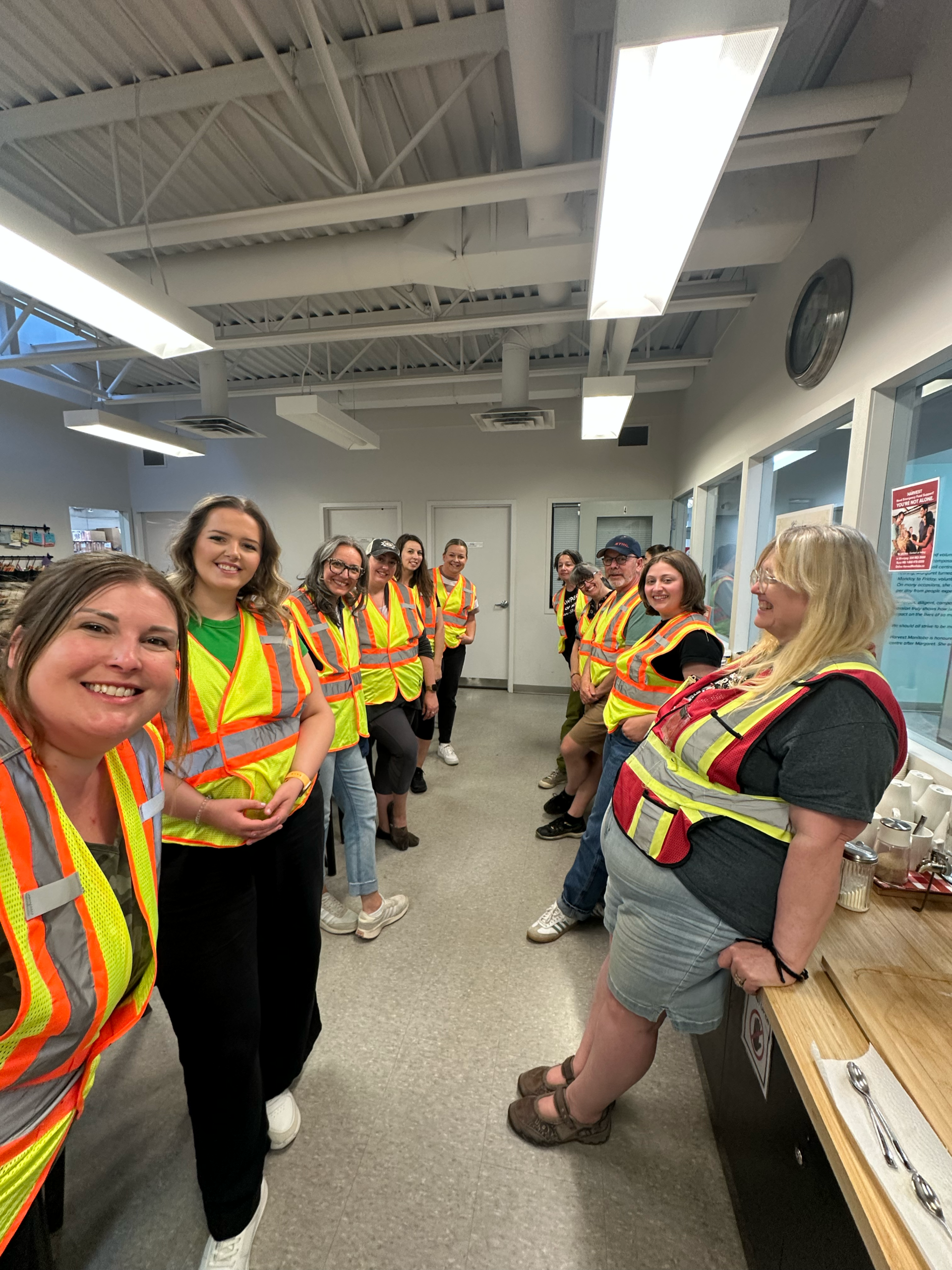
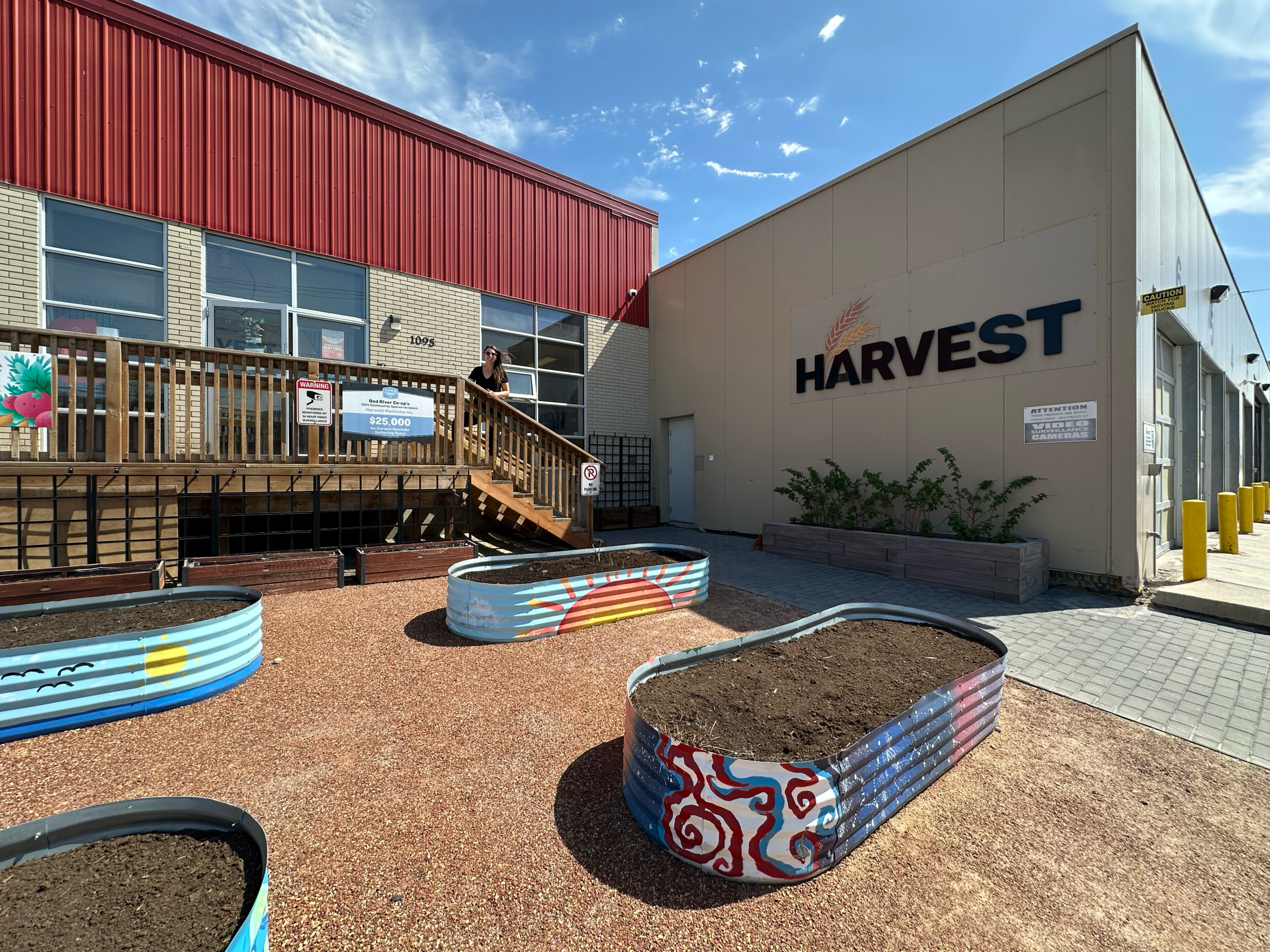
Outreach in 2025 also meant investing in our own learning. In May, AITC-M staff volunteered with Harvest Manitoba, a practical way to give back while seeing, firsthand, how food moves through the community and where pressures and gaps can appear in the system. That kind of experience strengthens our work: when our team understands the real-world context behind food and agriculture, we can teach it more clearly, build stronger partner relationships, and tell more authentic stories about why agriculture education matters.
Staff also joined industry bus tours hosted by Manitoba Agriculture. These tours helped our team deepen sector understanding, strengthen relationships and bring fresh, real-world examples back into programming. Stops included Richardson Pioneer (seed receiving, inspection and quality assurance), Charison’s Turkey Hatchery (hatchery operations and the poultry industry), Winnipeg Livestock Sales (how livestock auctions connect buyers and sellers), and Arrowquip Livestock Equipment (safe, efficient livestock handling). The team also took part in an EMILI presentation and networking session focused on agriculture innovation, helping us connect students with the modern, technology-enabled agriculture sector.


Leveraging Our Network:
An Update from
AITC-Canada

Over the past year, Agriculture in the Classroom Canada (AITC-C) has remained committed to supporting the great work that our members carry out while focusing on strengthening the organization’s financial stability and health, improving organizational efficiency, and enhancing the services we provide to our members.
A key milestone was the transition to a refreshed Board of Directors structure designed to support stronger strategic oversight as the organization continues to evolve.
Alongside this transition, AITC-C established a new Program Advisory Committee (PAC) to bring together expertise from across the network and provide guidance on national program alignment, collaboration opportunities, and shared priorities that advance agricultural literacy across Canada.
The PAC has already become an important forum for dialogue and collaboration among members. I would like to extend a sincere thank you to Agriculture in the Classroom-Manitoba for supporting Katharine Cherewyk, AITC-M executive director, in serving as Chair of the committee and for their ongoing commitment to advancing agricultural literacy within their province. Her leadership, thoughtful guidance and collaborative approach have helped shape the committee’s work and strengthen connections across the AITC network.
We are also grateful to the Manitoba team and board for their continued leadership and dedication to ensuring students
have opportunities to learn about agriculture and food, contributing meaningfully to our shared national efforts.
Denise Schmidt
Executive Director, Agriculture in the Classroom Canada
Partnerships
AITC-M’s impact is rooted in the support of
funders, donors, volunteers and industry
partners who invest in accurate, classroom-ready agriculture learning for Manitoba students
The stories that follow recognize those contributions and show what they make possible:
stronger classroom outcomes, wider access and deeper public understanding.
When partnerships are steady, impact can deepen and grow year after year.
Partner Spotlight: Manitoba Crop Alliance
In April 2025, Manitoba Crop Alliance made a landmark $195,000 investment in Agriculture in the Classroom-Manitoba: a major, mission-defining boost that will dramatically expand AITC-M’s classroom garden programs across the province. This isn’t just funding for garden kits. It’s an investment in public trust, food literacy and the next generation of agriculture leaders, giving more Manitoba students the chance to learn agriculture by doing it, from seed to harvest.


"As fewer people grow up in rural areas, it has become especially important that young people gain an early understanding of farming and where their food comes from. We hope our investment will help equip students with that understanding and might even inspire them to consider careers in agriculture when they grow up."

LEADERSHIP CIRCLE
In 2025, Dairy Farmers of Manitoba joined the AITC-M Leadership Circle with a $75,000 commitment over three years, helping AITC-M bring hands-on, curriculum-connected learning to more classrooms across the province. The partnership supports programs that move students beyond reading about agriculture to experiencing it, sparking questions, curiosity
and a deeper understanding of where food comes from and the people behind it.
Real, lasting change in agricultural education doesn’t happen overnight. It requires long-term commitment.
The challenges facing agriculture — rising misinformation, growing disconnection between consumers and food production, and a rapidly changing political and economic landscape — demand a sustained, strategic, and nimble response.
That’s why multi-year investments are the strongest way to support AITC-M’s mission. These commitments allow us to deepen our roots, plan for the future, and build resilience in an uncertain world.
With stable, multi-year funding, AITC-M can:
- Expand agricultural education into more classrooms across Manitoba
- Develop new, innovative learning experiences for students of all ages
- Strengthen partnerships with educators to integrate agriculture into core subjects
- Provide long-term opportunities for industry professionals to engage with students

Join our
Leadership Circle
by contacting:
Katharine Cherewyk, Executive Director, AITC-M
Partner Stories


Bioscience Association Manitoba and FP Genetics
help launch a new Genetics Resource Kit
for Manitoba classrooms
In 2025, support from Bioscience Association Manitoba and FP Genetics helped AITC-M strengthen
something foundational: how Manitoba students learn the science behind modern agriculture.
Together, we developed and launched the first year of a new Genetics Resource Kit for Manitoba classrooms, a practical, teacher-friendly resource that brings real-world genetics and agriculture learning to life.
The year focused on building a strong base and testing what works. We developed the initial kit, delivered an
October professional development session for 30 science and biology educators from across Manitoba,
and launched a pilot with 19 participating teachers. Early classroom reach was encouraging:
about 20 classrooms and roughly 500 students engaged through hands-on learning.
This is a partnership rooted in strength: investing in accurate, current learning, then piloting, improving,
and preparing to scale by building the industry’s future capacity through stronger science literacy today.
Brandon and Area Community Foundation
invests $10,000 to strengthen
AgVenture at Manitoba Ag Days
The Brandon and Area Community Foundation became a first-time supporter of AgVenture this year, contributing $10,000 to AITC-M’s student experience at Manitoba Ag Days in Brandon. Their support reflects a shared belief: strong communities and a strong agriculture sector depend on young people understanding agriculture, not as a distant idea, but as something real, modern and connected to local opportunity.
AgVenture gives youth an engaging, hands-on way to explore agriculture, food and careers, while giving teachers
and schools a trusted experience they can build on back in the classroom. This first-time investment is also an
important step toward stronger community-based funding in the region, which benefits Brandon-area
youth now and helps build the workforce pipeline the industry will rely on in the years ahead.

Municipal momentum grows as
AITC-M deepens ties with Manitoba
communities through AMM
In 2025, AITC-M made a more intentional effort to expand municipal outreach and deepen connections
across Manitoba by building on past support from a handful of municipalities and opening the door to a much
broader base of local investment. We started by hosting a booth at the Association of Manitoba Municipalities
Fall Convention and Trade Show, connecting directly with CAOs, councillors and board leaders.
The response was clear: municipalities see agriculture education as a real need, and many encouraged us to
apply through local funding processes. Our message landed because we framed the work through an economic development lens: focusing on youth, community and local economies, and agriculture’s role across the
industries that sustain rural Manitoba. Follow-up webinars extended that momentum, and in December,
we launched our first-ever provincewide municipal appeal timed to budgeting season, strengthening
the foundation for future municipal investment.
Thank You
to our
2025 Donors
Leadership Circle















Trailblazer
($100K+)

Cultivator
($49,000)



Visionary
($50K - $99,999)

Driver
($10K - $24,999)








Champion
($5K - $9,999)
Anonymous



Mark Peters

Builder
($1K - $4,999)
Access Credit Union
Anonymous
Bioscience Association of Manitoba
CANTERRA Seeds
Cargill Ltd.
Enterprise Machine Intelligence & Learning Initiative (EMILI)
Farmery Estate Brewing
Federated Cooperatives Ltd
FP Genetics
G3 Limited
Grain Elevator & Processing Society
Greenvalley Equipment Inc
Herbsigwil Ltd.
HyLife Ltd
Jonathan Sawatzky
Keystone Agricultural Producers
Les Verts Living
Manitoba Agricultural Services Corporation
Manitoba Oat Growers
Manitoba Potato Production Days
Manitoba Veterinary Medical Association
Mark Peters
Prairielane Farms Ltd.
RM of Ste Anne
RM of Woodlands
Scott Wolfe Professional Accountants Inc
SW Advisory Services Inc
TD Friends of the Environment Foundation
Topigs Norsvin
Trish Jordan
Tristar Dairy Centre Ltd
Trish Jordan
Tristar Dairy Centre Ltd
U of M Stockmans Club
UPL
Supporter
($250 - $999)
5603979 MB Ltd (J & V Pedersen)
Aaron Brown
Agassiz Seed Farm Ltd
Al Raine
Allan Calder
Assiniboine West Watershed District
Beauchemin Enterprises Ltd
Bob Bartley
Border Chemical Co Ltd
Brent Derkatch
Cathey Day
Crystal & Gunter Jochum
Doug Martin
Dundee Farms Inc
Dwight & Leah Willoughby
Ellis Seeds
Erin MacGregor
Field 2 Field Agronomy Inc
Goodwin Ballance Communications
Gursevak Kasbia
J Elaine Thomson
Janine Laforte
Jared Munro
Jenelle Hamblin
Kevin Hamblin
Manitoba Turkey Producers
Michelle Philippot
Municipality of Rhineland
Oakdale Farms Ltd
Orchard Grain Farms Ltd
P & D Froese Farm Ltd
Pam & Norbert De Rocquigny
Pitura Seeds
Prairie View Municipality
Redview Farms Ltd
RJP Seed Ltd
RM of Fisher
RM of Grey
RM of Oakview
RM of Springfield
RM of Wallace-Woodworth
Rutherford Farms Ltd.
Roland Air Spray Ltd
Serek Slawomir
Shelley Bartley
Sheryl Tegelberg
Stephanie Cruickshanks
Steve Derksen
Teresa Zimmer
Town of Carman
Tracy Gilson
Univar Solutions
University of Manitoba Faculty of Agriculture and Food Sciences
Wayne Hiltz
Whitemud Watershed District
Friend
($50 - $249)
Alex Cruspe
Ashley Taylor
Barbara Strath-Pitura
Barry McNabb
Bill Ross
Blaine Pedersen
Bob Horsman
Boerchers Farm Ltd
Bonnie Bain
Brian Kenyon
Brian Nedohin
Bruce Montgomery
Canada Helps
Carson Callum
Clarke Munro
Cliff Cullen
Cindy Pellerin
Crystal Berthelette
Crystal City-Clearwater Agricultural Society
Cynthia Plaseski
Dan Maizer
Diane Mauthe
Doris Ibhawaegbele
Douglas W Livingston
Edgar Scheurer
Edeltraut Dancho
Fiona Jochum
Gail Eckert
Gina Sunderland
Grace & Matthew Wedlake
Hannah Minshull
Heather and Joel Martens
Ireland Kyrzyk-Smith
Jeff Blixhavn
Jennifer Dyck
Jennifer McCombe-Theroux
Jessica Brady
Jessica Painter
Jim Thiessen
Joanne Buth
John Chorney Farms Ltd
John Gaudes
Juliana Baird
Katharine & Greg Cherewyk
Kelly Green
Kellen Chiborak
Kevin & Linda McGill
Kristen Matwychuk
Laurel Lyons
Laura Holtmann
Leanne Campbell
Lee Anne Murphy
MacNair Farms Ltd
Mallory Women`s Institute
Margaret Smith
Marvin Elder
Municipality of Brenda-Waskada
Municipality of Louise
Orsak Paul
Patsy Michiels
Pen-Dale Farms Ltd
Prairie Fruit Growers Assoc
Rivers Women’s Institute
Robert & Charlene Graham
Robert Reid
Ron Brand
RM of Minto Odanah
RM of Roland
RM of Yellowhead
Rosalie Beamish
Rural Municipality of Mountain
Ryan McBride
Sally Parsonage
Scott Peters
Shona Fraser
Shubhanga Gautam
Stephen & Carolyn Biggar Biggar
Stephen Fox
Stoesz Acres Ltd
Tenesha Lawson
Theresa Ramsoomair
Tim Rollheiser
Tim Swynar
United Way - Winnipeg
Val Weeks
Walter & Debra Finlay
Woodmore Womens Institute
Celebrating
Our
Volunteers
Does the Future of Agriculture Matter to You?
If 2025 taught us one thing, it’s that agriculture is changing faster than ever, and so are the forces that shape it.
Our industry is rooted in the strength of our people. The next generation of farmers, processors, innovators and ag professionals is sitting in classrooms across the province right now, thinking about the future. Early agriculture education is how we turn that strength into a lasting advantage. AITC-M is essential to delivering that knowledge and understanding in communities across Manitoba.
We are meeting the moment — barely. Demand is outpacing capacity. We’re delivering more than ever by making every dollar count, but our current pace isn’t sustainable without stronger partner support. In 2025, 41 classrooms were on a wait list. That’s 41 missed opportunities for hands-on, curriculum-connected agriculture learning that builds public trust and the future workforce our sector depends on.
When you invest in AITC-M, you’re investing in community and economic development in rural and urban Manitoba alike. You’re also investing upstream, helping youth build understanding and confidence now so our industry isn’t scrambling later.
By supporting AITC-M, you:
- Build the workforce Manitoba agriculture needs by helping youth see agriculture as a modern, innovative industry and the in-demand careers behind it, from skilled trades and agri-food to science and technology.
- Reconnect youth to food systems and strengthen agriculture literacy so they understand where food comes from, how the system works, and why agriculture matters to their lives and communities.
- Strengthen public trust as expectations rise by building credible understanding of food systems at a time when scrutiny, misinformation and sustainability expectations are increasing.
- Grow STEM and innovation readiness through curriculum-linked, hands-on learning that builds the foundations agriculture needs as technology advances.
- Support local business growth and economic development by helping youth develop the awareness and skills that drive innovation, entrepreneurship and long-term competitiveness across the ag economy.
- Help youth see a future at home by showing the breadth of opportunity in agriculture, from mechanics and equipment to manufacturing, logistics, veterinary and animal sciences, research, marketing, agri-tourism, and digital technology.
- Develop informed citizens and future leaders who understand local economic issues and can lead with context, not assumptions.
- Turn investment into direct, local impact through tangible experiences in your community, including hands-on agriculture learning, farm and ag-career tours, and year-round classroom gardens through Little Green Thumbs.

let's build a RESILIENT
future together
We’re doing all we can, but it still isn’t enough. Every contribution
helps close the gap between demand and capacity:
- $250 brings a resource to a classroom.
- $500 brings hands-on agriculture experiences to youth in your community.
- $2,500 supports participation in farm and ag-career tours.
- $5,000 funds a year-round classroom garden through Little Green Thumbs.
- $25,000 builds a resource or program for hundreds of classrooms.
contact us for other
partnership
opportunities
Katharine Cherewyk, Executive Director, AITC-M
2025
Financials
Stewardship supports lasting reach
The financial report that follows shows how AITC-M managed resources responsibly
to deliver province-wide learning and sustain program quality as demand rises.